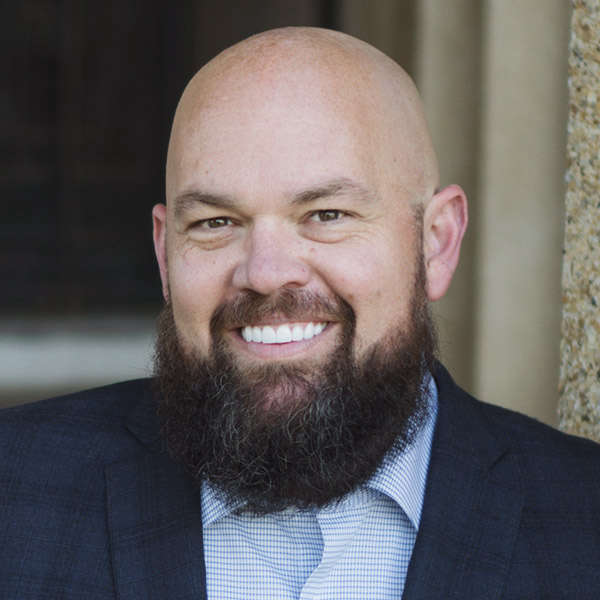

Dominican friars still live and worship at Santa Maria delle Grazie in Milan, the same convent where Leonardo da Vinci painted 'The Last Supper' in the 1490s. While the famous artwork now belongs to the Italian state, the religious community continues their centuries-old mission of prayer, study, and welcoming visitors.
MILAN (AP) — Father Paolo Venturelli maintains his distance when viewing Leonardo da Vinci’s ‘The Last Supper.’ The Dominican priest chooses to observe the masterpiece from across the room where it was created, positioning himself on the far side of what once served as his religious order’s dining hall.
‘From that vantage point, the artwork appears as if it were created right in the center of our dining room,’ Venturelli explained about the famous work that portrays the Gospel account of Christ’s final dinner with his twelve disciples. ‘It evokes profound human and spiritual responses.’
Venturelli resides at Santa Maria delle Grazie, a monastery and church in Milan where Leonardo created his masterpiece during the 1490s under commission from Ludovico Sforza, Milan’s ruler at that time.
The renowned fresco, which depicts the biblical moment when Jesus reveals that one disciple will betray him, occupies the monastery’s original dining hall. These spaces traditionally function as gathering places where religious communities share meals, prayers and scripture readings. However, at Santa Maria delle Grazie, this room no longer serves the friars’ everyday needs.
Following Napoleon’s dissolution of religious institutions in the 1700s, the dining hall became government property. Currently operating as the Cenacolo Vinciano, Italy’s Regional Directorate of Museums of Lombardy oversees the space.
‘We rarely visit because we must request authorization to enter,’ Venturelli noted, explaining that he faces the same 15-minute time restriction as other guests due to conservation requirements.
‘The space is no longer ours.’
Santa Maria delle Grazie currently houses twelve priests and nine students in training within its Dominican community. Wearing their traditional white habits — or brown hooded garments during winter months — the religious men are frequently visible throughout the church.
Many tourists who visit the Cenacolo skip the neighboring church entirely. However, those who do explore both locations often regard Venturelli and his fellow friars with fascination.
‘We just left the courtyard area and noticed one of the brothers tending to the garden,’ shared Maria Teresa Bruzzi, who made the trip from Genoa with her spouse in mid-February.
‘We came to view Leonardo’s masterpiece, but we also wished to explore the church since it holds special significance,’ she continued. ‘This Renaissance structure blends two architectural approaches and held great importance for the Sforza dynasty.’
Venturelli observed that visitors to the sacred space frequently express amazement at its design. ‘When they enter the chapel dedicated to Our Lady of the Grazie, they witness that the surrounding splendor was constructed to honor the one who embodies perfect beauty — God,’ he stated.
Cenacolo admission tickets frequently sell out completely, and the museum remains closed Mondays, leaving spontaneous Milan visitors unable to view the painting. The church, however, opens every day and accommodates those seeking to participate in Mass or receive the sacrament of confession.
‘Confession services remain highly requested, and we continue providing this ministry for Milan residents as well as all guests,’ explained Father Llewellyn Muscat, who leads the Dominican community at Santa Maria delle Grazie.
Venturelli provides confession services for Italian speakers. Muscat assists those communicating in English, Italian and Maltese, his native language. While additional friars serve French and German speakers, the leader emphasized that all members strive to communicate with everyone.
‘We cannot withhold the blessings that the Lord bestows upon each person,’ Muscat declared.
Dominican friars established themselves at Santa Maria delle Grazie during the complex’s 15th-century construction. Nevertheless, the religious order had already established roots in Milan previously.
Those early brothers’ dedication to St. Catherine of Siena remains apparent throughout the church. Wall paintings show her alongside St. Catherine of Alexandria, connected to the Dominican emphasis on learning and recognized as the patron of philosophers.
This scholarly heritage also appears within the monastery itself. Just beyond the constant stream of visitors, numerous bookshelves line the corridors.
‘Study forms a core part of our character,’ Muscat stated.
Neither he nor his religious brothers adhere to rigid daily timetables. However, learning, worship and their pastoral work structure their activities.
Clergy members like Muscat regularly conduct Mass and support neighboring parishes when additional priests are required. Others manage the training program for new members, instruct at area Catholic schools, or work with Santa Maria delle Grazie’s cultural center, which coordinates lectures and programs.
‘We strive to provide the spiritual encouragement that individuals require,’ Muscat explained.
Leonardo’s selection to create ‘The Last Supper’ within a Dominican monastery was intentional. Venturelli noted that most dining halls in his order feature this biblical scene on their walls. Muscat added that it reflects Dominican values.
‘For our community, it doesn’t trigger feelings about something from history,’ he said. ‘It represents a continuation where we dine alongside Jesus and his disciples, as if his teachings are directed toward us as well.’
Muscat, like other visitors who stand before Leonardo’s wall painting, experiences deep emotion from the artwork.
In his situation, though, both the artistic achievement and their common heritage create a more profound connection. The painting, like the monastery that contains it, has survived centuries of turmoil and needed collaborative efforts to endure.
‘The Last Supper’ challenges my individual conscience and the conscience of our entire order,’ Muscat reflected. ‘Because at the Grazie, we don’t function as separate individuals, but as a community that serves and receives others.’
The order’s current dining space sits away from tourist areas, deep within the maze-like monastery where the friars discover the silence necessary for contemplation and worship. It features a simple, spacious design with multiple square tables rather than a single long table, unlike the table shown in ‘The Last Supper.’
It serves well, Muscat acknowledged. But perhaps, he wondered, someday the original dining hall might return to their care.
 Dense Fog Advisory: Quarter-Mile Visibility Expected Overnight Across Delmarva
 Finnish Reindeer Racing Championship Draws International Crowds Despite Bitter Cold
 Three Brothers, Including Top Real Estate Agents, Found Guilty of Sex Trafficking