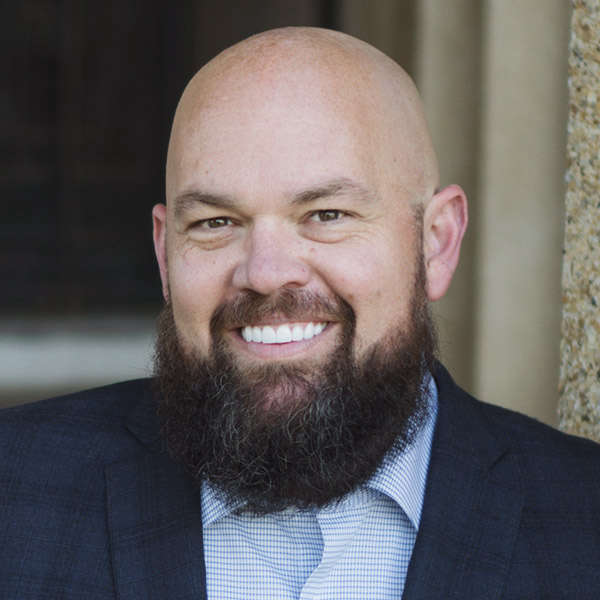

German Chancellor Friedrich Merz's Christian Democratic Union suffered an unexpected loss in Baden-Württemberg state elections, falling just short to the Green Party. The defeat marks a challenging start to a year filled with crucial state elections across Germany.
BERLIN — German Chancellor Friedrich Merz’s Christian Democratic Union has begun what promises to be a pivotal election year with an unexpected setback, losing a closely contested state race in a major industrial stronghold after the Green Party mounted a successful comeback campaign.
The center-right CDU had long anticipated reclaiming the governor’s position in Baden-Württemberg, a southwestern German state housing over 11 million residents and serving as headquarters for automotive giants like Mercedes-Benz and Porsche. The region had been governed for 15 years by Winfried Kretschmann, Germany’s first and only Green Party state leader, who decided to step down from his role in this traditionally conservative area.
Despite Merz’s federal administration facing criticism over Germany’s sluggish economic recovery during his 10 months in office, a CDU win initially seemed probable. However, the party watched its polling advantage erode as election day approached, largely due to an effective Green Party campaign centered around Cem Özdemir, a veteran federal legislator and former agriculture minister.
Monday’s official tally revealed the Green Party captured 30.2% of votes, narrowly edging out the CDU’s 29.7% — representing improvement for the conservatives compared to five years prior, though insufficient for victory. The far-right Alternative for Germany saw its support nearly double to 18.8%, mirroring gains from last year’s national contest. Meanwhile, the Social Democrats, who partner with Merz federally, experienced a dramatic collapse, losing half their previous support to finish with just 5.5%.
The 60-year-old Özdemir emphasized his governmental experience while highlighting the Green Party’s more moderate stance in Baden-Württemberg — a marked difference from the party’s leftward positioning at the national level, where it operates in opposition.
His CDU challenger, 37-year-old Manuel Hagel, lacked comparable name recognition and may have been damaged by a recently surfaced 2018 video where he discussed a school visit and commented on a female student’s “fawn-brown eyes.”
The two parties are anticipated to continue their decade-long coalition arrangement in governing Baden-Württemberg, with Özdemir poised to become Germany’s first state governor of Turkish heritage.
This weekend’s contest kicks off a series of five state elections scheduled for 2024. The next battle occurs March 22 in neighboring Rhineland-Palatinate, where the current national coalition partners will compete directly against each other. Social Democrats have controlled that state since 1991, though they now face a competitive race with Merz’s CDU for the top spot.
September will bring elections in Berlin and two eastern regions formerly part of communist East Germany, where the Alternative for Germany maintains particular strength and hopes to secure its first state governorship.
Jens Spahn, the conservative party’s parliamentary leader in Berlin, acknowledged Sunday’s outcome was “bitter” while highlighting his party’s vote gains and claiming Özdemir succeeded by downplaying his Green Party affiliation. Spahn credited the federal government’s recent performance, including “the chancellor’s strong foreign policy performance.”
Merz has faced occasional criticism for prioritizing foreign policy after recent trips to Washington and Beijing within the past two weeks.
“His foreign policy presence may be really good, but he can only gain popularity and the federal CDU can only gain in polls if things go better domestically,” said Uwe Jun, a political science professor at the University of Trier, speaking to Phoenix television.
“He needs significant improvements in the area of social and economic policy,” Jun added.
 New Survey Shows Strong Evangelical Support for Trump Continues
 Research Finds Only 1% of Gen Z Americans Hold Biblical Worldview
 New Video Evidence Challenges Trump’s Claims on Deadly Iranian School Strike