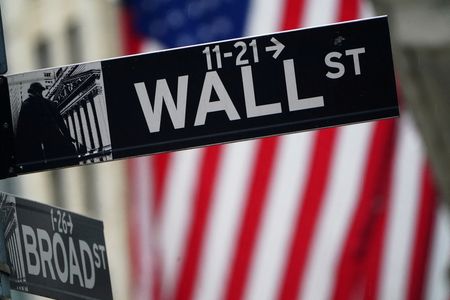
WASHINGTON, Oct 26 (Reuters) – Wall Street banks are poised to score significant regulatory relief thanks to US President Donald Trump’s Republican regulators, but ensuring the changes survive long-term may ultimately require Democratic support.
The Federal Reserve is trying to finalize the biggest overhaul of bank capital rules since the 2007-09 financial crisis by year end. Although Trump appointed four of the Fed’s seven governors, Wall Street banks hope his vice chair for supervision, Michelle Bowman, can secure Democratic backing for the changes too, hoping that will make them harder to unwind, half a dozen industry executives said.
The fraught, years-long rulemaking is wrapping up as Democrats, often skeptical of deregulation, are poised to win one or both chambers of Congress next month, according to independent analysts. Democratic lawmakers have said they planned to probe Trump’s agencies and companies that have benefited from their policy shifts. Wall Street banks are now weighing how to protect their wins if Democrats gain more power next year, or retake the White House in 2028, executives said.
“Bipartisan consensus-driven results stand the test of time much more often than not,” said Michael Bright, CEO of the Structured Finance Association, an industry group.
“I think that the market’s expectation is that they’re working to find overall consensus,” Bright added, referring to the Fed.
A spokesperson for the Federal Reserve Board declined to comment.
BANKS WANT MORE CHANGES THAT COULD ALIENATE DEMOCRATS
Democrats typically favor tougher rules to prevent costly taxpayer bank bailouts, while Republicans often argue that overly burdensome regulation can constrain lending and economic growth.
Invoking that conservative argument, Bowman in March proposed rule changes that would reduce big-bank capital by around 4.8%, a major reversal for an industry that had faced a 20% hike under a 2023 plan led by her Democratic predecessor Michael Barr.
Banks fought Barr’s plan, persuading congressional Republicans as well as dozens of Democrats to pressure the Fed into revising it. That battle dragged the project into the Trump administration.
Barr stepped down as vice chair for supervision early last year, saying he wanted to avoid a legal fight with Trump, who was reportedly planning to strip him of that role. Barr remains on the board and opposed Bowman’s proposal, arguing it will increase systemic risk. Progressive Democrats and advocacy groups have echoed his concern, but most other Democrats have not weighed in.
The board’s other two Democratic-appointed governors, Lisa Cook and Philip Jefferson, voted for the proposals, and said they would assess the final rules on their merits after reviewing feedback on how they would affect the economy and financial resilience.
“It is critical that we strike the right balance,” Cook said.
Some big banks are pushing Bowman for more relief, including tweaks that would further reduce their “GSIB surcharges,” additional capital applied to the biggest global banks. Others want changes to how the proposal to implement international ‘Basel’ standards treats unused credit card lines. Most banks also want some fine-tuning to remove what they say is overlap with other capital rules.
But cutting big-bank capital further could cost Bowman Democratic support. While a handful of executives are privately urging Fed officials to prioritize further gains, most favor a swift bipartisan vote, according to the executives, who spoke on the condition of anonymity to discuss sensitive regulatory issues.
Bowman acknowledged that balancing act during congressional testimony in June, when lawmakers asked why the Fed stopped short of adopting the industry’s preferred approach for recalibrating the GSIB surcharge in line with economic growth.
“It was a compromise,” Bowman said, adding the industry approach would have reduced big-bank capital to levels that “some were uncomfortable with,” in what executives saw as an allusion to Cook and Jefferson.
If they back the final package, it is less likely to become a target for Democrats, said executives and academics.
“Were there to be two or more dissenting votes, it would delegitimize the final rule,” said University of Michigan law professor Jeremy Kress, who generally favors tougher rules.
Dissents also provide fodder for litigants seeking to argue that a rulemaking was flawed. Washington nonprofit Better Markets last month sued the central bank, alleging missteps in the capital rulemaking process. The Fed has not yet responded to the lawsuit.
“To the extent that dissents … highlight flaws and deficiencies in rules, then that is often helpful in subsequent litigation,” said the group’s CEO, Dennis Kelleher.
THE FED’S CONSENSUS CULTURE IS STRAINING
The central bank has long prized consensus-driven policymaking, but the tug-of-war over Wall Street rules has challenged that tradition in recent years, and dissents are becoming more common.
Trump’s efforts to wrest more control of the historically independent central bank could strain that tradition further, say regulatory experts. Trump has tried to oust Cook and his former Fed chair Jerome Powell, who remains on the board. Trump’s new Fed chair, Kevin Warsh, has said he is comfortable with internal conflict.
Recent votes underscore widening divisions. In March, the board approved Morgan Stanley’s request to restructure its European operation over the objections of Barr, Cook and Jefferson, in a very rare split that also marked Jefferson’s first dissent.
Cook last year also dissented from the final version of a leverage rule she initially voted to propose, saying it cut capital too deeply.
“Cook and Jefferson have a lot of leverage,” said Kress. “The question is whether they choose to use it.”
(Reporting by Pete Schroeder in Washington; Additional reporting by Nupur Anand; Editing by Michelle Price and Matthew Lewis)
Brought to you by www.srnnews.com
 Japan indicts US Marine over Okinawa killing, media say
 Libya summons US envoy to protest at Trump remarks