
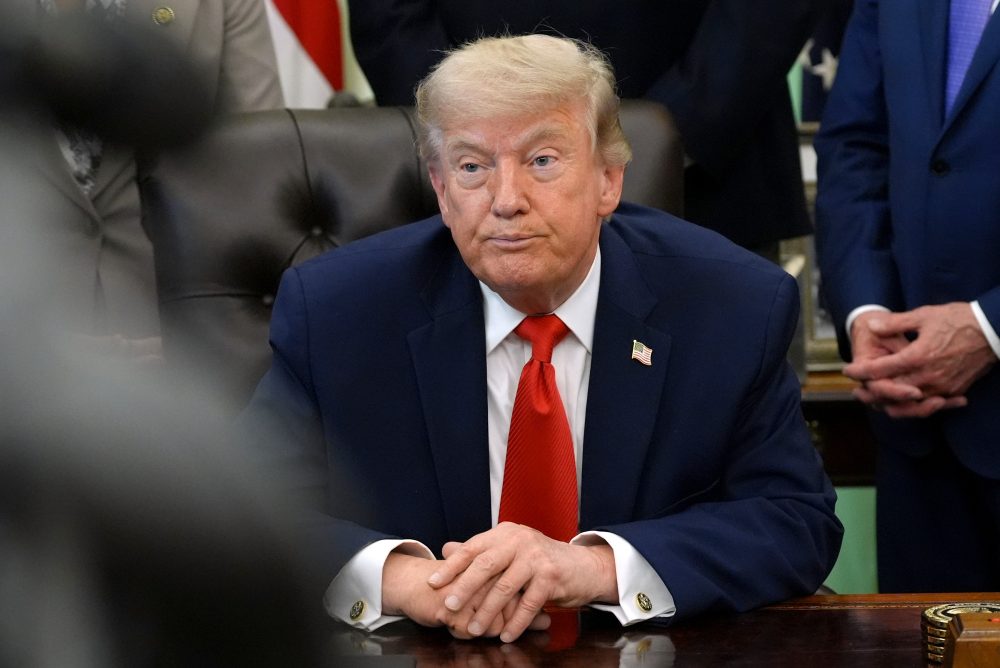
WASHINGTON (AP) — President Donald Trump said the U.S. is close to signing a deal with Iran to wind down the war, with a memorandum of understanding to be signed in the coming days.
But some of the key objectives Trump laid out for the conflict seem to remain unfulfilled. And while the Trump administration has said its objectives are clear and unchanging, the list has expanded and shifted as the president and his administration have spoken about the war since it started Feb. 28. All the while, the conflict has battered the global economy, tested alliances and raised unanswered questions about the planning for the conflict, its justification and its aftermath.
By most accounts, the strikes by the U.S. and Israel have significantly degraded Iran’s military capabilities and killed scores of senior leaders. But those tactical successes don’t necessarily translate into achieving all the president’s strategic aims, even as the administration said Friday that it was meeting the goals it had laid out.
Here’s a look at the objectives laid out by Trump at various points since the outset of the war and what we know about where they stand:
One of the prime objectives laid out by the administration was to “destroy their missiles and raze their missile industry to the ground.”
Trump said in late March that Iran’s missiles “are mostly decimated” and that 90% of their missiles and launchers were knocked out.
By mid-May, that shifted to a more conservative estimate, with the president saying that 82% of Iran’s missiles were gone.
Adm. Brad Cooper, the top U.S. military commander in the Middle East, told lawmakers in mid-May that Iran maintains a “very moderate if not small capability to continue strikes” in the region.
Iran proved as recently as this week that it still had the ability to launch missiles when it attacked three Gulf allies of the U.S.
Early in the war, the president and his administration sometimes listed this as a standalone objective. Other times, it has fallen off their list.
U.S. Central Command has said its targets for strikes in Iran have included weapons production and missile and drone manufacturing facilities.
Secretary of State Marco Rubio told lawmakers in early June that Iran has had “massive destruction” of its defense industrial base and “80 to 90% of attrition. It will take years for them to rebuild it.”
Trump told NBC’s “Meet the Press” in an interview that aired Sunday: “Most of the drone factories have been knocked out, most of the launching pads have been knocked out and most of the missile manufacturing areas have been knocked out. But they still have capacity.”
The U.S. and Israel quickly established air superiority in the skies above Iran, where they flew largely unchallenged.
Rubio told lawmakers that Iran still has drone capabilities, but it lacks the ability to use swarms of drones to attack targets, as it did at the start of the war.
He also said Iran does not have a navy but small crafts outfitted with machine guns that harass ships and sometimes drop mines in the water.
Iran has shown its ability to still launch attacks in the region, such as a deadly June 3 attack of drones and missiles at Kuwait that led to the brief closure of its main airport. The U.S. and Bahrain also said they intercepted missiles and drones fired at the Gulf kingdom by Iran.
And on Tuesday, Trump blamed Tehran for the downing of a U.S. Army helicopter near the Strait of Hormuz after it collided with an Iranian drone.
Trump made a marked shift over the last year after declaring that the U.S. had “obliterated” Iran’s nuclear program in June, only for his aides to warn that Iran was just weeks away from a bomb to justify the current operations.
One of the most pressing questions is what will be done with about 970 pounds of enriched uranium that Tehran has that could potentially be used for a weapon. The material is believed to be buried under three nuclear sites bombed by the U.S. and Israel last year. Trump said in a May 29 social media post that it will be retrieved by the U.S. “in close coordination and conjunction with the Islamic Republic of Iran, plus the International Atomic Energy Agency, and DESTROYED.”
Iran has not said whether it would consent. Without permission from Iran, seizing it would be a dangerous mission, experts say, and would require a sizable deployment of U.S. troops into the country.
Trump told reporters on Thursday that there was an agreement “conceptually” on the uranium, but he did not offer details and Iran has not yet confirmed it.
A senior administration official, who spoke to reporters on condition of anonymity on Friday to provide an update on negotiations, said that Iran has agreed that the uranium will be destroyed and removed, but details of what that looks like have not yet been hammered out.
Trump, in a March social media post, added a fifth objective for the U.S: “Protecting, at the highest level, our Middle Eastern Allies, including Israel, Saudi Arabia, Qatar, the United Arab Emirates, Bahrain, Kuwait, and others.”
The U.S. maintains thousands of troops on bases and other installations in the region, but Trump has been unclear on how far he’d be willing to go to protect Middle East allies from threats.
As Trump said the U.S. was nearing a deal with Iran in recent weeks, he’s said that any agreement should somehow bind many of the Gulf allies to join the Abraham Accords, agreements from Trump’s first term that seek to normalize relations with Israel. But that seems exceedingly unlikely as Israel’s actions in the Gaza Strip have created a bigger distance from Gulf Arab states and the wider Muslim world.
As the U.S. and Iran traded back-and-forth strikes this week, Tehran’s targets included attacks on Bahrain, Kuwait and Jordan, prompting the U.S. to respond with a fresh round of strikes.
The Trump administration has begun exploring whether to let Gulf allies use Iran’s frozen assets to pay for damages sustained in the war, but officials have not said whether they are moving forward with that plan.
The senior administration official said Friday that the memorandum of understanding would guarantee a long-term peace in the region, but did not offer details on what that would look like or how it would be achieved.
Keeping shipping traffic flowing through the vital waterway was not one of the reasons for launching the war, but after Iran leveraged its ability to effectively shut traffic through the strait, it has become a key problem to tackle in the conflict.
The Strait of Hormuz is a chokepoint for 20% of the world’s oil and natural gas and its effective closure since the war has spiked global energy prices, along with the costs of other goods. Iran had allowed ships seen as friendly to pass through, while charging considerable fees.
Trump has said that a proposed deal with Iran would include the reopening of the strait and the U.S. ending its blockade of Tehran’s ports.
In March, Trump and his administration repeatedly included degrading Iran’s proxy terror networks as a key goal of the operation.
As time has gone on, administration officials have offered fewer updates about this objective, which the president described as ensuring that “the region’s terrorist proxies can no longer destabilize the region or the world and attack our forces” and “ensuring that the Iranian regime cannot continue to arm, fund, and direct terrorist armies outside of their borders.”
The U.S., early on, struck Iranian-aligned militia groups in Iraq. But the biggest question has been Israel’s deepening war in Lebanon against Hezbollah, which Iran backs. Iran has insisted that the fighting in Lebanon must be stopped as part of any deal with the U.S., but Israeli Prime Minister Benjamin Netanyahu appears intent on pursuing his goal of destroying the militant group.
Israel said Thursday that it was not a party to the agreement that the U.S. had reached with Iran.
The administration official said Friday that the U.S. was confident that broad regional peace terms in the memorandum of understanding would include both Hezbollah and Israel. If the Iranians hold up their end as it pertains to constraining Hezbollah, the Israelis would not feel a need to respond, the official said.
___
Associated Press writer Konstantin Toropin contributed to this report.
Brought to you by www.srnnews.com
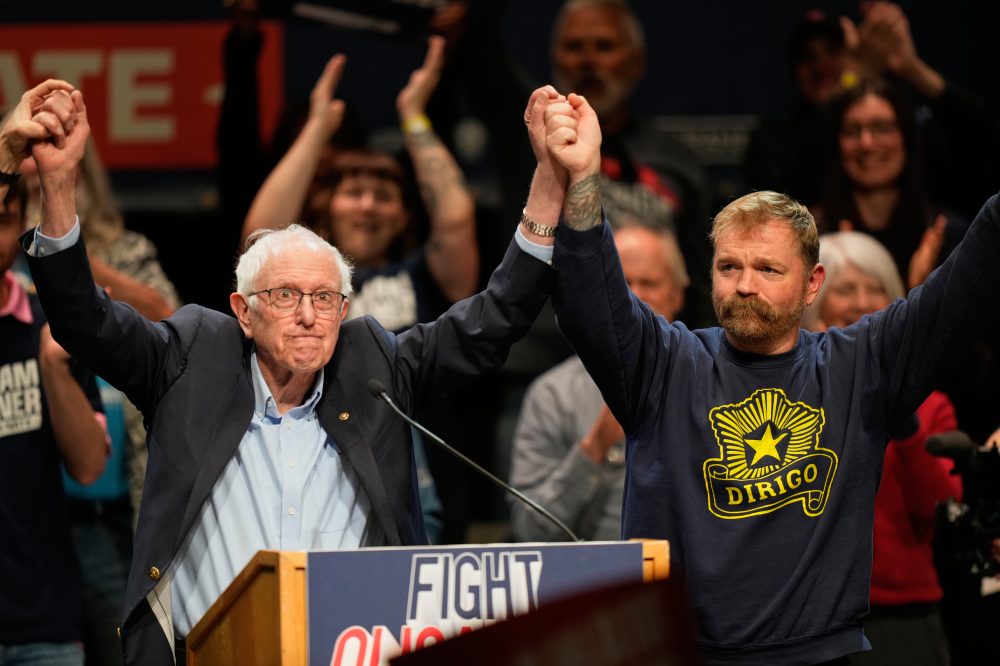 ‘Democrats want to win’: Platner’s support reflects a changing party in the Trump era
 Taiwan’s opposition leader touts talks with China as necessary for peace during US trip
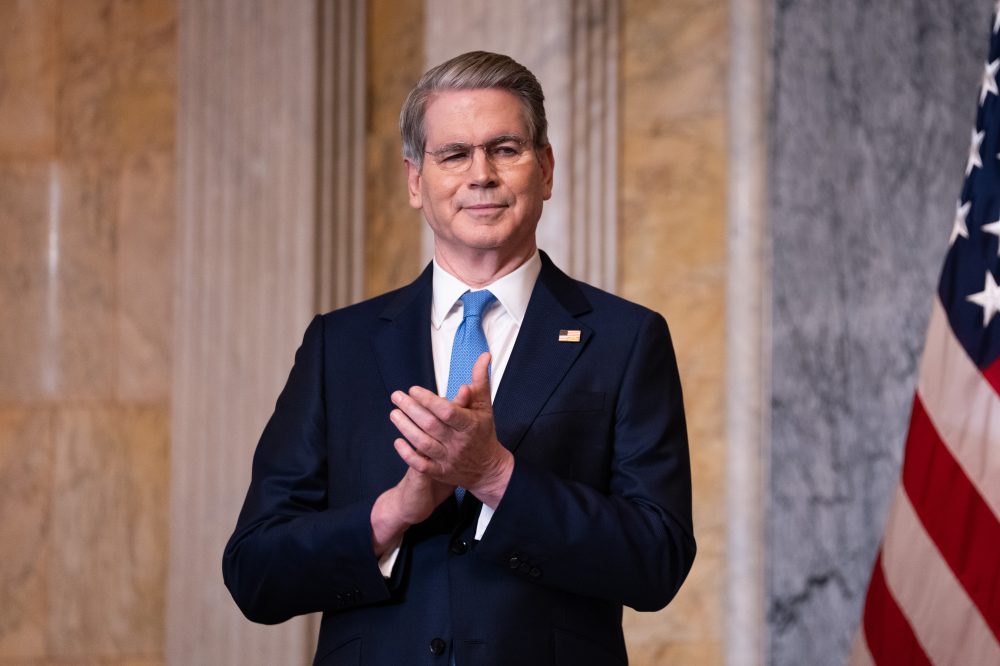 Treasury expands bank data-sharing rules tied to Trump immigration crackdown
 Legal groups that help migrant children say law enforcement visits were attempt at intimidation