
Washington—(AP) Acting Attorney General Todd Blanche has issued a formal order terminating President Donald Trump’s proposed $1.8 billion “anti-weaponization fund,” a move that follows weeks of negotiations with two Republican senators who had been withholding support for Blanche’s confirmation.
Late Sunday, Blanche’s order—released as the Senate Judiciary Committee prepares for a Tuesday confirmation vote—ends the effort to compensate people were treated unfairly by federal authorities or “lawfare.”. Texas Sen. John Cornyn, one of the senators who had blocked Blanche’s nomination, confirmed the development through a spokeswoman. Cornyn emphasized that the agreement now moves from discussion to paperwork. North Carolina Sen. Thom Tillis, the other GOP senator holding up the nomination, did not offer immediate comment.
In a statement accompanying the order, Blanche said the decision came after “good faith discussions” with committee members and senators. He said his team and he had “met with committee members and Senators over the past several weeks and addressed any concerns or outstanding questions.”
The Justice Department’s accompanying language makes the administration’s position even clearer, insisting the fund is no longer merely paused, but officially dead. The department stated that although Blanche had repeatedly told Congress—under oath and in written responses—that the fund was not moving forward, the latest order “officially rescinds” a prior directive from May 18, 2026. The document further declares that “although” the acting attorney general has advised and the department has represented in court, Sunday’s action “establishes, beyond any doubt, that there is no Fund.”
That claim is backed by specifics about what has or hasn’t happened. The order states that since the settlement of the president’s lawsuit against the IRS was announced, “No Members were appointed; no funds were transferred; no process for receiving claims was established; no claims were paid.” In other words, the government is now asserting that there was never a functioning mechanism to distribute money—and that the rescission ensures there will be no claims program.
Conservatives have argued for months that the premise of the so-called anti-weaponization fund—designed to compensate those claiming politically motivated prosecutions—was an effort to fight “lawfare” by the Biden Administration. At a June hearing, Blanche had testified that the Justice Department would not proceed with a plan to compensate those who believed they were unfairly prosecuted amid bipartisan outrage over the potential scope.
Cornyn and Tillis made clear that they were not satisfied with assurances alone. Their position throughout the confirmation process was that the promise had to be written down in a way that could not be easily reversed later. Cornyn and Tillis have been members of the Senate Judiciary Committee, and their vote—along with those of other Republicans—has become the central hurdle for Blanche’s nomination to become attorney general.
The stakes are not limited to the fund. Sunday’s order also narrows another element of the settlement related to tax audit immunity for President Trump and members of his family. The order specifies that the tax audit immunity agreement “applies by its terms only retroactively” to claims open at the time of the settlement. It also states that it does not prevent examination of future tax filings—an important distinction for lawmakers and watchdogs who have repeatedly asked how far immunity would extend.
While the nomination heads into the committee’s Tuesday vote, the political context remains tense. Cornyn, who lost reelection this year after Trump endorsed his primary opponent, and Tillis, who is retiring when his term ends in January, have both been among the leading conservatives wary of Blanche’s agenda. Their objections came as many GOP colleagues expressed frustration with the idea that the Justice Department might pursue a policy that critics say would reward politically connected figures rather than uphold neutral, law-based enforcement.
The committee has already postponed a vote that had been planned for Thursday morning. Cornyn and Tillis said they needed more from the administration to ensure they had the necessary votes.
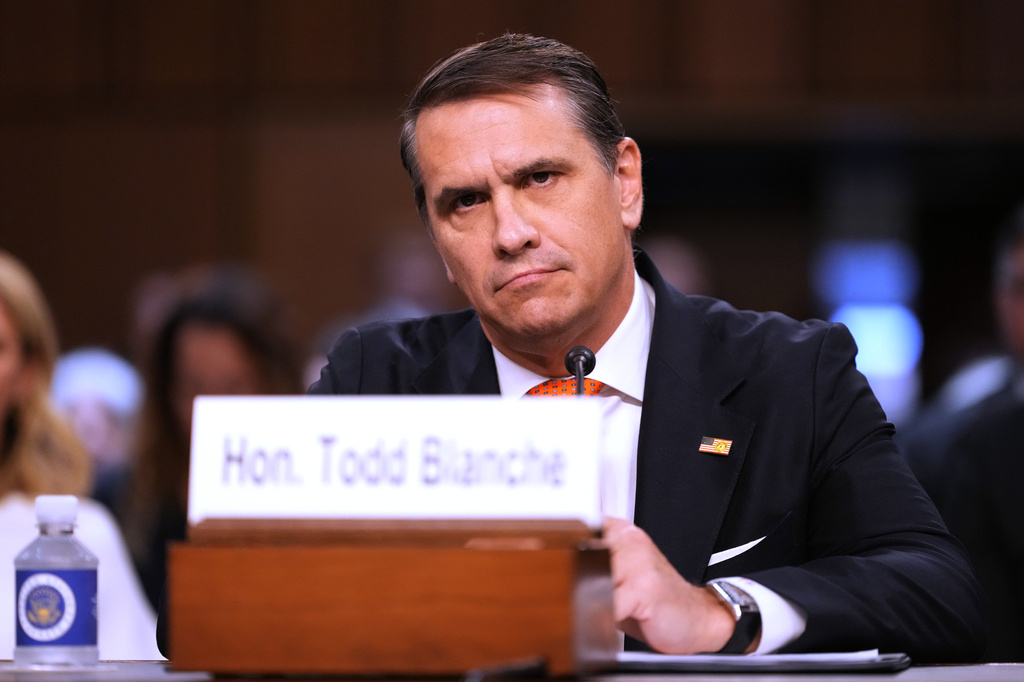
PHOTO- FILE – Acting Attorney General Todd Blanche appears before the Senate Judiciary Committee on Capitol Hill in Washington, July 15, 2026. (AP Photo/Mark Schiefelbein, File)
Brought to you by www.srnnews.com
 US construction spending unexpectedly falls in June
 AP Decision Notes: What to expect in the Kansas state primary
 AP Decision Notes: What to expect in Michigan’s state primary