
By Karen Freifeld
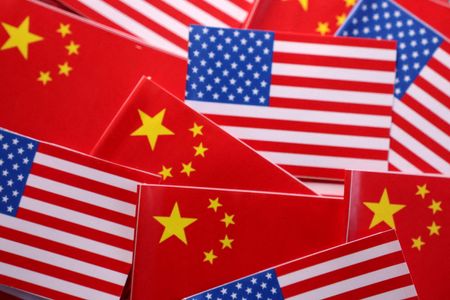
May 13 (Reuters) – China is pushing back against proposed U.S. legislation that would curb its chipmakers in the global AI race, making early moves that underscore Beijing’s concerns.
The proposal, known as the MATCH Act, is likely to be raised in discussions this week in Beijing alongside a long-awaited meeting between U.S. President Donald Trump and Chinese President Xi Jinping.
For months, the Trump administration has held back from imposing new regulations on technology exports to China, despite national security concerns.
But the U.S. Congress has moved to fill that gap, introducing legislation in the House of Representatives and the Senate last month that would make it harder for Chinese chipmakers to produce AI semiconductors, in part by setting up mechanisms to coerce allied countries to keep more equipment from China. It has drawn the ire of Chinese officials.
They have publicly criticized the bill, prepared countermeasures to employ if it passes and, according to a person briefed on the interaction, summoned U.S. embassy diplomats in China to complain about the proposed legislation – efforts that reflect the gravity of the situation.
In April, China’s Ministry of Commerce (MOFCOM) also called U.S. chip industry representatives into its embassy in Washington for a meeting to talk about topics related to semiconductors, including the MATCH Act, according to a different source. The source did not name the companies.
“Congress understands how important it is for the United States to win the AI race with China — and Beijing understands its chipmaking industry is extremely vulnerable to American export control,” said Ryan Fedasiuk, a former adviser for U.S.-China affairs at the U.S. State Department who is among those expecting the bill to come up in Beijing this week.
The meeting is the first between the two leaders since their countries reached a fragile trade truce in South Korea last year and, while other matters will take center stage, sources said, Chinese officials have raised the bill in pre-summit meetings.
The White House has not publicly taken a position on the proposed legislation. On Friday, a White House official declined comment on the bill, as well as the likelihood of it being raised in Beijing this week. “We don’t get ahead of the President on pending legislation,” the official said.
A spokesperson for the Chinese embassy in Washington declined to comment on the bill being raised in diplomatic meetings. The spokesperson also did not comment on the industry event at the embassy or the summoning of U.S. embassy diplomats in China.
CHINA PLANS COUNTERMEASURES
But Chinese officials have been outspoken since the bill was introduced last month, and the government has unveiled countermeasures it could implement were the bill to become law.
The U.S. is “using all sorts of pretexts to coerce other countries into joining its technological blockade against China,” Liu Pengyu, the embassy spokesperson, said in response to a question from Reuters about the MATCH Act early last month.
After a vote in the House Foreign Affairs committee on April 22 advancing the proposed legislation, along with other bills tied to AI, semiconductors and export controls, China’s MOFCOM also weighed in.
“Should the relevant bills be enacted into law, they would severely undermine the international economic and trade order,” a MOFCOM spokesperson said. China will “decisively take necessary measures to resolutely safeguard the lawful and legitimate rights and interests of Chinese enterprises.”
On April 13, China issued a decree it could use to combat U.S. regulations such as the MATCH Act, including by adding those who promote or implement improper foreign extraterritorial measures to a “Malicious Entity List.” It also opens the door to legal action.
The MATCH Act aims to close gaps in sales of chipmaking equipment to China by targeting critical technology from countries including the United States, Japan and the Netherlands, the three countries that dominate the market. If foreign countries don’t limit the exports months after they go into effect, the draft legislation sets the stage for the U.S. to impose controls. It also requires licenses to service equipment.
Netherlands-based ASML, the world’s dominant supplier of deep ultraviolet immersion lithography, is viewed as a target of the legislation and risks new restrictions for the China market. Japanese equipment maker Tokyo Electron is also viewed as among companies in the crosshairs. An ASML spokeswoman declined comment, and Tokyo Electron did not immediately respond to a request for comment.
The MATCH Act advanced out of the House Foreign Affairs committee with a 36 to 8 vote late last month, after draft legislation was repeatedly revised in the wake of lobbying. Micron, the largest U.S. memory chipmaker, was a driving force behind the bill, Reuters reported last month.
(Reporting by Karen Freifeld. Additional reporting by Laurie Chen in Beijing; Editing by Chris Sanders and Deepa Babington)
Brought to you by www.srnnews.com
 Tax cuts collide with inflation as voters weigh Trump’s economy in the midterms
 Warsh has big plans for the Fed, but results may take time
 Trump says no need for China’s help on Iran as shippers seek passage through Hormuz
 US grocery prices rose in April, but gas spikes weren’t the only reason