
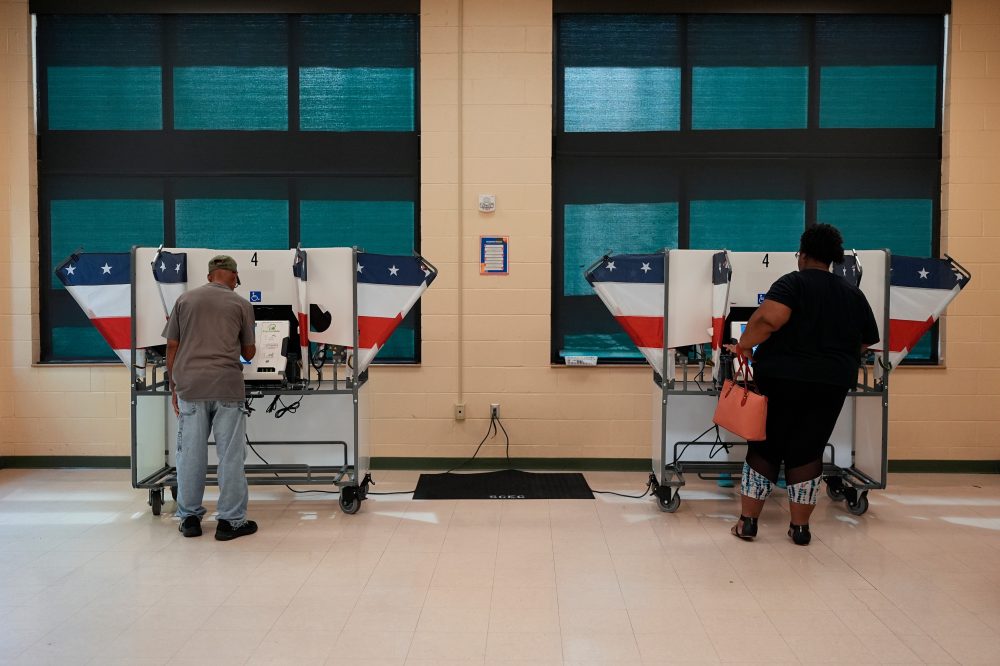
NEW YORK (AP) — In a Michigan swing district just north of Detroit, Democratic congressional candidate Christina Hines said voters are far more worried about affording fuel, groceries and healthcare than about left-wing extremists gaining ground in her party.
“It costs me $73 to fill up our minivan right now,” she said. “This is just not acceptable for working families.”
Some 600 miles away, political extremism is exactly what Republican Rep. Mike Lawler wants to talk about in his New York battleground district. He said the Democratic Socialists of America “is going to be a big issue, in part because that’s the platform that Democrats are running on.”
A transition is underway over these final days of summer as Democrats and Republicans push past internal fights over the direction of their parties and begin a two-month sprint to the general election. As they turn to the fall, a rigid split screen has emerged featuring fundamentally different campaign messages to win over voters. Which version they choose will decide whether Republican President Donald Trump and his party maintain full control of Washington for the next two years.
Specifically, Democrats are working to refocus on the economy, which voters say is their top concern as the cost of everyday goods remains high, even though inflation has fallen from the peak of Democratic President Joe Biden’s term. Republicans, unwilling or unable to challenge Trump’s policies, are fighting to keep the focus on Democrats’ lurch to the left, warning nonstop about socialism or even communism.
Republican strategist David Urban, a Trump ally, acknowledged that the message “has limits.”
“That’s not going to work everywhere,” he said. Meanwhile, he described the war in Iran and the related economic fallout as “a mess.”
“Right now I think people see the war as a drag on the economy and therefore they don’t like it,” Urban said, warning that the road ahead for the Republican Party may be painful. “Do I have a rosy scenario where I think Republicans roll strong and keep the House and everything? I’m not naive enough to think that’s a likely scenario.”
The Republican Party is struggling to settle on a message to address voters’ economic concerns.
The word “gasoline” is mentioned only one time across more than a dozen separate talking points released by the Republican National Committee this month, according to documents reviewed by The Associated Press. That is as the average price of gasoline was $4.18 last week — the fifth consecutive week that national gas prices exceeded $4.
While largely ignoring the issue, the talking points encourage Republicans to blame high costs generally on Biden.
“President Trump is fixing what Biden broke,” they say.
Meanwhile, the word “Democrat” is cited 73 times in this month’s RNC talking points.
Vice President JD Vance did not address gas prices when he visited Ohio last week, touching on affordability in general only briefly.
“We got a lot of work to do, but we’re finally seeing that American dream of homeownership become accessible again to our young people,” he said.
Vance also ignored the Trump administration’s war in Iran, which has now been going on for six months and has a direct impact on the rising cost of gas. He was eager to attack the rise of Democratic socialists, however.
“If these radicals take control of Congress, they’re going to pass the craziest agenda America has ever seen,” the vice president said.
Some Democratic officials worry that the rise of democratic socialists within the party presents a political problem for candidates in swing districts.
At least eight DSA members or DSA-backed candidates secured Democratic nominations for Congress this primary season. That includes seven for the House, in addition to Democratic Senate nominee Angie Nixon in Florida. There are no DSA-affiliated nominees for governor after Wisconsin’s Francesca Hong lost her primary bid this month.
While such candidates represent only a fraction of the 257 seats Democrats currently hold in Washington, Democrats know they cannot ignore the issue altogether.
In an interview, Michigan Democrat Hines refused to endorse two DSA-affiliated House candidates in her state or Michigan’s Democratic Senate nominee, Abdul El-Sayed. El-Sayed is not affiliated with the Democratic Socialists of America, although he is a vocal ally of Sen. Bernie Sanders, a Vermont independent who is a progressive champion.
Without naming them, Hines condemned those in her party whom she does not view as sufficiently patriotic.
“I love my country,” she said. “It drives me crazy when some members of my party, particularly on the far left, don’t act like that.”
The Democratic Socialists of America are still far from a household name for most voters.
Only about 2 in 10 U.S. adults had a favorable view of the DSA, according to a CNN/SSRS poll conducted in July, while about one-third had an unfavorable opinion and the rest have not heard of the organization or do not have an opinion. About 7 in 10 Democrats or people who lean toward the Democratic Party said they would feel “enthusiastic” or “okay” about their party nominating a candidate who describes themselves as a democratic socialist.
Polling consistently shows that voters are far more concerned about costs and the economy.
A Washington Post/Ipsos poll conducted in July found that most registered voters, about 6 in 10, mentioned something related to the economy or high prices when they were asked to share the most important factors for their midterm vote in their own words. About 3 in 10 mentioned immigration.
Very few mentioned anti-communism or socialism as a top factor for their vote, although cultural issues have been an effective wedge for Republicans in recent contests.
Still, Trump’s weak standing represents another hurdle for Republicans. Only about one-third of U.S. adults approve of how the Republican is handling the presidency, according to Associated Press polling, down slightly from 37% in June.
Lawler said he would campaign with Trump again if the president returned to his district this fall, but the congressman also sought to create some distance from Trump.
“If he comes back that’s fine, but ultimately this race is going to be decided by my record and my vision,” he said. “It’s going to be an interesting fight to the finish.”
Brought to you by www.srnnews.com
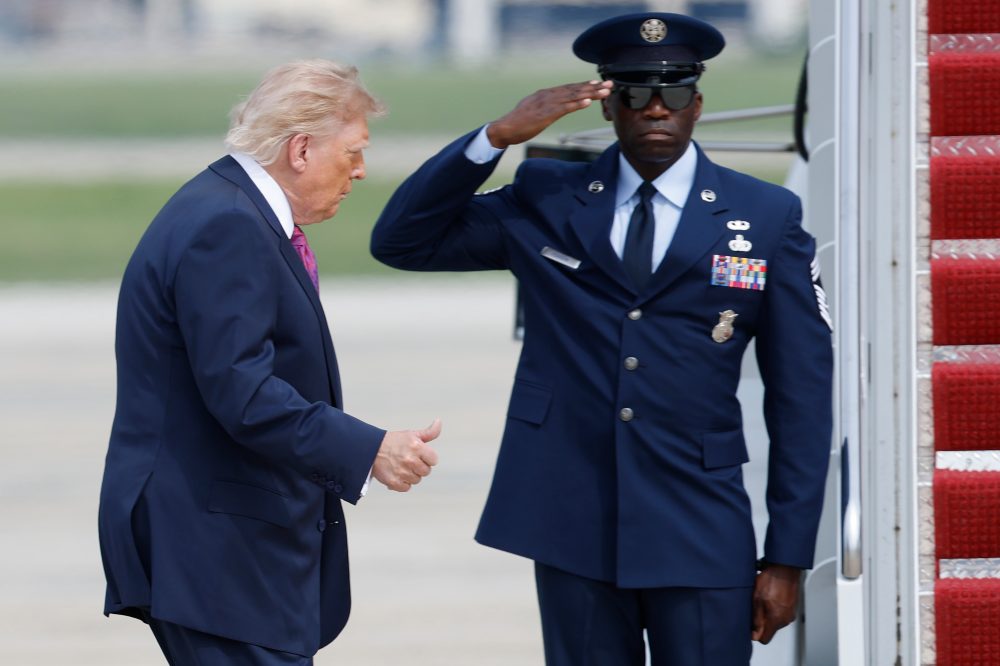 The Latest: Iran war reaches its six-month mark as Trump tries increasing economic pressure
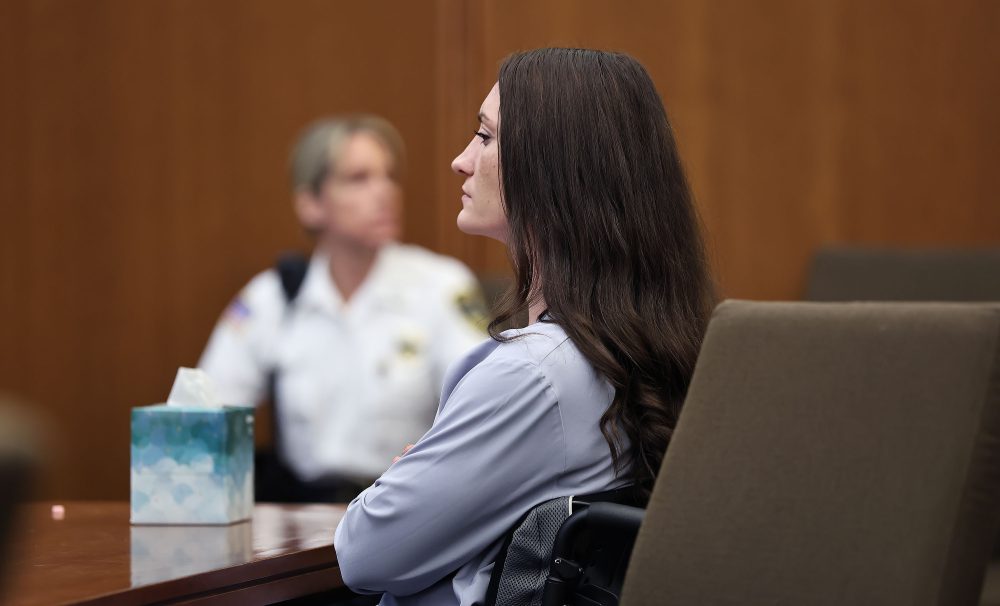 Jurors to resume deliberations in the Lindsay Clancy murder trial
 Washington chemical tank was called unfit for service before deadly failure, investigators find
 Eswatini receives 2 more US deportees under a controversial third-country deal