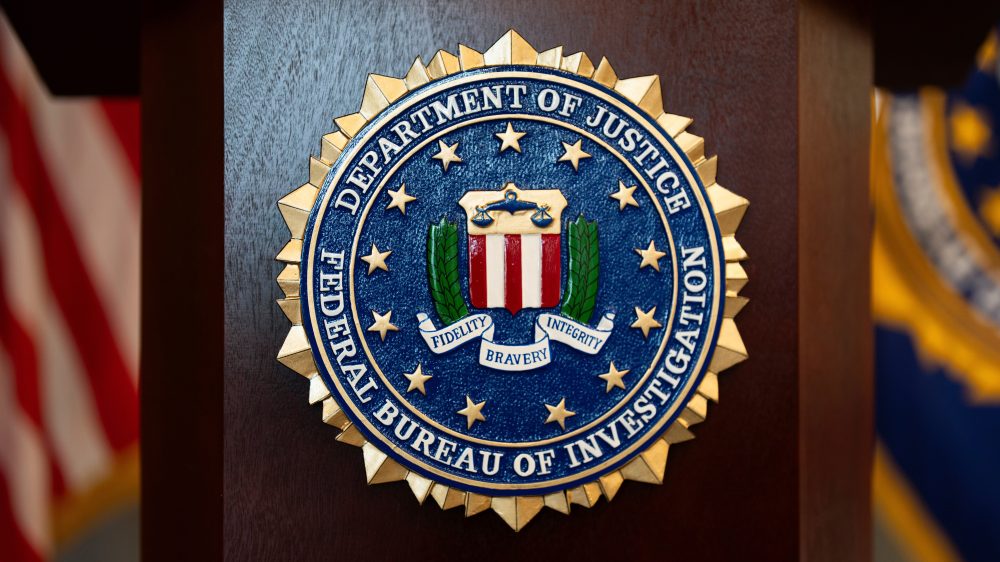
WASHINGTON (AP) — The FBI is dropping a categorical hiring ban on applicants who have had sexual encounters with prostitutes and will instead consider in a more holistic manner at least some candidates who have engaged in the practice in the past, according to people familiar with the matter.
The move away from an automatic disqualification falls along a continuum of evolving recruitment standards within federal law enforcement and at the buttoned-up bureau, which several years ago relaxed its approach to candidates’ past marijuana use and has drawn more recent concern among some current and former agents about a perceived loosening of recruitment requirements as it seeks to replenish its ranks.
The bureau still intends to dismiss applicants who are revealed during the vetting process to have engaged in prostitution within the last 10 years, three or more times overall or while in a position of trust such as public safety, according to guidance issued this past spring and described by a person familiar with the matter who was not authorized to discuss internal decision-making and spoke on condition of anonymity. For others, it will allow for consideration of the context of the conduct rather than treat it as grounds for an automatic rejection from the FBI’s hiring process.
The practical impact is not immediately clear since many who have engaged in prostitution may still be either immediately disqualified or weeded out upon further scrutiny from FBI polygraphers and security officials.
The FBI said the change was meant to account for the fact that some otherwise suitable candidates, including service members, may have engaged in the practice in places where it is legal and to accommodate applicants who themselves may have been victims of sexual abuse.
“It is false to suggest criminal behavior like this is no longer disqualifying at the FBI. Any applicant who has engaged in criminal sexual acts like those referenced would of course not be eligible for employment, and it is ridiculous to suggest otherwise,” the FBI said in a statement that described the background check process as “wide-ranging and extensive.”
“The FBI has and always will maintain some of the highest suitability standards for its applicants and employees in the US Government,” the statement added.
Even so, the shift is being made at a time when current and former officials worry that the FBI, and the Justice Department more generally, have eased recruitment requirements while facing a mass personnel exodus brought on by retirements, voluntary resignations and firings. The bureau, for instance, has taken steps to make it easier for its own professional staff to become agents and has offered truncated a training academy for applicants from other federal law enforcement agencies.
“If they’re moving the bar for sexual encounters to include prostitution, what is that saying about the applicant pool? They’re trying to bring in more people, which to me indicates that the applicant pool is extremely shallow right now,” said Daniel Brunner, a retired FBI agent who spent two decades in the bureau.
In 2015, then-Attorney General Eric Holder issued a memo reiterating that all Justice Department employees were prohibited from soliciting or accepting prostitution, including in places where it was legal. But both before and since that directive, the FBI and other federal law enforcement agencies have confronted periodic episodes in which agents serving abroad have been accused of sexual encounters with prostitutes.
As recently as last year, for instance, the Justice Department inspector general substantiated allegations that a supervisory special agent solicited and used prostitutes on multiple occasions while overseas and used a bureau-issued cellphone for the transactions.
Chris Piehota, a retired top FBI executive, said he would be more troubled if the bureau were to loosen its standards for current employees who require periodic renewals of their security clearances. But he said he could understand the FBI leaning “toward leniency” for actions taken as a teenager or college student.
“I don’t think you get a better or worse candidate from something you did in your college years,” Piehota said. “That’s why they have the screening process, that’s why they have the vetting process. And the people who do the recruiting and hiring, they look at all those things.”
Applicants to the FBI undergo a multi-step application and vetting process that includes, among other things, a background check, a detailed questionnaire, credit checks, interviews with neighbors and colleagues and a polygraph test. The comprehensive regimen is meant to uncover any prior criminal conduct in an applicant’s past as well as embarrassing personal information that could make an employee vulnerable to blackmail.
Felony convictions, domestic violence convictions, failure of a urinalysis and the bureau’s drug policies are among factors treated as automatic disqualifiers.
Though the new guidance will allow for a broader and more contextual evaluation of applicants who disclose past experience with prostitution during their polygraph admission, such an admission has historically been typically regarded as a “death knell” for potential employees at agencies including the FBI, CIA and NSA, said Daniel Meyer, a Washington lawyer who specializes in the background check and the security clearance process.
Brought to you by www.srnnews.com
 Seneca Nation calls for reversal of Trump’s ‘Lake America’ executive order
 Measles deaths reported in Pennsylvania spark fight among politicians and health officials
 Trump says US has entered deal with Venezuela to take control of 65 billion barrels of oil reserves
 Trump says he will observe the 25th anniversary of 9/11 at the Pentagon