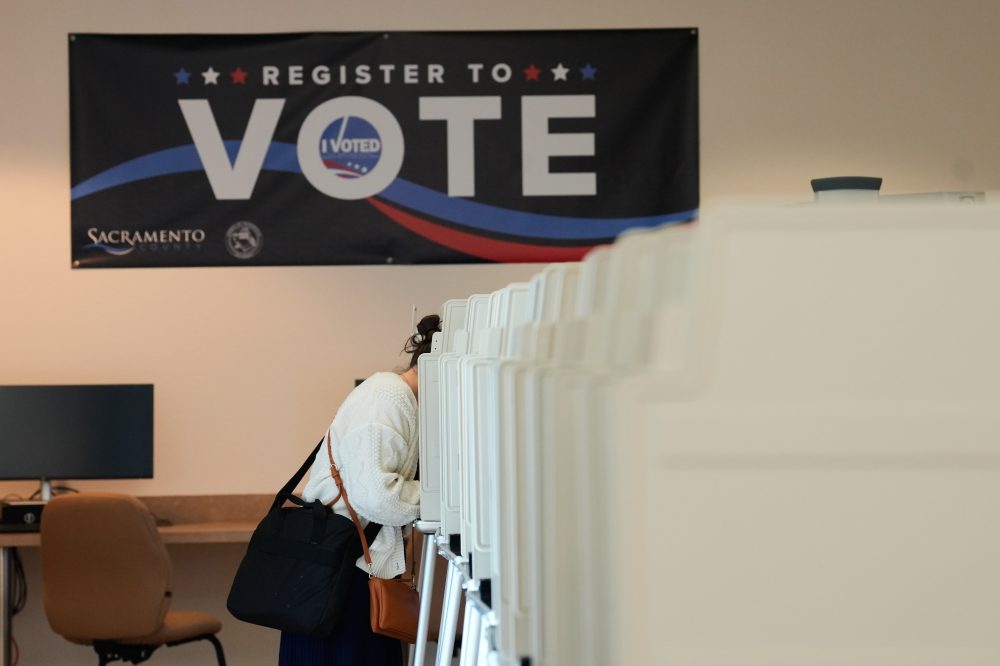
Michael Stansfield, a 50-year-old tech support worker, decided to run as a Republican in his congressional district in suburban Sacramento, California, to make a statement to the party’s religious base.
He wanted to emphasize the need for peace in the Middle East and Islam’s compatibility with Christianity.
The ex-seminary student and father of two took out a loan against his home to pay for the $17,000 cost of filing the various forms to run for the seat. He received no other donations. He had no visible campaign and no staff.
Yet on Wednesday, the day after California’s primary, Stansfield had done well enough with voters to be holding on to second place, potentially locking Democrats out of the November general election in a U.S. House race that the party had put at the center of its national redistricting strategy.
“I wanted to show Christianity and Judaism a God from the Bible who loves Muslims,” Stansfield said in a telephone interview before rushing to his son’s sixth-grade graduation. “I wasn’t necessarily going after it to win a race.”
It is too soon to know which two candidates will advance in the 6th Congressional District, but the early results are already serving as a cautionary tale for Democrats and about the assumptions both major parties make when they gerrymander political boundaries to expand their power. California Democrats won voter approval last year to redraw the state’s congressional map as a way to counter Republican moves elsewhere before this year’s midterm elections. Democrats had planned on gaining five seats in the state, and one was the 6th District, which stretches from Sacramento into Republican-leaning suburbs to the east.
Democrats assumed that one of the top two finishers would be a member of their party. But Stansfield’s showing is evidence that the best-laid partisan mapmaking plans can go awry when they run into the unpredictable reality of campaign politics.
Kevin Kiley is the congressman whose conservative district was split in two and fused with a more Democratic area. Kiley, who left the Republican Party and filed to run as an independent and has nabbed the largest share of votes so far. That left Stansfield the only candidate on the ballot with an “R” next to his name, helping him land, for now, above the nine Democrats who split the majority of the votes recorded at this point.
Both Democratic and Republican strategists expect heavily Democratic-leaning mail ballots that comprise the tens of thousands and have yet to be counted to break for the party’s candidates, making it likely one of them supplants Stansfield in the final tally.
“I would think there’d be an advantage to Democrats,” said Rob Stutzman, a GOP consultant in Sacramento.
The state allows mail ballots to count if they are postmarked by Election Day and received up to seven days afterward. Officials also must contact each mail voter whose signature does not match the one on file and offer that voter a chance of proving identity in other ways. Close races in the state often take weeks to resolve.
Stansfield, who said he is married to a Muslim woman from the Middle East and was kicked out of seminary for arguing that Palestinians have a biblical right to the Holy Land, has made a quixotic run for Congress before. In 2018, he sought an Oregon congressional seat as a Democrat, a party he joined after the Iraq War.
He ended up losing badly in that primary, receiving about 4% of the vote in a district that included part of Portland, but a candidate survey he completed at the time offered more insight into his views. In a response to a question about his top priorities if elected, Stansfield said, among other things, that he was “against ignorance in all its forms.”
“If we are ever going to call ourselves a tolerant society we need to learn to embrace the diversity of our world with love,” he wrote.
In the questionnaire, he described himself as Jewish and said one of the public policies he was most passionate about was supplying water and medical equipment in Gaza.
Stansfield said he left the Democratic Party after the Israel-Hamas war broke out, during Democrat Joe Biden’s presidency, and over what he described as the “genocide” in Gaza. After moving to California, he decided to run in the congressional district before last year’s redrawing and when it was reliably conservative because he wanted his message to reach as many Republican voters as possible.
“I wanted to go to the Republican Party and say ‘Guys, I love you, but you’ve messed up,’” Stansfield said.
He had no idea he would end up in such a potentially pivotal role.
Democrats had fretted about being locked out of one of the five seats they expected to gain in their redistricting bid, but their concern was centered on a San Diego-area district where they had a similarly broad field of candidates. One of them, San Diego City Councilwoman Marni von Wilpert, surged ahead to secure a spot in the general election and will face Republican Jim Desmond, a San Diego County Supervisor, in November.
In another redrawn congressional district, Republican Rep. Ken Calvert secured a slot on the November ballot after a bruising campaign against fellow Republican Rep. Young Kim. The second slot in that race was still up for grabs on Wednesday.
Three veteran Democratic members of Congress who were challenged by younger upstarts from within their party seemed to have avoided upsets.
Reps. Brad Sherman and Mike Thompson emerged as the top voter-getters in their respective races and will move on to the general election. Rep. Doris Matsui was leading the tally Wednesday in her Sacramento district, although it remained uncertain which two candidates would move on to the general election.
____
Associated Press writer Claire Rush in Portland, Oregon, contributed to this report.
Brought to you by www.srnnews.com
 SpaceX’s IPO is set to be the biggest ever and could make Elon Musk a trillionaire
 District attorney challenges new Georgia law that removes party labels in Atlanta-area elections
 Chicago US attorney defends his meddling with grand jury process over immigration protest case
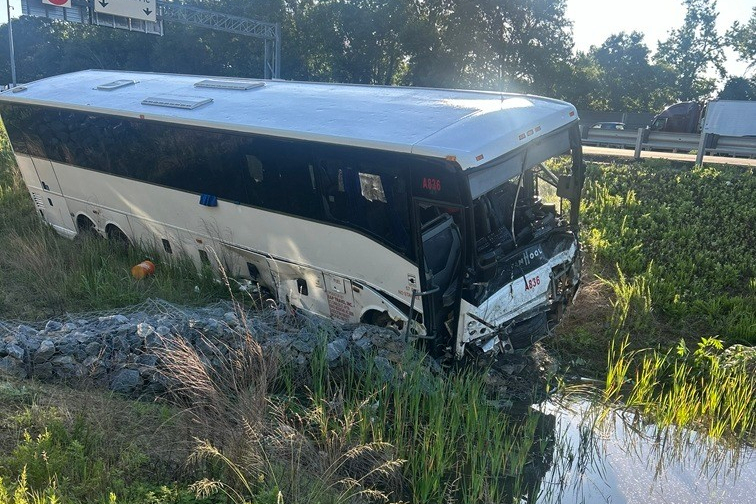 Fatal Virginia crash raises questions about bus safety and the records of the driver and company