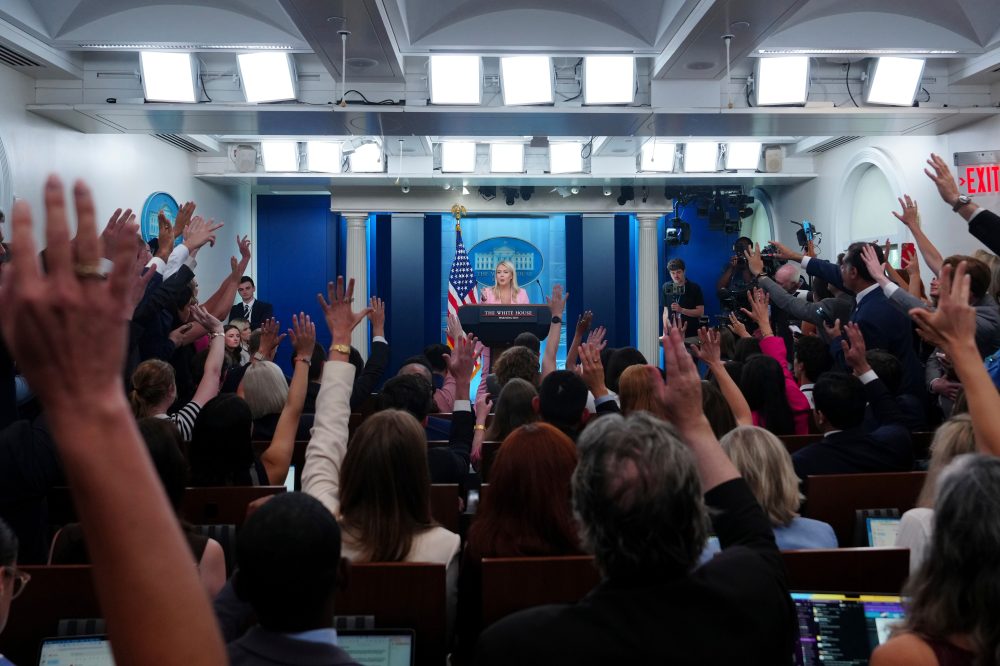
WASHINGTON (AP) — The Trump administration announced Thursday it will drastically shorten visas for foreign journalists in the U.S. to 240 days, down from years, and cut those for Chinese journalists to only 90 days, raising concerns over press freedom in the United States and retaliation against American journalists overseas.
The final rule announced by the Department of Homeland Security will do away with the “duration of status” system, which allows foreign journalists to stay and work in the United States as long as they meet eligibility requirements. That will be replaced with a fixed period of time, though the visas may be extended.
The agency says it’s necessary to better vet the visa holders. But advocates for foreign journalists oppose the change, saying the drastically shorter stay would severely restrict their ability to live and work in the States.
The even shorter visa rule for Chinese journalists, which does not include those from the “special administrative regions” of Hong Kong or Macau, is particularly harsh and could add tensions to the already fraught relations between Washington and Beijing, despite stated intents by both leaders to stabilize ties.
The decision comes at a time when President Donald Trump is targeting news organizations with multiple threats and legal actions at home and his administration is tightening immigration policies, though foreign journalists are not considered immigrants.
The rule will take effect 60 days after it’s published in the Federal Register. Congress can reject a rule, but it’s extremely rare.
“We are outraged that the Trump administration has cruelly limited the duration of visas for foreign journalists from a period of up to five years to a fixed eight months,” the advocacy group Reporters with Borders said in a statement. “This change destroys international journalists’ ability to report from the U.S. and makes it extremely difficult for international outlets to operate here at all.”
“The relentless cycle of visa renewals restricts press freedom, as journalists will feel compelled to avoid drawing the administration’s ire, lest their applications be rejected,” it said.
In proposing the change in August 2025, the federal agency said the rising number of foreign journalists in the U.S. “poses a challenge” to its ability “to monitor and oversee these nonimmigrants while they are in the United States.” Mentioned as well: students and foreign visitors, who also will see their previous rule of “duration of status” replaced with fixed periods by the same decision.
By admitting them into the country for a fixed period, the Department of Homeland Security said it could better vet the visa holders to ensure their activities are permissible. The visas can be extended.
The first Trump administration sought to change the visa rules in 2020, but the proposal was withdrawn in 2021 when President Joe Biden took office.
But the White House then tightened visas for Chinese journalists to only 90 days, in response to the treatment of U.S. journalists in China, including the expulsion of three Wall Street Journal reporters, as tensions flared up during the COVID-19 pandemic between the two countries. The Biden administration later relaxed the rule, allowing stays to increase to up to a year.
When the Trump administration proposed to revive the 90-day rule last year, the Chinese Foreign Ministry said it opposed “the U.S.’s discriminatory move targeting a specific country.”
The Chinese Embassy in Washington did not immediately respond to a request for comment about the latest decision.
___
AP journalist Fu Ting in Washington contributed to the report.
Brought to you by www.srnnews.com
 AP Exclusive: ICE officer in Maine shooting has history of violent behavior, family and records say
 Family to hold a vigil for man fatally shot by immigration officer in Houston
 Hegseth again backs a low-altitude military flyover as maneuvers draw scrutiny
 National Guard deployment to DC will last through Trump’s term