
By Andrew Hay
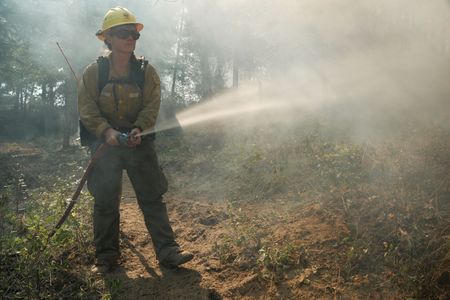
Aug 13 (Reuters) – U.S. firefighting personnel are being overrun by wildfires at the highest rate in two decades, leading to six deaths and dozens of injuries this year, federal data showed, a grim count during a record-setting fire season in the United States.
There have been 12 entrapments so far in 2026, according to the Wildland Fire Lessons Learned Center, a federal agency, already more than the full-year average of nine in the last 20 years, and the highest year-to-date number since 2006.
Wildfire entrapments are life-threatening situations in which fire behavior compromises the escape routes or safety zones of firefighting personnel.
The sheer number and scale of wildfires this year, which experts attribute in part to climate change caused by burning fossil fuels, mean increased risk for firefighting personnel.
Seven active and retired firefighters told Reuters they were also concerned firefighters were taking unusual risks because of an all-out approach to stopping fires mandated by the Trump administration. They also questioned the impact of U.S. Forest Service staffing cuts as part of broader federal downsizing.
A spokesperson for the U.S. Forest Service, part of the Department of Agriculture that has historically taken the lead on fighting wildfires, said firefighter safety was the agency’s highest priority and investigations were ongoing into the incidents of firefighters being trapped by flames.
The USFS did not immediately respond to requests for comment on the impact of all-out fire suppression tactics and staffing cuts.
The newly created U.S. Wildland Fire Service, which aims to consolidate federal firefighting forces under the Interior Department, said it was reviewing the entrapments to improve firefighter safety.
INTENSE FIRE SEASON
After a historically low winter snowpack, record temperatures and decades of drought in the U.S. West, the country is facing an intense fire season.
The National Interagency Fire Center said 6.4 million acres (about 2.6 million hectares) have burned to date — the highest August 12 level on record and about five times the area burned in Europe this year. U.S. firefighters have had to respond to over 46,500 wildfires, the highest number in over a decade.
That means they face danger for longer periods of time in drier, more extreme fire conditions, which heightens risks, said U.S. Forest Service fire specialist Wesley Page, who has researched entrapments.
Entrapment deaths normally account for around four of the average 17 fatalities each year of wildland firefighting personnel in the United States, according to National Interagency Fire Center and USFS data. So far in 2026, six of the 13 people who died fighting fires were entrapped, based on Wildland Fire Lessons Learned Center data.
Around a quarter of 2026 entrapments involved helicopter-borne firefighters, or so-called helitack crews, often dropped near blazes to create fire breaks. Four helitack firefighters died and one was severely burned after a June 27 entrapment in Colorado’s Knowles Fire, the most deadly entrapment in 13 years.
“The fact that three incidents may involve Helitack crews does not necessarily mean Helitack operations have become more dangerous,” the U.S. Wildland Fire Service said in a statement.
Other entrapments involved Washington fire crews who abandoned vehicles after they caught fire, and bulldozer drivers overrun by flames in Washington and Oregon as they scraped fire breaks.
Current and former firefighters said they were concerned fire personnel were taking more risks than usual after officials in President Donald Trump’s administration stressed putting out all blazes immediately, an approach known as full suppression.
Agriculture Secretary Brooke Rollins, responsible for the Forest Service, said in an April letter to staff that her top priority was to “accelerate initial attack and use a full suppression strategy.”
Riva Duncan, president of firefighter advocacy group Grassroots Wildland Firefighters, said that was not always appropriate, given conditions on the ground were “insanely” volatile with extreme dryness and strong winds.
“We can’t put people in front of some of these fires, we just can’t,” said Duncan, who worked as a fire duty officer on blazes in the U.S. Southwest this year.
U.S. Wildland Fire Service Director Brian Fennessy told the Hotshot Wake Up podcast earlier this month that he was confused by 2025 policies encouraging firefighters to be more aggressive on initial attack, the first response to a wildfire, adding their procedures were already aggressive.
“Aggressive does not mean taking extra or extraordinary risk of harming your people,” he said.
DEATHS IN COLORADO
U.S. Forest Service fire specialist Page, who works in Colorado, said the agency’s emphasis on full suppression may have made firefighters on the the Knowles Fire act more aggressively than they would normally.
Page, assigned to firefighting duties in the same area around two days after the entrapment, said a blaze like the Knowles Fire would die by itself once the wind dropped due to the area’s rough terrain and relatively sparse vegetation.
Scott Fitzwilliams, former supervisor of Colorado’s White River National Forest, said full suppression marked a return to failed 20th-century policies that led to the build-up of forest fuel now driving the country’s wildfire crisis.
He said over 6,000 USFS job cuts in 2025 during federal downsizing had wiped out the support structure for the agency’s 11,300 firefighters and caused higher fatigue.
“The pressure to put out all fires when they are small puts firefighters at risk,” said Fitzwilliams, who retired last year and knew Emily Barker, one of the Rifle Helitack crew members who died in the Knowles Fire and worked in his forest area.
(Reporting by Andrew Hay in New Mexico; editing by Donna Bryson and Nia Williams)
Brought to you by www.srnnews.com
 Reflecting Pool’s botched repairs threaten to tarnish the National Park Service’s reputation
 As Abdul El-Sayed breaks a barrier, anti-Muslim vitriol surges on multiple fronts
 Tropical Storm Hernan forms in the Pacific while a different weather system could soak Hawaii
 Higher-income families more likely to enroll kids in organized sports, an AP-Ipsos poll finds