
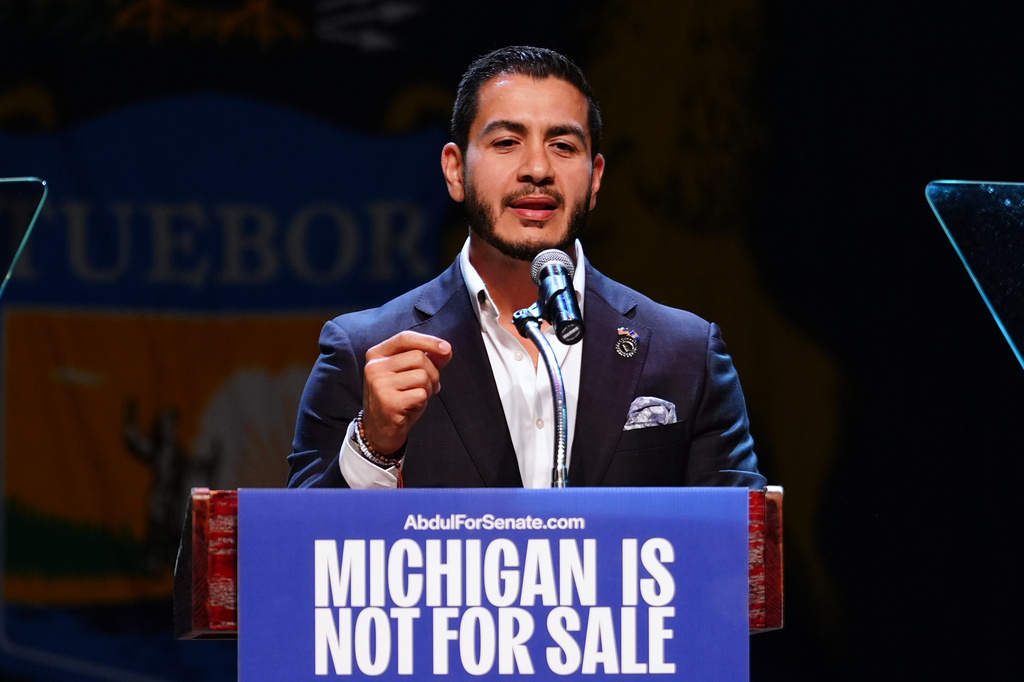
(SRN NEWS) – A debate is heating up in Michigan—where public ownership proposals and healthcare policy are colliding in an argument about the proper role of government in everyday life.
At the center of the discussion is Democratic Socialist supported candidate Abdul El-Sayed, who is facing sharp criticism after comments calling for greater public ownership and public control of certain sectors of the economy. Critics say those remarks reflect government overreach—and signal a troubling shift away from private enterprise.
They argue that when government expands its footprint into industries that should be guided by competition, consumer choice, and private investment, the results can be slower growth and fewer options for families. Opponents warn that large-scale government control can discourage investment by making business planning less predictable and by replacing market decision-making with bureaucratic decision-making.
El-Sayed, meanwhile, argues that public ownership and expanded public control are necessary to address “major societal risks.” In particular, he has advocated for a Medicare for All style healthcare system. His supporters say the goal is straightforward: expand access to care and give the public a stronger voice over essential services.
But critics—including those raising concerns about Medicare for All—say the promises come with tradeoffs Michigan residents should not ignore. They point to the likelihood of substantial tax increases to fund expanded coverage. Opponents argue that no matter how the plan is packaged, someone has to pay—and that taxpayers could bear the cost through higher levies.
Supporters claim that a single-payer model could reduce healthcare spending by replacing private insurance premiums with tax-funded coverage. But real world examples dispute their claims.
The central question remains: can Washington-style central planning deliver better outcomes than a system shaped by consumer demand and private-sector innovation?
Opponents also cite historical examples of government-run economies, arguing that they struggled with inefficiency and shortages. While the details of any modern proposal differ, critics say the underlying issue is consistent—when government becomes the main provider and controller, incentives change, and performance can suffer.
Healthcare, of course, is not an abstract policy debate. It’s about costs, access, and reliability—issues Michigan voters care about deeply. The controversy over El-Sayed’s remarks is becoming a focal point of the broader ideological divide in American politics: supporters of larger government involvement say it’s the best path to solve social challenges; critics warn it risks expanding state control in ways that undermine economic opportunity and leads to unwanted government control.
Political analysts say this fight will remain a central campaign theme as elections approach—because voters are weighing healthcare affordability alongside fears about economic growth, investment, and the future direction of government policy.
For many Michigan residents, the decision is ultimately about balance: how much power government should have, and how much room should be left for private-sector participation and individual choice.
Brought to you by www.srnnews.com
 AP Exclusive: US military family schools put new emphasis on Western civilization and Christianity
 Online forum Reddit will join the influential and closely tracked S&P 500 index
 A timeline of Luigi Mangione’s criminal cases in the killing of UnitedHealthcare’s CEO
 The Media Line: UN Envoy Warns Yemen Faces Greatest Risk of War Since 2022