
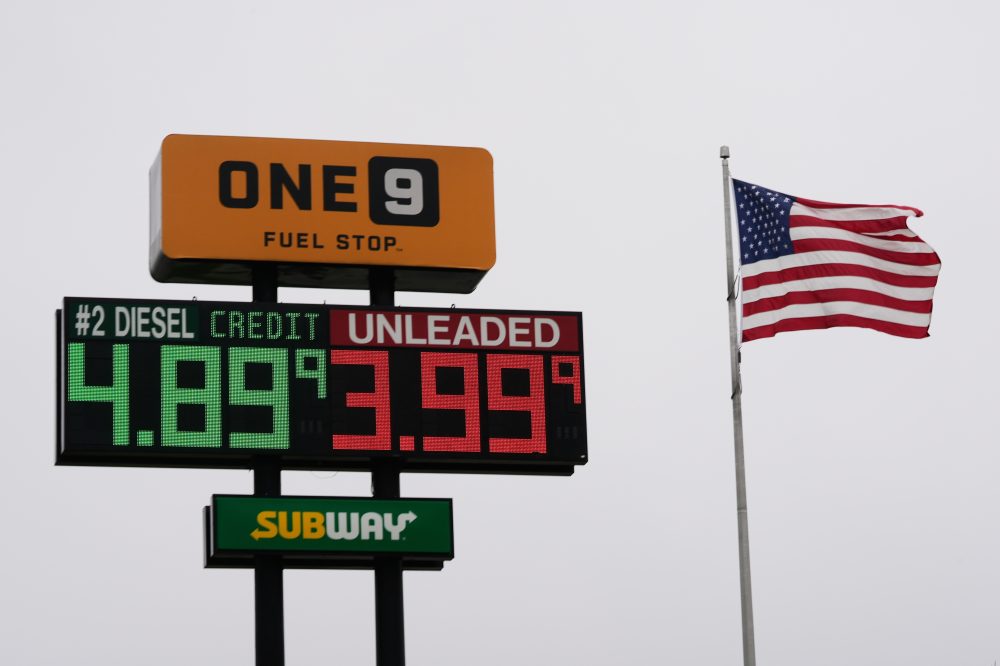
NEW YORK (AP) — High oil and gasoline prices and energy supply problems won’t be solved overnight, despite an agreement to end the Iran war and open the Strait of Hormuz announced Sunday.
It will likely take months before energy companies can resume operations to the point of meeting the world’s demand, according to energy experts. The slow pace of the process of shipping and refining crude oil, and doubts about the security of traveling through the strait mean the effect won’t be seen immediately, they said.
Ships loaded with crude oil have been stranded in the Persian Gulf for more than three months, unable to safely travel through the waterway, through which about a fifth of the world’s oil and gasoline supplies typically traveled before the war began.
“It’s going to take time for people to feel comfortable and for insurance to be in place … particularly to get people on the ground to restart some of these assets,” said Daniel Evans, global head of fuels and refining research at S&P Global Energy.
First, ships that have been stranded will have to exit the strait, and then new tankers will have to come in to be loaded, Evans said.
“To bring a ship in, you need to be confident that you’ve got a big enough window of safety to bring it in, load it and move it out,” he added.
Oil tankers also move slowly, he explained. It takes months to travel from the strait to distant countries, deliver the crude oil to a refinery for processing and then arrive at its final destination.
In addition, some producers in the Middle East paused extracting oil from the ground, known as a shut-in, when they ran out of storage space. Restarting those operations can be a slow process.
Countries such as Saudi Arabia and United Arab Emirates, where there are alternate pipelines or routes besides the Strait of Hormuz to deliver oil, may be among the quickest to resume production, said Alan Gelder, senior vice president of refining, chemicals and oil markets at Wood Mackenzie, an analytics firm.
“But places like Iraq could be much more challenged because they’ve had a much bigger shut-in, their fields are more difficult … it may well take about a year before they get back,” he said.
Investment in the energy system, which can take years to see the results, ground to a halt after the strait’s closure, Gelder said. So it will take time for this capital to restart.
Countries that shut in oil production won’t want to restart until they know there is a stable, durable strait, and that a ceasefire will last more than 30 or 60 days, said Daniel Sternoff, senior fellow at the Center on Global Energy Policy at Columbia University.
“We don’t know what open means or what the speed of evacuation of trapped material is going to be,” he said.
Brought to you by www.srnnews.com