
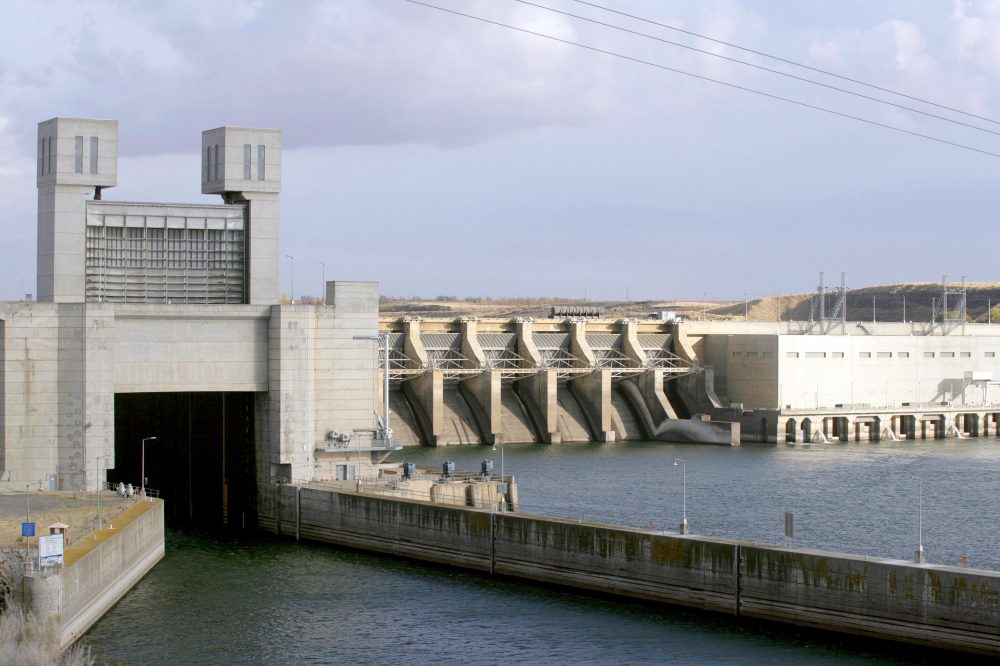
PORTLAND, Ore. (AP) — Lawyers for conservation groups, Native American tribes, and the states of Oregon and Washington are returning to court Friday to seek changes to dam operations on the Snake and Columbia Rivers, following the collapse of a landmark agreement with the federal government to help recover critically imperiled salmon runs.
President Donald Trump last year torpedoed the 2023 deal, in which the Biden administration had promised to spend $1 billion over a decade to help restore salmon while also boosting tribal clean energy projects. The White House called it “radical environmentalism” that could have resulted in the breaching of four controversial dams on the Snake River.
The plaintiffs argue that the way the government operates the dams violates the Endangered Species Act. They’re asking the court to order changes at eight large hydropower dams, including lowering reservoir water levels, which can help fish travel through them faster, and increasing spill, which can help juvenile fish pass over dams instead of through turbines.
In court filings, the federal government called the request a “sweeping scheme to wrest control” of the dams that would compromise the ability to operate them safely and efficiently. Any such court order could also raise rates for utility customers, the government said.
“We’re returning to court because the situation for the salmon and the steelhead in the Columbia River Basin is dire,” said Kristen Boyles, managing attorney with Earthjustice, a nonprofit law firm representing conservation, clean energy and fishing groups in the litigation. “There are populations that are on the brink of extinction, and this is a species which is the center of Northwest tribal life and identity.”
The lengthy legal battle was revived after Trump pulled the U.S. out of the Resilient Columbia Basin Agreement last June. The pact with Washington, Oregon and four Native American tribes had allowed for a pause in the litigation.
The plaintiffs, which include the state of Oregon and a coalition of conservation and fishing groups such as the National Wildlife Federation, filed the motion for a preliminary injunction, with Washington state, the Nez Perce Tribe and Yakama Nation supporting it as “friends of the court.” The U.S. District Court in Portland will hear the oral arguments.
The Columbia River Basin, spanning an area roughly the size of Texas, was once the world’s greatest salmon-producing river system, with at least 16 stocks of salmon and steelhead. Today, four are extinct and seven are endangered or threatened. Another iconic but endangered Northwest species, a population of killer whales, also depend on the salmon.
The construction of the first dams on the Columbia River, including the Grand Coulee and Bonneville in the 1930s, provided jobs during the Great Depression as well as hydropower and navigation. They made the town of Lewiston, Idaho, the most inland seaport on the West Coast, and many farmers continue to rely on barges to ship their crops.
Opponents of the proposed dam changes include the Inland Ports and Navigation Group, which said in a statement last year that increasing spill “can disproportionately hurt navigation, resulting in disruptions in the flow of commerce that has a highly destructive impact on our communities and economy.”
However, the dams are also a main culprit behind the decline of salmon, which regional tribes consider part of their cultural and spiritual identity.
The dams for which changes are being sought are the Ice Harbor, Lower Monumental, Little Goose and Lower Granite on the Snake River, and the Bonneville, The Dalles, John Day and McNary on the Columbia.
Brought to you by www.srnnews.com
 Russia and US discussed nuclear arms and agreed talks need to start soon, Kremlin says
 Fear among Minnesota’s Somali community compounds a public health woe: Low measles vaccination rates
 Bad Bunny look-alike contest in San Francisco draws hundreds of fans
 WANTED: Volunteers to host nuclear waste, forever