
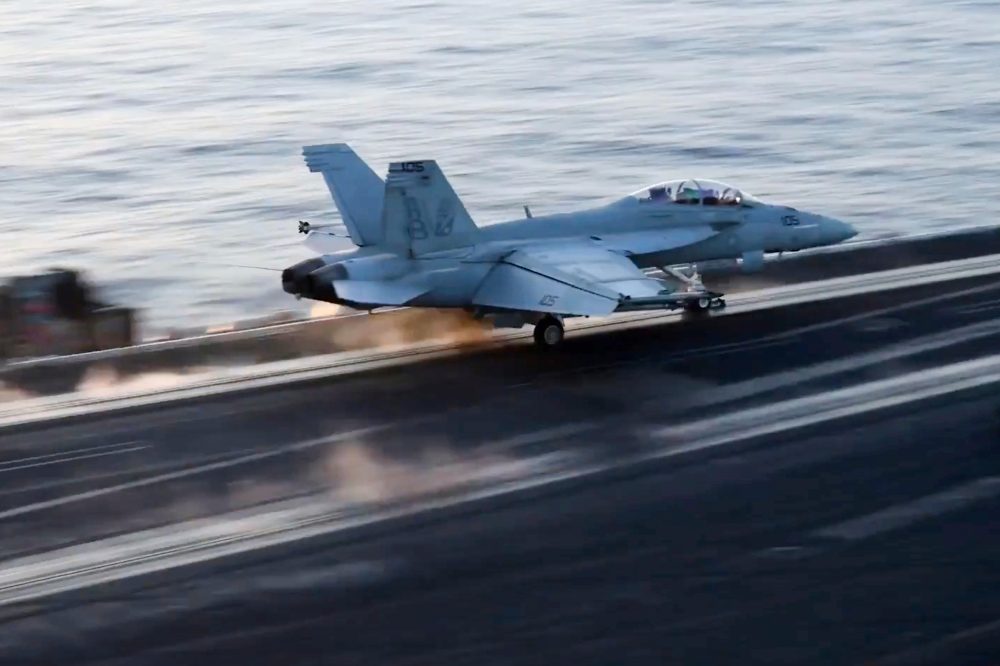
WASHINGTON (AP) — The Navy on Thursday released investigative reports into four mishaps that all involve the aircraft carrier USS Harry S. Truman while it was dispatched to counterattacks on shipping by Yemen’s Houthi rebels.
The four reports cover a friendly fire incident in December 2024 that saw the cruiser USS Gettysburg shoot at two fighter jets from the Truman, downing one, as well as the carrier’s collision with a merchant vessel and the loss of two more jets to mishaps earlier this year.
Taken together, the reports paint a picture of an aircraft carrier that was not only beset by regular missile attacks that stressed the crew but other operational demands that put pressure on top leaders.
Here’s a closer look at the findings for each of the mishaps:
The Truman conducted its first defensive strike against Houthi positions and aircraft on Dec. 22, 2024, and other ships in the strike group spent several hours defending themselves against Houthi-launched anti-ship cruise missiles and attack drones.
The USS Gettysburg, one of the ships in the strike group, mistook several F/A-18F fighter jets from the carrier for more Houthi missiles and fired at two of them. The heavily redacted report largely faulted the sailors in the Gettysburg’s combat information center for being poorly trained and overly relying on technology.
The troops from one jet ejected before the missile struck, while the ship stopped the second missile shortly before impact.
Months later, in February, sailors aboard the ship told investigators that they were feeling the strain of “a pressurized schedule and a culture of ‘just get it done.’”
As the ship prepared to head back to the Red Sea following a port visit, it had to sail through the highly trafficked waters just outside the Suez Canal. Running behind schedule, an officer who was navigating drove the massive aircraft carrier at a speed that it would have needed almost a mile and a half to come to a stop after halting the engines. Investigators later said the speed was unsafe.
As a merchant ship moved into a collision path with the carrier, the officer in charge did not take enough action to move out of danger, the report found, listing his actions as the top cause for the collision.
Investigators also faulted other more senior officers on the ship, including the commander and the ship’s navigator, for not fully realizing the risks of the maneuvers required of the transit.
Once the ship was back in the Red Sea, crew stress did not abate. Capt. Christopher Hill, told investigators that the crew had been conducting combat operations and “flying everyday with little exception” since March 15.
The report said the ship was experiencing “a myriad of drone and cruise missile attacks, numerous combat operations, additional mishaps, and deployment extensions,” which drove up stress and took time away from regular maintenance and upkeep of the ship and equipment.
Amid one attack in April, the ship’s bridge ordered a sharp turn to avoid an incoming Houthi missile, while sailors in the carrier’s hangers were moving aircraft around ahead of the next day’s operations.
Procedures called for the hangar doors to be shut, but a F/A-18F fighter jet was in the way.
As the sailors began moving the jet, officers began a set of sharp turns but failed to let sailors in the hangar know. As the Truman began to tilt under the turn, the jet began to slip.
The sailors moving the jet later told investigators that as the plane slipped off the deck and into the ocean, its landing wheels were freely rolling despite the sailor inside the plane “actively attempting to brake.”
Contributing was the fact that the deck was far dirtier and more slippery than normal partly, because “high operational tempo of combat flight operations impeded the regular 10-day scrubs” that were needed.
Ultimately, the investigation said that with the jet underwater, it was impossible to know for sure why its brakes didn’t engage but they recommend stripping the sailor responsible for applying the brakes of his qualifications because that service member “demonstrated deficiencies in required knowledge and system understanding.”
In the final mishap, another F/A-18F fighter jet went overboard while trying to land on the Truman in May 2025. The investigation found that a cable designed to bring the 50,000-pound jet to a halt in just a few hundred feet snapped mid-landing.
The subsequent investigation revealed that poor maintenance on the equipment meant that the system of cables that connected the wires on the flight deck to the braking hydraulics below deck was missing a part responsible for keeping a massive connecting pin in place and immobile.
With that missing, the investigators found that the connecting pin slowly moved out of place over at least 50 landings until it finally failed and sheared off.
After reading the investigation, the commander of Truman’s strike group at the time, Rear Adm. Sean Bailey, said that not only was “this mishap was entirely preventable” but that “the hard reality is that multiple individuals at all levels of leadership were complicit” in allowing the maintenance of the arresting gear “to degrade to the level of abject failure.”
Investigators, however, also noted that “maintenance support personnel struggled to balance maintenance requirements with operational requirements” and that “multiple personnel identified operational tempo as one of the most significant challenges” for sailors tasked with maintaining the equipment.
Brought to you by www.srnnews.com
 Chinese dronemaker DJI urges US to complete security review
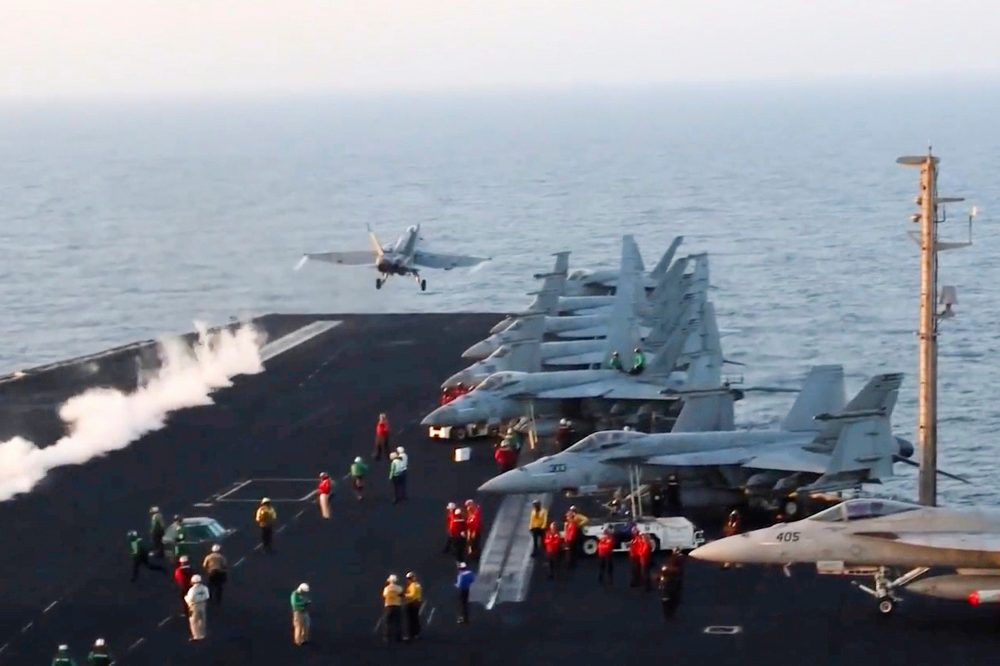 Stress of Houthi combat was a key factor in series of costly Navy mishaps, investigations show
 US health department unveils strategy to expand its adoption of AI technology
 Republican Rep. Darrell Issa to stay in California after flirting with US House run in Texas