
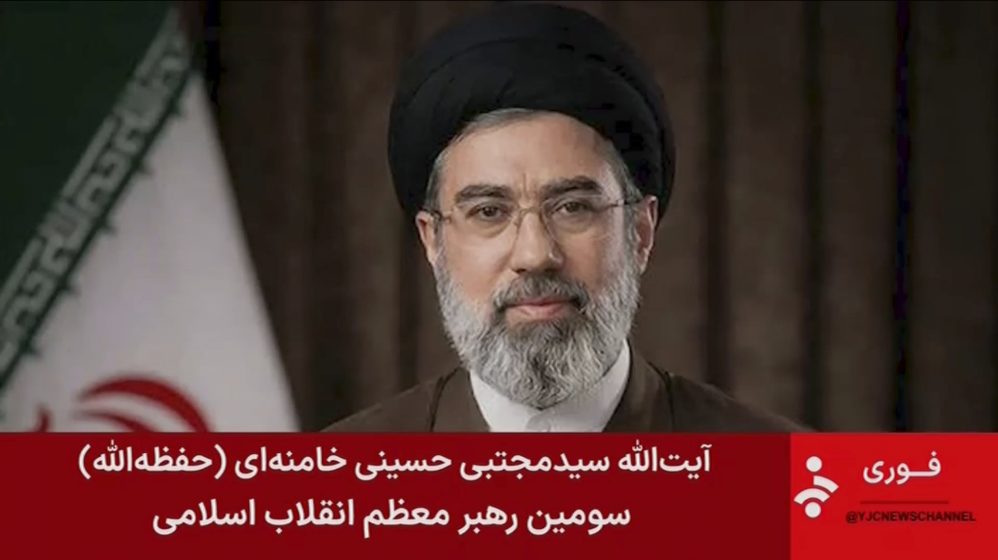
U.S. Defense Secretary Pete Hegseth said Tuesday will be the most intense day yet of U.S. strikes inside Iran as the Islamic Republic, its firepower diminished, vowed to fight on. Israeli Prime Minister Benjamin Netanyahu meanwhile said “we are breaking their bones” and said the war’s aim is a popular overthrow of Iran’s government.
U.S. President Donald Trump, for his part, has sent contradictory signals about how long the war could last, causing wild swings Monday in financial and fuel markets. The U.S. stock market and oil prices were holding relatively steady Tuesday.
Iranian Parliament Speaker Mohammad Bagher Qalibaf dismissed any suggestion Tehran has sought a ceasefire. Another top Iranian security official, Ali Larijani, appeared to threaten Trump himself, writing on X that “Iran doesn’t fear your empty threats. Even those bigger than you couldn’t eliminate Iran. Be careful not to get eliminated yourself.”
Here is the latest:
Iranians fleeing cities under attack seek refuge in the countryside
Terrified by explosions shaking their homes in Tehran and other cities, tens of thousands of Iranians have sought refuge in small, remote towns to wait out the massive bombardment by Israel and the United States.
Pouya Akhgari, 22, is holed up in a family house with aunts and cousins in a village in the mountainous countryside 200 kilometers (120 miles) from his home in the capital. Meanwhile his friends in Tehran tell him about the blasts all around them.
“It just feels so chaotic. I thought it’d be very short but it’s dragging on,” he told The Associated Press by a messaging app. ”If it goes on like this, we’ll run out of money.”
The U.N. refugee agency said that in the first two days of the war, about 100,000 people fled Tehran, a city of around 9.7 million. It said that the scale of displacement is likely much higher.
▶ Read more
An estimate the Pentagon sent to Congress does not appear to include other war-related expenses besides munitions, according to a person who spoke on condition of anonymity to discuss the private briefing.
The tally is higher than previous estimates by outside analysts, and the daily amount is expected to fluctuate. The war is currently in its 11th day.
The Trump administration has said it may seek supplemental war funds from Congress, but several lawmakers have insisted they would refuse to approve any more money for the Pentagon.
The annual Defense bill sent some $838 billion to the Pentagon earlier this year and the Defense Department was provided $150 billion in extra funds last year as part of Trump’s big tax breaks bill that became law.
Many Americans worry Trump’s recent military decisions have made the U.S. less safe, according to new polling.
About half of voters in Quinnipiac and Fox News polls said the U.S. military action in Iran makes the U.S. “less safe,” while only about 3 in 10 in each poll said it made the country safer. A CNN poll found about half of U.S. adults thought the military action would make Iran “more of a threat” to the U.S., while only about 3 in 10 thought it would lessen the danger.
In that same CNN poll, about 6 in 10 U.S. adults said they trusted Trump “not much” or “not at all” to make the right decisions about the U.S. use of force in Iran.
The war with Iran is inflicting collateral damage — driving up energy and fertilizer prices; threatening food shortages in poor countries; destabilizing fragile states such as Pakistan; and complicating options for the inflation fighters at central banks like the Federal Reserve.
Causing much of the pain: the Strait of Hormuz — through which a fifth of the world’s oil passes — was effectively shut down after the U.S. and Israel launched missile strikes Feb. 28 that killed Iranian leader Ayatollah Ali Khamenei.
“For a long time, the nightmare scenario that deterred the U.S. from even thinking about an attack on Iran and which got them to urge restraint on Israel was that the Iranians would close the Strait of Hormuz,” said Maurice Obstfeld, a senior fellow at the Peterson Institute for International Economics and former chief economist at the International Monetary Fund. “Now we’re in the nightmare scenario.”
▶ Read more
Fluctuating oil prices may already be alarming voters, a new poll suggests.
A Quinnipiac poll conducted over the weekend found about 7 in 10 registered voters are “very” or “somewhat” concerned that the war will cause oil and gasoline prices to rise. Only about one-quarter of voters are “not so concerned” or “not concerned at all.”
The highest levels of concern are driven by Democrats and independents, but about half of Republicans are also at least somewhat concerned about the war increasing gas prices.
Americans are divided along party lines on U.S. military action against Iran, according to polls conducted since the war began, with most polls showing opposition is higher than support.
About half of registered voters — 53% — oppose U.S. military action against Iran, according to a Quinnipiac Poll conducted over the weekend. Only 4 in 10 support it, and about 1 in 10 are uncertain.
That’s similar to the results of text message snap polls from The Washington Post and CNN, both conducted shortly after the joint U.S.-Israel attacks began, which also indicated that more Americans rejected the military action than embraced it.
A recent Fox News poll found opinions more evenly divided.
▶ Read more about what Americans think about the war in Iran.
The Spanish government announced Tuesday that it will provide 9 million euros (about $10.4 million) in humanitarian aid to Lebanon, including an initial emergency humanitarian aid package of 2.4 million euros, which will include food and water, sanitation and basic healthcare.
Medicines, shelter materials and food will be sent later, depending on specific needs. Some of the aid will be channeled through Spanish organizations on the ground, Foreign Minister José Manuel Alabares said at a press conference.
Ministers from the Group of Seven industrialized nations have met twice in two days to prepare for a potential use of their strategic oil reserves to bring down prices inflamed by the Iran war.
A first meeting of G7 finance ministers on Monday “decided in principle to use all available tools in order to stabilize markets, including the potential release of stockpiling,” said French Finance Minister Roland Lescure. France currently holds the G7’s rotating presidency.
Lescure was speaking after a follow-up meeting Tuesday of G7 energy ministers who “decided to go further down the route of working to get ready (for) any opportunity,” he said.
The ministers asked the Paris-based International Energy Agency for updated data on oil stocks and “details that we could have at hand were we to decide to use the stocks,” he said. “We want to be ready to react at any moment.”
More than two million people in the Gaza Strip are struggling to protect their health as they live near waste dump sites and piles of debris. Some fear that the widening U.S.-Israeli war on Iran war could overshadow their fragile situation.
“The Gaza Strip that used to have no piece of trash on the ground, now people sleep next to microbes, germs, diseases, bacteria. Today, everyone is suffering,” said Abdelsattar al-Batsh, a displaced man from Gaza City who worries that conditions will worsen as weather gets warmer.
Israel’s two-year war on Gaza has been muffled since a ceasefire agreement last October, but much of the territory remains in ruins with no clear timeline for reconstruction. Local municipalities and the United Nations Development Program have only limited resources to clear waste and debris. AP images show garbage piles accumulating beside destroyed buildings in Khan Younis, Nuseirat, Gaza City and near the Netzarim Corridor.
“The situation was terrifying,” evacuee Zulvan Lindan said. “The blasts were so powerful that the embassy’s windows shook.”
As many as 22 Indonesians arrived late Tuesday as evacuations continue, according to Indonesia’s foreign minister, who welcomed the group at Soekarno Hatta international airport. They traveled from Tehran to Azerbaijan’s capital of Baku before securing flights home, said Sugiono, who like many Indonesians uses a single name.
Roughly 329 Indonesian nationals were in Iran, many of them students based in the city of Qom, and evacuating them required navigating rapidly shifting conditions and logistical constraints, Sugiono said.
Indonesian officials said they will continue communicating with citizens who have opted to remain in Iran, and that more evacuations will depend on updated security assessments.
Some people walking by the memorial in Tel Aviv’s Dizengoff Square paused in silence, and some brought flowers to lay in front of photos of the six soldiers. A sign said “For the American heroes, your courage and dedication will not be forgotten.”
“Both of the countries are fighting together against a common enemy, and I think it’s really beautiful to see the solidarity between the people,” said Tel Aviv resident Gili Klein, whose boyfriend and several friends are currently serving in the Israeli military.
The Army Reserve soldiers were working in logistics when a drone hit their command center in Port Shuaiba, Kuwait, one day after the U.S. and Israel launched their military campaign against Iran.
The cost of the Iran war is aggravating Americans across the political spectrum. That’s the message from Associated Press interviews Monday with people at gas stations and beyond in five states. The national average gas price was $3.48 a gallon on Monday, up from $2.90 just before the war, according to tracking by AAA.
Electric vehicle owners expressed renewed gratitude for their vehicle choice. But Trump voter Francisco Castillo wasn’t happy as he fueled his son’s Ford pickup truck in Iowa. The factory worker said he voted believing Trump would strengthen the economy. “He said he was going to bring gas down, but the war in Iran is now making everything worse.”
A Quinnipiac poll over the weekend found about half of registered voters oppose the U.S. military action against Iran while about 4 in 10 support it, and three-quarters were concerned about the war raising fuel prices.
▶ Read more
Rights activists are calling on the governments of Qatar and Bahrain to halt a crackdown on protests and freedom of expression amid dozens of arrests.
People were arrested in both countries for sharing “misleading” opinions and information online, or in Bahrain in response to protests or critical posts, according to DAWN, a Washington-based rights organization that Saudi journalist Jamal Kashoggi founded before he was killed in Turkey.
“Freedom of expression does not disappear when the bombs start falling,” said Omar Shakir, the executive director of DAWN. “Wartime is precisely when people most need to speak freely to share information, question decision-making, express dissent, and hold authorities to account.”
Israel’s military had warned people it would attack several areas south of Beirut, saying the Hezbollah militant group is active there.
Tuesday’s strike came a day after more than a dozen other strikes hit Beirut’s southern suburbs, mainly targeting buildings housing offices of Hezbollah’s financial arm, known as al-Qard al-Hasan.
The Israeli military spokesman said shortly after the first strike on Tuesday that the air force has began attacks on Hezbollah infrastructure south of Beirut.
Dozens of residents from a Christian Lebanese border village have been evacuated, gathering at a church in Beirut’s outskirts to hold funeral prayers for a compatriot killed in an Israeli strike.
The United Nations peacekeeping mission in southern Lebanon, known as UNIFIL, helped almost 100 residents leave Alma al-Shaab early Tuesday, the last group of residents who for days tried to stand their ground amid the ongoing bombardments between Israel and the Hezbollah militant group.
“The situation was difficult, we were sleeping in the church the entire time,” said evacuee Joe Sayyah. He said the strike that killed Sami al-Ghafri was the turning point that made them decide to leave. “Sami was hit in front of his house, which is 40 meters away from the church.”
Over 600,000 people have been displaced as Israel asked residents across southern Lebanon to flee northward. In Christian villages like Alma al-Shaab, residents insisted they have nothing to do with this war and no military activity is taking place from their areas.
“There is no other alternative than increasing fuel prices by this amount (about 8%) at this time in order to manage the crisis related to the oil prices,” government spokesman and media minister Nalinda Jayatissa told the media Tuesday.
Long queues formed at fuel stations across the country last week to collect fuel as people feared a shortage due to the Iran war. As fuel sales doubled and nearly tripled, shrinking supplies compelled the authorities to purchase new fuel consignments at high prices.
Responding to a question shouted by a reporter at a news conference about accountability for the strike, Hegseth said that “we take things very, very seriously and investigate them thoroughly.”
“No nation takes more precautions to ensure there’s never targeting of civilians,” he said, adding that “open source information” shouldn’t be used to determine what happened.
Satellite images, expert analysis, a U.S. official and public information suggest the explosion that killed at least 165 people, mostly children, was likely caused by U.S. airstrikes that also hit an adjacent compound associated with Iran’s Revolutionary Guard.
Trump erroneously claimed Monday that Iran has access to the American Tomahawk cruise missile, the weapon likely used to strike the school.
Russia’s Foreign Minister Sergei Lavrov had a call on Tuesday with his Iranian counterpart to discuss the evolving situation and reaffirmed Moscow’s hope for a political and diplomatic settlement.
Lavrov told Abbas Araghchi that the Russian side is ready to help a de-escalation while taking into consideration security interests of Iran and its neighbors.
11 min ago
Chancellor Friedrich Merz said Tuesday that he shares many of the aims of the U.S.-Israeli campaign against Iran, but “more questions arise with every day of war.”
“Above all we’re concerned that there is apparently no joint plan for how this war can be brought quickly to a convincing end,” Merz said.
He stressed that “Germany and Europe have no interest in an endless war” or in Iran’s territorial integrity disintegrating.
The chancellor said he shares Trump’s hope that the war will end quickly. He said that if that happens, oil and energy markets should return to normal relatively soon and so there’s no reason to consider loosening sanctions against Russia.
The attacks have killed at least 22 health care workers since the start of the war, the World Health Organization’s top regional official said.
Dr. Hanan Balkhy, the head of WHO’s Eastern Mediterranean region, told The Associated Press that these attacks include strikes on medical facilities, personnel and ambulances. Eighteen of the documented attacks were in Iran and 23 were in Lebanon, where the agency verified 12 deaths and 26 injuries among health care workers after fighting between Israel and Hezbollah resumed earlier this month.
It’s an “unprecedented situation,” she said, adding that the intensity of attacks and the massive displacement have added more burden on the health care systems of both countries.
More than 100,000 people fled their homes in Iran, while over 500,000 were forced to flee in Iran, she said.
Caine says the military is considering options to ensure the Strait of Hormuz is open for tanker traffic but has not yet been asked to escort tankers through the narrow passage.
Speaking at a Pentagon news briefing, Caine said says military leaders are looking at “a range of options” and would present them to Trump if asked.
Hegseth noted Trump’s threat on Monday to increase strikes on Iran by 20 times if it stops the flow of oil through the Strait. He also said Iran’s decision to target its neighbors was a desperate move that would only drive other Middle East nations toward the U.S.
“I can’t say that we anticipated necessarily that’s exactly how they would react,” Hegseth said.
A merchant vessel escorted by Pakistan Navy warships docked overnight in the southern port city of Karachi and another was expected to enter Pakistan’s territorial waters in the Arabian Sea later Tuesday in the nation’s maritime security operation.
About 90% of Pakistan’s trade moves by sea, making maritime routes vital for the country’s economy and energy imports from Saudi Arabia and other gulf countries. Pakistan’s military said its navy launched Operation “Muhafiz-ul-Bahr” or Maritime Guardian in response to potential disruptions to key sea lanes.
Gen. Dan Caine, chairman of the Joint Chiefs of Staff, says the number of ballistic missiles fired off by Iran continues to go down since the first day of the U.S. military’s campaign against Iran.
Speaking at a Pentagon news briefing, Caine said missile attacks have fallen 90% and one-way attack drones have decreased 83% since the war began.
Hegseth said the numbers show U.S. strikes are making progress by wearing down Iran’s defenses and its ability to strike its neighbors and U.S. forces.
“That is strong evidence of degradation,” Hegseth said of the numbers.
The U.S. defense secretary told reporters Tuesday morning from the Pentagon that “today will be yet again our most intense day of strikes inside Iran.”
Hegseth’s statement came shortly after he said that “the last 24 hours have seen Iran fire the lowest amount of missiles they have fired yet.”
Gen. Dan Caine, chairman of the Joint Chiefs of Staff, said at the same news conference that the U.S. military is moving into the 11th day of its operation against Iran.
Israel’s military says it has launched new airstrikes targeting Iran’s capital, Tehran, where witnesses reported hearing several explosions in the city.
In Bahrain, which hosts the U.S. 5th fleet, authorities reported Iranian strikes from three missiles and a drone. One hit a residential building in Bahrain’s capital, Manama, killing a 29-year-old woman and wounding eight others, the Interior Ministry said. Bahrain hosts the U.S. 5th Fleet.
Qatar’s Defense Ministry reported that it intercepted an incoming missile after warning the public to take shelter Tuesday afternoon.
The United Arab Emirates’ Defense Ministry said in a statement that nine drones hit the country on Tuesday, while it intercepted eight missiles and 26 drones. It said the attacks on the Gulf country have so far killed six people and injured 122 others.
Iranian security official Ali Larijani wrote a message on X after Trump threatened to attack Iran “TWENTY TIMES HARDER” if Tehran stopped oil flowing through the Strait of Hormuz.
Larijani wrote: “The sacrificial nation of Iran doesn’t fear your empty threats. Even those bigger than you couldn’t eliminate Iran. Be careful not to get eliminated yourself.”
A spokesman for Iran’s paramilitary Revolutionary Guard, Ali Mohamad Naeini, said Iran “will not allow the export of even a single liter of oil from the region to the hostile side and its partners until further notice.”
“Their attempts to reduce and control oil and gas prices will be temporary and ineffective,” his statement said.
A ship likely came under attack in the Persian Gulf off the coast of the United Arab Emirates’ capital, a center run by the British military says. If confirmed, that would expand the radius of ongoing assaults against shipping by Iran. The United Kingdom Maritime Trade Operations center reported that a ship captain reported seeing “a splash and heard a loud bang in proximity of a bulk carrier.”
Kremlin spokesman Dmitry Peskov says Russia remains ready to help broker an end to the war in the Middle East.
Following Russian President Vladimir Putin’s call on Monday with U.S. President Donald Trump, Peskov said that Russia’s mediation offers “are still on the table.”
He told reporters that “Russia is ready to provide assistance to the best of its ability and will be happy to do so.”
German Foreign Minister Johann Wadephul lauded Greece, France and Italy for dispatching warships to the region as a “pragmatic step,” adding that Germany would augment a European force presence if needed.
An Iranian Shahed drone struck a British air base on Cyprus’ southern coast last week.
Following talks with his Cypriot counterpart, Constantinos Kombos, Wadephul said he doesn’t have intelligence indicating “a real current threat” to Cyprus or another European country, but “you can never predict what will happen the next day” with groups like Hezbollah.
Saudi oil company Aramco says it will soon reach its daily capacity of 7 million barrels as the nation tries to reach the global market through a port on the Red Sea.
“We should be reaching capacity, in a couple of days. It’s all been going on the repositioning of tankers from the East to West,” said Amin Nasser, the president and CEO of Aramco. “The situation at the Strait of Hormuz is blocking sizable volumes of oil from the whole region.”
Thailand’s Prime Minister Anutin Charnvirakul told government agencies and state companies to begin having staff not in public facing roles to work from home.
The announcement comes as countries in Southeast Asia move to counter disruptions to oil and gas supplies from the war in the Middle East. The Vietnamese government ordered similar measures, but also urged people to limit private use of their vehicles.
Fuel prices have climbed and long lines have formed outside filling stations as people rush to fill tanks.
Brought to you by www.srnnews.com
 No new trial for man convicted of killing Georgia nursing student Laken Riley
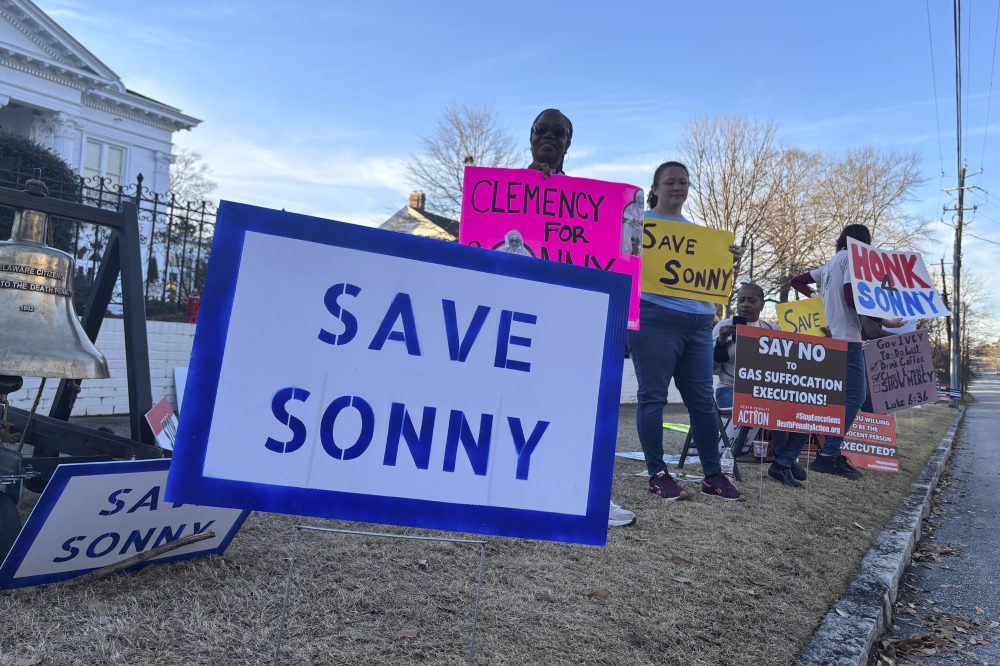 Alabama governor commutes death sentence of inmate whose accomplice fired fatal shot
 ‘Ship of Gold’ treasure hunter released from prison, but 500 gold coins remain unaccounted for
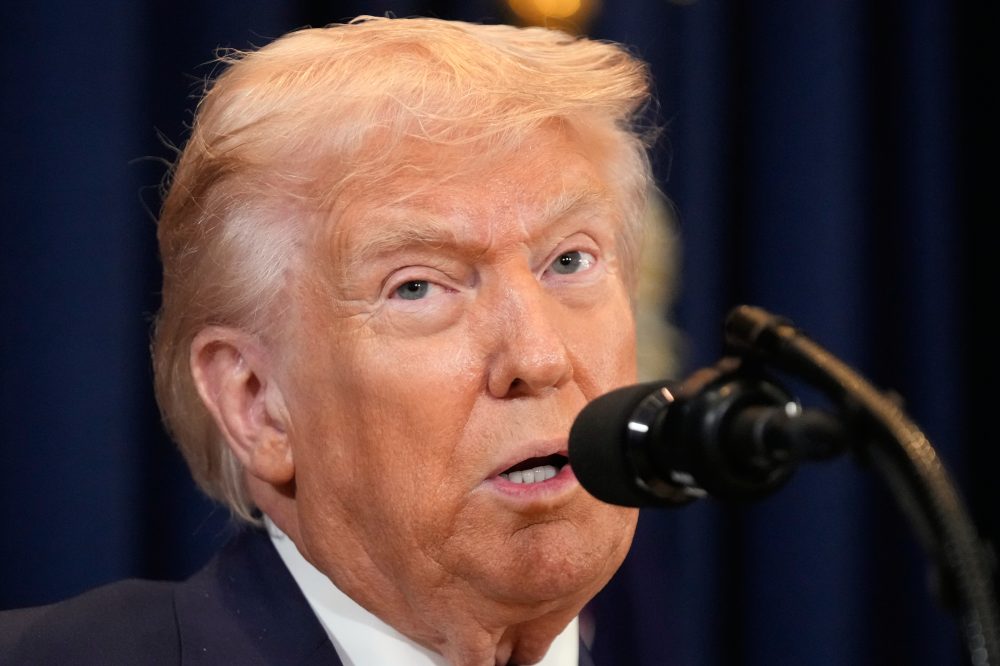 What Americans think about the war in Iran, according to recent polls