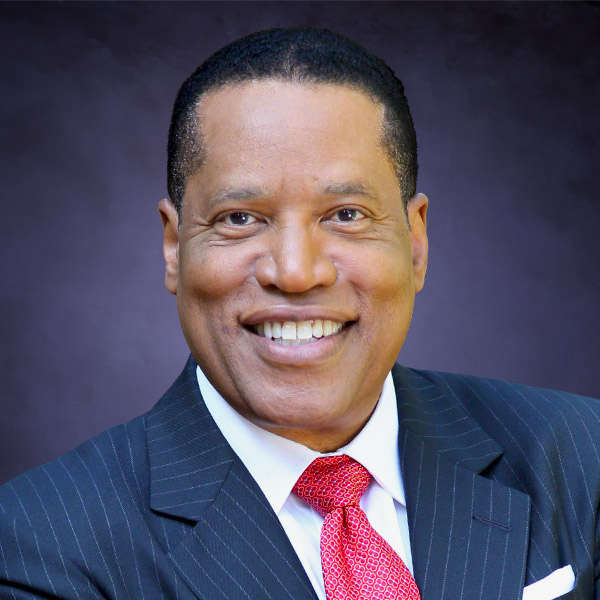

Grateful for His ‘Blessed Life,’ Dennis Prager Says ‘We Are Our Memories’
“I’m not sitting here in anger,” the conservative commentator and PragerU co-founder tells The Media Line as he reflects on paralysis, gratitude, memory, faith and the work he still intends to finish
By Felice Friedson / The Media Line
Dennis Prager has spent a lifetime explaining why people should be grateful. After a fall left him without the use of his arms or legs, the ideas he has taught for decades have now become the principles by which he confronts his own devastating situation.
A longtime conservative radio host, author, educator and co-founder of PragerU, Prager has built a public career around questions of morality, faith, happiness and the survival of Western civilization.
Today he talks about the gifts many people never notice: the ability to breathe, to speak and to think clearly.
“Obviously, I can breathe, which is a miracle unto itself, and I can speak, though with somewhat of a gravelly voice, and those are two great gifts,” Prager said. “And my brain was not in any way affected.”
Prager spoke to The Media Line by Zoom. At 6 feet 4 inches tall, he has long been a physically imposing presence. Now paralyzed from the shoulders down, what comes out of his mouth—and the expressions that cross his face—have become the focal point. The voice may be rougher and the body largely immobile, but the quickness of thought, flashes of humor and intensity remain unmistakable.
Since the accident on Nov. 12, 2024, which left him a quadriplegic, Prager has confronted losses that are intimate as well as immense. He considers it a miracle that his wife, Sue, happened to be nearby when he fell. Had she not been there to respond, the outcome might have been even worse.
In the months that followed, Sue became far more than a spouse beside him through rehabilitation. She is his caretaker and lifeline, helping him navigate a life in which tasks once performed without thought now require another person’s assistance.
But the accident did not cause Prager to abandon the philosophy that has defined his work for decades. It drove him back to it.
“I have prepared all of my life for the eventuality of tragedy,” he said.
That sentence is neither resignation nor self-pity. It is the premise of a lifelong argument: that happiness is not dependent on escaping pain; that gratitude must survive disappointment; and that people may endure calamity without making calamity their identity.
Three decades ago, he wrote Happiness Is a Serious Problem, a book that explored the moral seriousness of the pursuit of happiness. Now, after an accident that radically changed his physical life, he has returned to the ideas in that book—not as an academic exercise, but as evidence of a philosophy tested by circumstance.
“One big thing has changed, but overwhelmingly, and that’s the subject of my piece in the Jewish Journal,” Prager said. “And when people see what I wrote, they will see that I almost prepared myself for my present calamity.”
He went back to passages he had written 30 years earlier and reproduced them word for word. In doing so, he said, he wanted to demonstrate “that the human being can in fact have a view of life that encompasses tragedy.”
For Prager, tragedy and unhappiness are not the same. Suffering is inevitable; allowing it to become one’s identity is a choice.
“I never thought that bad things happened to the other guy,” Prager said. “I’m the other guy.”
The line is at once wry and deeply revealing. It is also consistent with an idea he expressed long before his fall: “If you see yourself as a victim, you can’t be happy.”
Prager traces much of this outlook to a lesson he absorbed as a university student in England. He was studying comparative religion, among other subjects, when a teacher—an English Buddhist named Trevor Ling—made a statement that became formative.
“According to Buddhism, he said, all pain comes from desires and expectations that are not fulfilled,” Prager recalled.
Prager did not accept the first half of that proposition. Desire, he said, is essential to progress.
“I do not believe in not having desires,” he said. “That’s what prompts moral progress. Desire for a good world, desire to conquer illness, etc.”
But the second half—the question of expectations—stayed with him.
“But I realized he was right,” Prager said. “Buddhism was right about expectations. And from that day until the present, I have dropped expectations. I did not expect only good things to happen. Never did.”
Prager sees lowered expectations as a prerequisite for gratitude.
“Expectations undermine the most important mother of happiness,” he said. “The mother of happiness is gratitude. If you have expectations, you won’t have gratitude.”
“If your expectations come true, why be grateful? You expected it to happen. And if they don’t come true, you will be angry because what you expected did not take place.”
The perspective has assumed a new urgency since his accident. He knows, perhaps more than most, the distance between what life was and what it can no longer be. Yet he refuses to allow that distance to erase the richness of what came before.
Looking back over the life he previously lived, Prager says simply that “it was blessed.”
“When I look back at all the spectacular experiences of my life, I have two choices,” he said. “One choice is to dwell on all the things I could do, and now can’t, and get depressed. And the other is to dwell on all the good things that happened and be incredibly grateful for them and have a real degree of happiness over having had them.”
That is not a denial of what he has lost. He is remarkably open about it.
Asked what he missed most, he was forthright.
“Oh my God,” he began. “Let me put it to you this way. I envy every person I see on YouTube who is paraplegic. They can move their arms and wheel themselves … ”
Then he named the losses that cannot be reduced to abstraction.
“I miss hugging my wife, my family, my friends. I miss being able to use a mouse. I miss being able to type my book. Instead, I now have to dictate it, which thank God I can do.”
Writing remains central to his life. His book If There Is No God: The Battle Over Who Defines Good and Evil, completed during his recovery, was published in February. He is now working to finish his commentary on Leviticus, the remaining volume in his Rational Bible series of Torah commentaries.
“I’m extremely productive now,” he said. “But there’s so much that I miss. But there is so much that I can do. They’re both important.”
If gratitude is the foundation of Prager’s response to adversity, memory is its companion.
When asked whether there is a difference between the man he was before the fall and the person he is now, he replied: “I always knew it was important, but for some reason, in preparing my Yom Kippur sermon, I came to realize that memory is everything. We are our memories.”
The assertion applies to individuals, families and nations.
“Our country and society are its memories,” he said. “You have to preserve them and be grateful for them.”
For Prager, the claim that only the present moment matters is not wisdom. It is a dangerous stripping away of continuity, gratitude and identity.
“It’s crazy to say memories don’t matter, that the only thing that matters is what happens now,” he said. “That if what happens now is the only thing that matters, nothing matters. Because now passes in an instant. It’s a very bad philosophy. What happened matters.”
He sees the consequences not only in private life but in the broader Western world.
“It’s true on the country level,” Prager said. “America is forgetting its past. So is the whole West. And that’s going to lead to calamity, maybe even self-destruction.”
Memory, he believes, is essential because it helps individuals understand that their lives contain more than immediate pain. It also enables societies to recognize the sources of their moral inheritance and the stakes of abandoning them.
In response to a question about Jewish history and enduring antisemitism, Prager rejected the idea that victimhood should define the Jewish people, even while acknowledging the scale of the suffering Jews have endured.
“Of course, we’re victims of pogroms, gas chambers, and the like,” he said. “But the notion that we cannot do anything about it, I don’t accept.”
He described what he sees as the burden and purpose of Jewish distinctiveness: “That is the price we pay for being the chosen people, for bringing God and universal moral law into the world. People don’t want it.”
Prager did not attempt to reduce the issue to a brief explanation.
“It’s not something I can develop in a nutshell right now,” he said.
But his conviction was unmistakable: “We have a special role. And if we don’t fulfill it, the world is not going to get better.”
His sense of history also informs his faith. Asked about providence, luck and the mysteries of human relationships, Prager spoke with unusual restraint for someone so accustomed to answering large questions.
“My parents were married 69 years,” he said. “They were together 72 or 73. And if you ask my father, what’s the secret to a long and happy marriage? … You just have to live long and not divorce. But to a long and happy marriage, he would have looked at you and said, luck.”
Others may say that God brings people together, Prager said, but “I don’t know the answer to that. It’s hard for me to know when God acts and when God doesn’t act.”
“So, either way, it’s luck,” he said. “I’m lucky God acted in my life, or I’m just lucky that I found the right person. I do believe there’s luck.”
That acknowledgment is rooted in his refusal to offer simplistic explanations for evil.
“Everybody wants to believe God is behind everything,” he said. “But unless I believe that God is behind the death of every one of the 6 million, every one of the 60 million Chinese that Mao starved, the 20 to 40 million Soviet citizens that Stalin murdered, etc. etc. It’s very hard to believe God chose all of them to die.”
His response is a call to humility—and to gratitude for the good that has occurred, including goodness inherited from the distant past.
“We Jews are supposed to be grateful for the Exodus,” Prager said. “Something that happened 3,200 years ago; we celebrate every year because we’re supposed to continue to be grateful for it. Otherwise, you’ll only be grateful for what have you done for me lately? And that’s not a good thing.”
Prager’s voice may be weaker than it once was, but his concern about the condition of Western civilization remains undiminished. Asked whether people still have the strength not only to endure but to think clearly, he offered a brief, blunt assessment.
“No kidding,” he said. “We’re really at a teetering point in Western civilization. That’s all I can say about that.”
He offered no prediction of how the present crisis will end. That is not, he said, his responsibility.
“And I make no predictions,” he said. “I only know what I have to fight for. That’s what I’ve always said. I don’t know if I’ll win, but I know I have to fight.”
The sentence captures the man who continues, despite enormous physical limitations, to dictate books and engage with questions of moral purpose. He no longer measures life exclusively by what he can control. He measures it by what remains worth doing.
His psychiatrist, Dr. Stephen Marmer of UCLA Medical School, once gave him a phrase that Prager now recognizes as accurate.
“He just said at one point, Dennis, you have great shock absorbers,” Prager recalled. “And he was right. I do have great shock absorbers.”
Then came the simplest explanation for his resistance to despair:
“I don’t want to be depressed. I don’t want to be dead. I still love life.”
He does not offer a polished formula for overcoming pain. He does not say that tragedy disappears if one thinks positively. He acknowledges the injury, the daily dependence, the financial pressure and the physical losses.
He said he has enough support “day to day right now,” but added that the future remains a concern.
“I lost 90% of my income and I’m paying a very large amount for nursing care 24-7.”
Prager also voiced his frustration with the limitations of the existing system.
“Medicare does not cover spinal cord injuries that are taken care of at home,” he said. “They basically want you to go to a nursing home, get palliative care, and leave quietly.”
His broader conclusion is blunt: “Generally speaking, what the government touches rarely works out. What can I say?”
And yet, even on that subject, he sought to avoid ending on despair.
“Anyway, I don’t want to leave everybody with any pessimistic note,” he said. “Just realism.”
There has also been, he said, a powerful outpouring of support.
“President Trump called my wife directly after my accident,” Prager said. “She at first thought it might be a prank.”
The call surprised him. So did the volume of messages he received on his birthday.
“On my birthday I got 22,000 messages,” he said. “So, there’s been an outpouring of love. It’s been very touching.”
As the conversation turned toward what people should hold onto in their own lives, Prager returned to gratitude as an act of reorienting the mind.
“My God, when you think about it, it’s endless,” he said.
He invoked a Jewish prayer recited after using the bathroom, one that expresses thanks for the ordinary biological processes that allow a person to live.
“Bless you, God, and thank you for making sure that the vessels that are supposed to, let’s see, push out, push out, and the ones that need to breathe in, breathe in,” he said. “Because if only one of them fails, we would not find it possible to exist.”
For someone who now depends on others for much of what most people do without thinking, the prayer carries an uncommonly immediate meaning. But Prager’s point is universal: life is filled with gifts that go unnoticed precisely because they are ordinary.
“There is so much to be grateful for,” he said, “but the human being is preoccupied with the bad stuff.”
He pointed to the way adult children often remember parents.
“It’s like the memories of parents. Adult children, so often are preoccupied and only remember bad stuff about parents when there might have been a lot of good stuff as well,” he said. “That’s the way we’re engineered.”
The remedy, in his view, is acknowledgment and kindness.
“So, we have to re-engineer our mind and be logical and compassionate,” he said.
Prager’s own life now provides the clearest expression of that instruction. He does not pretend that he has escaped devastation. He has not.
But he is still writing. Still reflecting. Still working to complete Leviticus. Still fighting for the principles he believes are essential to preserving a moral society. Still insisting that the past matters, that gratitude matters and that human beings are more than the worst thing that has happened to them.
Asked what angers him most, Prager did not point to his accident.
“Human evil,” he said.
As for the fall itself, he refused to turn it into a source of rage.
“I’m not sitting here in anger, to be honest.”
His final thought was an instruction, offered in the spirit of a man determined to see reality in its entirety.
“Concentrate on the good,” Prager said. “Most people definitely have had good in their lives to concentrate on, and I’m not dealing in wishful thinking. Be realistic.”
Readers who would like to offer support or learn how they may help can contact Prager at Dennis@PragerMedia.com.
Brought to you by www.srnnews.com
 Trump administration asks the Supreme Court to allow quick third-country deportations to continue (AUDIO)