

By Nate Raymond
BOSTON, April 1 (Reuters) – A federal appeals court on Wednesday refused to allow U.S. President Donald Trump’s administration to impose new restrictions on billions of dollars in grant funding used to provide permanent housing and other services to homeless people.
A three-judge panel of the Boston-based 1st U.S. Circuit Court of Appeals declined to put on hold a ruling by U.S. District Judge Mary McElroy in Providence, Rhode Island, that had blocked the U.S. Department of Housing and Urban Development from changing the criteria used to distribute grant funding from the Continuum of Care program.
U.S. Circuit Judge Julie Rikelman, who like the other appellate judges was appointed by Democratic President Joe Biden, said a ruling to the contrary would be “destabilizing and disastrous” for funding recipients, leading to the shuttering of housing organizations and people losing their housing.
“In sum, the record paints a disturbing picture of the harms that would flow to the plaintiffs, their constituents, and the public from issuing a stay,” she wrote.
HUD did not immediately respond to a request for comment.
The ruling stems from a lawsuit brought by Democratic officials in 20 states and Washington, D.C., local governments and nonprofit organizations.
Lawyers for some of the plaintiffs said that if the administration had prevailed, more than $2 billion worth of grant funding supporting 4,000 local housing coalitions could have become subject to HUD’s new rules.
“Because the appeals court refused to grant the federal government’s motion to stay the injunction pending appeal, almost 200,000 people — many living with disabilities — will not be displaced from stable housing,” Jill Habig, the head of the legal group the Public Rights Project, said in a statement.
‘HOUSING-FIRST’ APPROACH
At issue was the Continuum of Care program, which has provided resources since 1987 for states, local governments and nonprofits to deliver support services to homeless people, with a focus on veterans, families, and people with disabilities.
The program has long been based on a “housing-first” approach to combating homelessness, which prioritizes placing people into permanent housing without preconditions such as sobriety and employment. Along with housing, the grants fund childcare, job training, mental health counseling and transportation services.
The Trump administration has criticized the housing-first approach, and HUD in November said it was overhauling the grant program to focus on transitional housing initiatives with work requirements and other conditions.
McElroy in December concluded HUD’s efforts conflicted with the mandates of a federal law that provides money for homeless shelter programs. She cited Congress’ prioritization of providing funding for stable and permanent housing.
After Congress passed a spending bill in February that mandated HUD renew Continuum of Care projects and issue new grant awards, the administration asked McElroy to set aside her injunction, allowing some of the roughly $4 billion for the program to become subject to HUD’s new rules.
But McElroy declined to do so, citing the need to protect funding recipients from “upheaval and service gaps.” The administration then appealed, citing the new law, which the plaintiffs said never blessed HUD’s approach to grant funding.
(Reporting by Nate Raymond in Boston, Editing by Alexia Garamfalvi and Deepa Babington)
Brought to you by www.srnnews.com
 Brief fire causes evacuation but no injuries at historic Detroit college building
 New DNA testing links unsolved death of Utah teen in 1974 to serial killer Ted Bundy
 Death of a refugee left at a Buffalo doughnut shop by Border Patrol is ruled a homicide
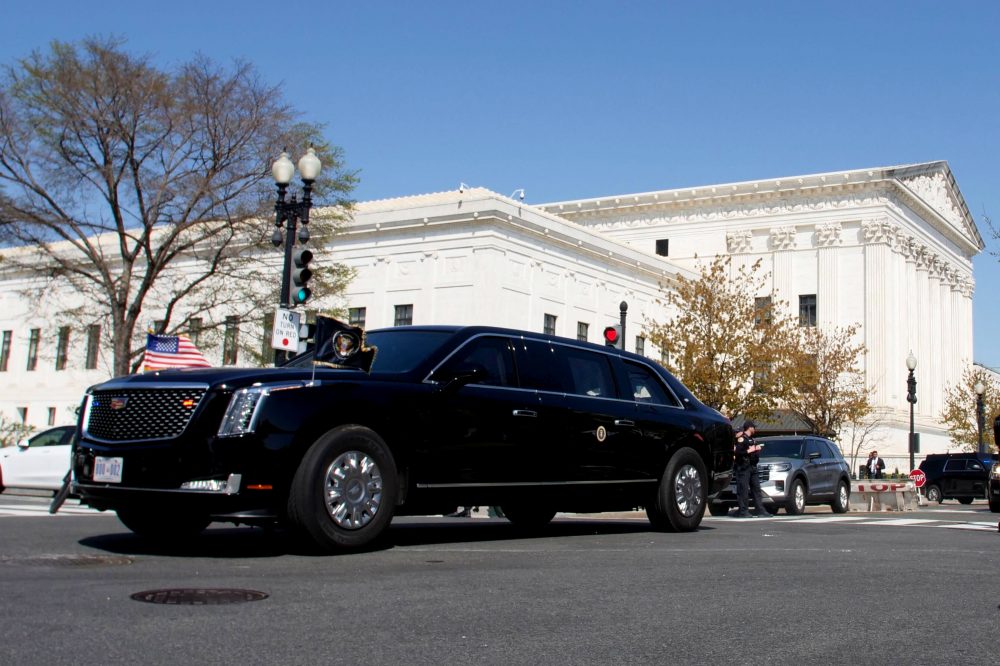 Whispers in the Supreme Court as Trump takes a front-row seat for oral arguments