
WASHINGTON (AP) — The Trump administration has identified more than 15,000 cases of adults gaining custody of multiple immigrant children who enter the U.S. without a parent, officials said Thursday, signaling a potential push to prosecute prolific child sponsors.
The Justice Department highlighted cases against three Guatemalan nationals that they say underscore the dangers of improper vetting of sponsors in a program that seeks to unite kids with relatives or family friends after they enter the U.S. Officials said they are investigating numerous other so-called super-sponsors — those who gained custody of more than three unrelated children — to determine whether the sponsors took the kids in fraudulently.
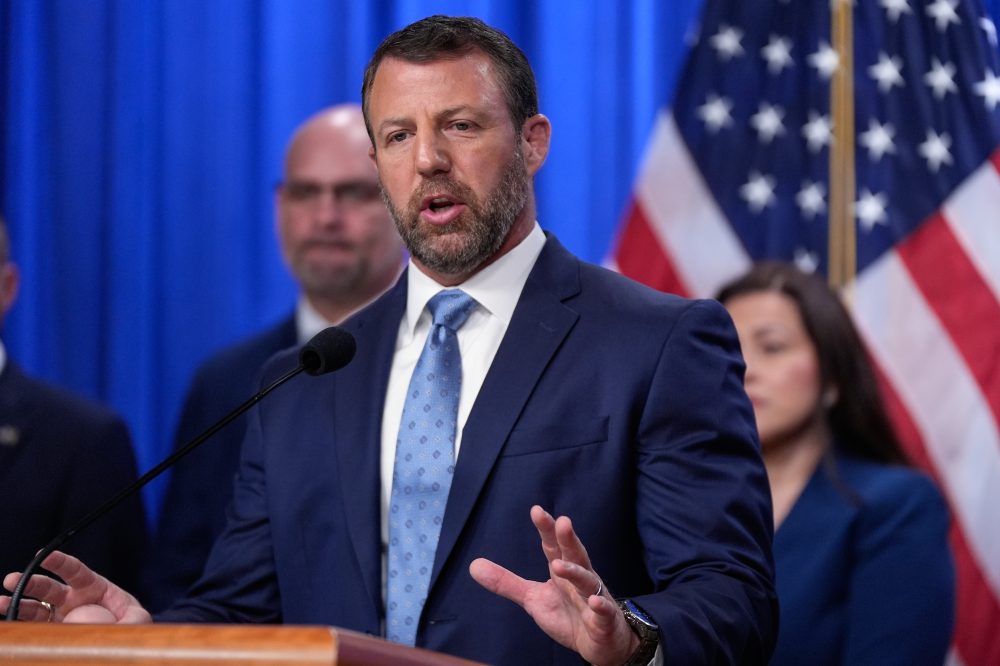
“We will not accept half measures when it comes to securing the border, protecting American lives and saving children from exploitation,” Acting Attorney General Todd Blanche told reporters.
Taking custody of multiple unrelated migrant children is not a crime. The sponsors may be caring and well-intentioned, but senior administration officials calling them out suggests that authorities harbor suspicion about them and may subject them to deeper scrutiny.
Under the Biden administration, officials tried to release children to eligible adult sponsors within 30 days, reuniting many families quickly. But the approach also yielded errors, with some children being released to adults who forced them to work illegally, or to people who provided clearly false identification and addresses.
Under Trump, the administration tightened rules aimed at preventing traffickers from illegally bringing children into the country and that has also led to a dramatic increase in federal custody times for kids. As of May, children are held in federal custody for an average of 206 days before they’re released, compared with an average of 37 days when Trump took office. At the same time, the number of total children in custody has steadily dropped.
Striking a balance to release children to vetted sponsors and shielding them from danger has proved a contentious partisan disagreement.
Democrats “want to claim that Republicans, because we’re enforcing the laws, it’s inhumane, somehow,” Blanche said after criticizing the vetting procedures under the Biden administration. “What’s inhumane about taking care of our kids?”
The cases announced Thursday include charges against a woman who, authorities say, was living in the U.S. illegally, schemed with others to smuggle kids across the border, then used fake identities to gain custody of them in exchange for money. Her attorney, Michael J. Goldberg, said “the only comment I can make is that the case will be tried in court and not in a press conference.”
In another case, a woman is accused of falsely claiming that she was siblings with a teen who had entered the U.S. illegally in her application to become the teen’s sponsor.
Critics of the Trump administration have raised concerns over wellness checks carried out by immigration officers at elementary schools, immigration officers showing up and detaining sponsors at reunification meetings with children, and newly required documentation that’s created a “paperwork barrier” and led to a recent lawsuit.
Shaina Aber, executive director of the Acacia Center for Justice, which provides legal services for unaccompanied migrant children under contract with the government, said the administration has not acknowledged the harm it has caused to kids by “subjecting them to indefinite detention and eroding nearly every avenue for legal relief.”
Aber added: “If the administration is concerned with the well-being of unaccompanied children, the answer can’t be to take them away from loved ones, try to undermine their representation, and detain them in group facilities with well-documented risks of isolation, abuse, and mental health deterioration.”
Even sponsors willing to undergo the new vetting procedures have been forced to wait through unnecessary delays.
A Chicago father who is a U.S. citizen and had a valid birth certificate for his child was kept waiting for five months before the government could schedule a fingerprinting appointment. During the wait, his toddler daughter was sexually abused in federal custody, a lawsuit claimed. The government did not respond to repeated requests for comment on the case.
_____
Gonzalez reported from McAllen, Texas.
Brought to you by www.srnnews.com
 Trump calls off latest threats to strike Iran, citing progress in negotiations
 The Media Line: US Jewish Groups Back Bipartisan House Bill To Expand Security Funding
 More than 30 lawsuits filed against aerospace company in California over damaged chemical tank
 Years after oil pipeline protests, North Dakota and the federal government settle policing lawsuit