
DUBAI, United Arab Emirates (AP) — President Donald Trump warned Wednesday that the U.S. will destroy one bridge or power plant each time Iran shoots at a ship in the Strait of Hormuz.
Trump’s latest threat to target infrastructure came as the war continues with no clear offramp, threatening further worldwide economic disruption and sending fuel prices up. Both sides have dug in on their dispute over the strait, a crucial waterway for global energy that remains largely closed because of Iranian attacks.
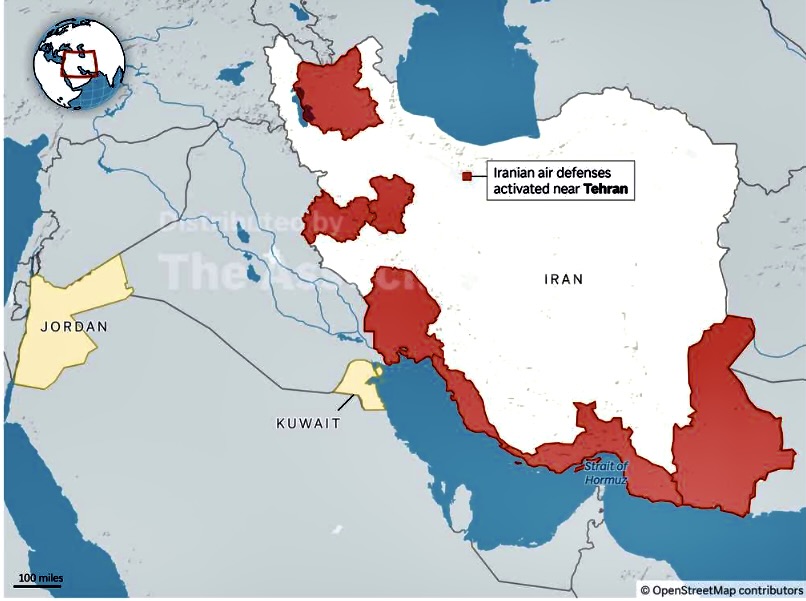
The U.S. carried out another wave of strikes on Iran overnight into Wednesday, and air defenses opened fire over the capital, Tehran. Iran launched a missile attack on a Jordanian city on Israel’s doorstep, and alerts were issued in Bahrain and Saudi Arabia.
With negotiations largely stalled, both sides have sought leverage by targeting infrastructure. Iran has responded to U.S. attacks by targeting energy infrastructure and desalination plants that provide drinking water in parched neighboring Gulf countries.
International law generally prohibits such attacks unless the infrastructure is being used for military purposes. United Nations Secretary-General Antonio Guterres decried such attacks as “unacceptable” on Tuesday.
Trump Attends Dignified Transfer Ceremony for 4 ‘Great Heroes’
President Trump traveled to Dover Air Force Base in Delaware Wednesday to honor four American servicemembers killed during the conflict with Iran.
Before departing Washington, the president told reporters that attending a dignified transfer is among the most difficult responsibilities of any commander in chief.
Trump also offered a message to the fallen and their families, saying simply: “We love you.”
Among those honored were 19-year-old Army Private Isabella Gonzales of Carrollton, Texas, and 25-year-old First Lieutenant Tyler James Feehan of Hawaii. Both were killed in an Iranian missile strike on a U.S. base in Jordan.
The Defense Department has also identified Army Sergeant Angel S. Rampersad, 28, of New York, as having died in the same attack.
In a separate incident, Army Sergeant Michael Emmanuel Swinton, 30, of North Carolina, was killed when a drone exploded in Iraq.
The military describes a dignified transfer as a solemn procedure honoring service members killed while serving the nation.
Attacks shake Iran and Jordan
Jordan’s military said it intercepted four Iranian missiles over Aqaba, while two others fell in “uninhabited areas.” Plumes of smoke could be seen overhead in videos filmed by people in the nearby Israeli city of Eilat. Jordan said it also intercepted four Iranian drones.
Iran has avoided striking Israel since hostilities resumed last month, apparently hoping to keep it from reentering the war. But the attack on Aqaba, within sight of Israel’s Eilat, raised concerns over a further widening of the conflict after an agreement to halt hostilities collapsed.
Another missile alert sounded in Bahrain, and Saudi Arabia warned residents of the Persian Gulf city of Dammam to seek shelter. Saudi authorities later said the danger had passed, without elaborating.
The U.S. military said earlier Wednesday that it had completed an 11th night of strikes on Iran, with targets including aircraft hangars and drone storage sites.
Iran’s state-run IRNA news agency reported explosions across several provinces. Iran’s Health Ministry says U.S. strikes over the past 11 days have killed 53 people, including six women and three children, and wounded nearly 600 people.
Iran’s paramilitary Revolutionary Guard insisted its retaliatory attacks would continue.
Diplomatic efforts show no signs of progress
Before the latest strikes, Iranian Interior Minister Eskandar Momeni visited Pakistan, a key mediator in the conflict, seeking to revive diplomacy. But it was unclear what new arrangement might be reached to end the war, which lately has become a battle for control over the Strait of Hormuz.
Iran’s Interior Ministry spokesman Ali Zeinivand said “diplomacy isn’t called off” and that messages were still being exchanged, without elaborating, according to IRNA.
At a regional summit in the Philippines, U.S. Secretary of State Marco Rubio denounced Iran’s actions in the strait.
“If we create a precedent in the Middle East where a nation state can decide that they are going to control an international waterway, charge a toll and if you don’t pay them, blow up your ships, we have created a very dangerous precedent which will repeat itself in other parts of the world, including in this region,” he said.
In response to Iran’s attacks, the U.S. re-imposed a blockade on Iranian ports.
Trump signals US may attack underground nuclear site
Speaking from the Oval Office on Tuesday, Trump said the U.S. had “no interest in meeting.”
He signaled that U.S. forces could soon target an under-construction Iranian nuclear site buried deep under a mountain.
The site, known as Pickaxe Mountain, lies on the south side of Iran’s Natanz nuclear enrichment site, which was bombed by the U.S. during the 12-day war between Iran and Israel in 2025. But Pickaxe Mountain has remained untouched as Iran continues to dig at the site.
Iran has always insisted its nuclear program is peaceful, while resuming the enrichment of uranium to near weapons-grade levels since Trump scrapped a 2015 nuclear deal during his first term. The U.S. and others believe Iran had a nuclear weapons program until 2003 and may reconstitute it in the future.
A map showing strikes in and around Iran early Wednesday. (AP)
Brought to you by www.srnnews.com
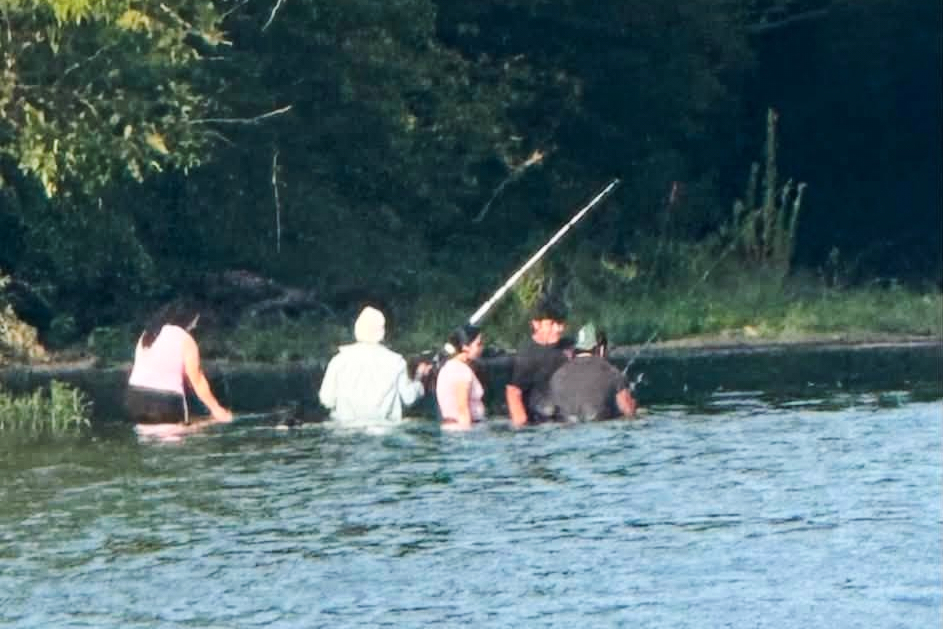 ‘The last picture’: A passing boater’s photograph may be the 5 adults who drowned in Ohio
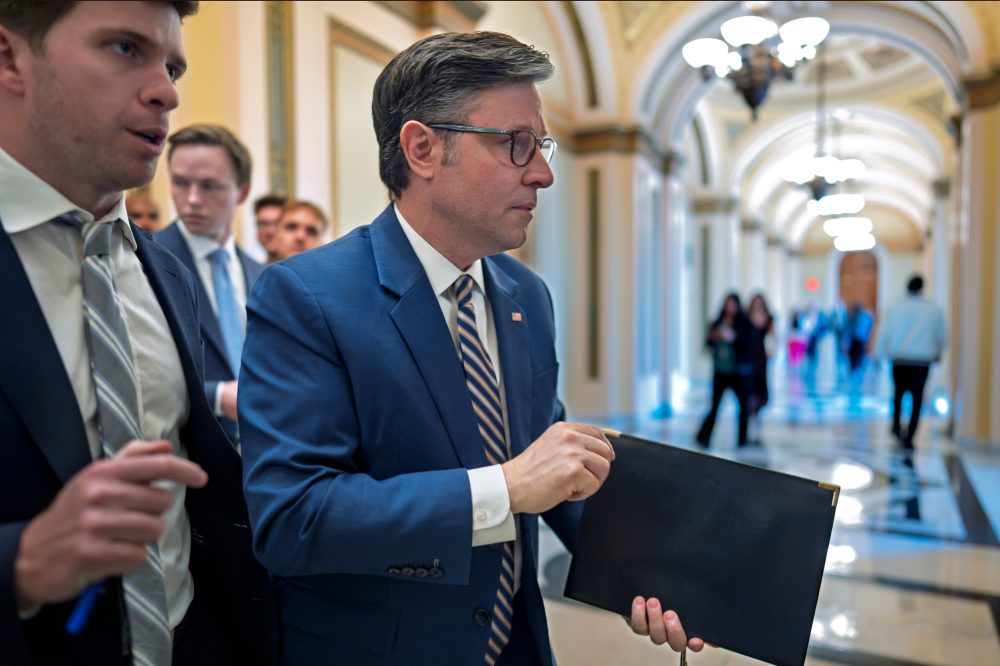 House Republicans push $95 billion package for the Iran war and Trump’s priorities
 Endangered right whales could wait almost a decade for new US protections
 Special prosecutor drops all felony criminal charges against Louisiana Attorney General Murrill