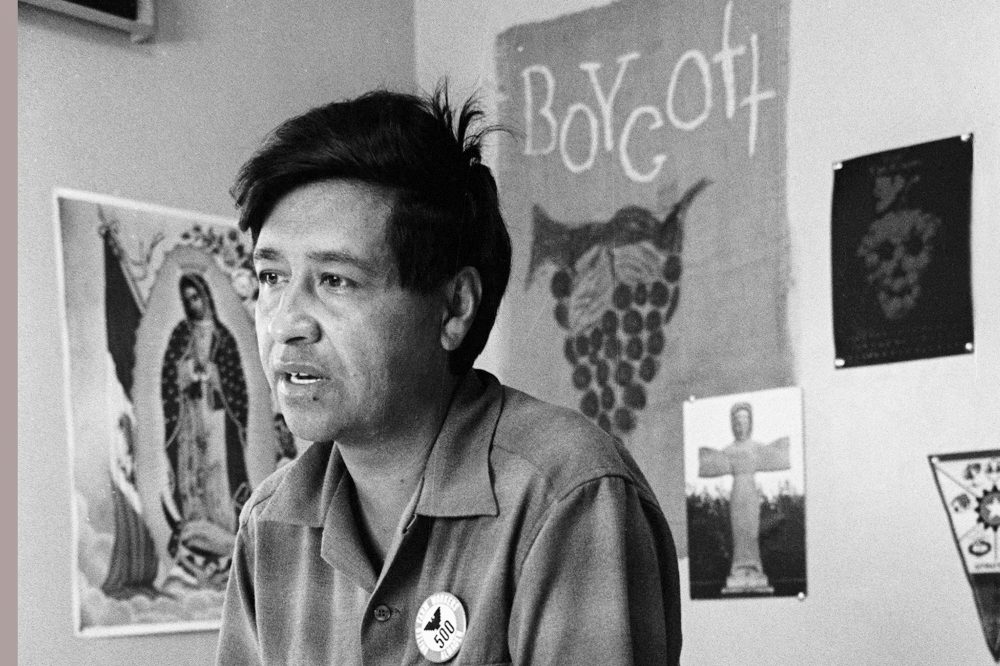
The United Farm Workers union has distanced itself from annual celebrations of its founder, Cesar Chavez, amid what it said were troubling but unspecified allegations.
In a statement Tuesday, the union said allegations of “abuse of young women or minors” were concerning enough to urge people around the country to participate in immigration justice events or acts of service instead of the typical events in March to commemorate Chavez’s legacy.
The union said it has not received any direct reports of abuse and does not have any firsthand knowledge of the allegations. Neither the union nor the Cesar Chavez Foundation responded to requests from The Associated Press for further comment.
“Some of the reports are family issues, and not our story to tell or our place to comment on,” the union said in its statement.
Several Cesar Chavez celebrations in San Francisco, Texas and Chavez’s home state of Arizona were canceled at the request of the foundation, which also said it’s become aware of disturbing allegations about Chavez during his time as president of the union. Organizers of canceled events did not immediately respond to the AP’s requests for comment.
Both groups said they’d be working to establish ways for anyone who might have been harmed by Chavez to share experiences confidentially.
“These allegations have been profoundly shocking,” the union statement said. “We need some time to get this right, including to ensure robust, trauma-informed services are available to those who may need it.”
California became the first state to establish March 31, Chavez’s birthday, as a day commemorating the labor leader. Others followed. In 2014, then-President Barack Obama proclaimed March 31 as national Cesar Chavez Day, urging Americans to honor his legacy.
Streets, schools and parks bear Chavez’s name. Born in Yuma, Arizona, Chavez grew up in a Mexican-American family that traveled around California picking lettuce, grapes, cotton and other seasonal crops. He died in California in 1993 at age 66.
Chavez is known nationally for his early organizing in the fields, a hunger strike, a grape boycott and eventual victory in getting growers to negotiate with farmworkers for better wages and working conditions.
In 1962, Chavez and Dolores Huerta co-founded the National Farm Workers Association, which became the United Farm Workers of America.
Farmworkers are crucial to agribusiness in California, which grows nearly half the nation’s fruits, nuts and vegetables.
Chavez protested against poor pay and often-miserable work conditions. There were no toilets in the fields for workers, who weeded fields with short-handled hoes that forced them to bend over for hours at a time.
Bosses frequently ignored the health and wages of their workers, many of whom were Spanish-speakers in the country temporarily or illegally and had little political or legal clout to prevent abuses.
Brought to you by www.srnnews.com
 Trump administration widens Medicaid fraud crackdown to Florida, calling it a ‘hotspot’
 San Francisco sizzles as a winter heat wave grips the West
 In his words: How Gregory Bovino became a face of Trump’s mass deportations and ended his career
 In Black pastor’s arrest, Alabama Supreme Court rules police can demand to see identification