
(SRN NEWS) – The United States has imposed fifty-percent tariffs on roughly twenty billion dollars’ worth of Canadian products, after last-minute negotiations between Washington and Ottawa failed to produce a deal.
The tariffs took effect early Saturday and cover a range of Canadian goods, from hockey sticks to medical supplies, including tongue depressors. The affected products represent about five percent of Canada’s annual exports to the United States.
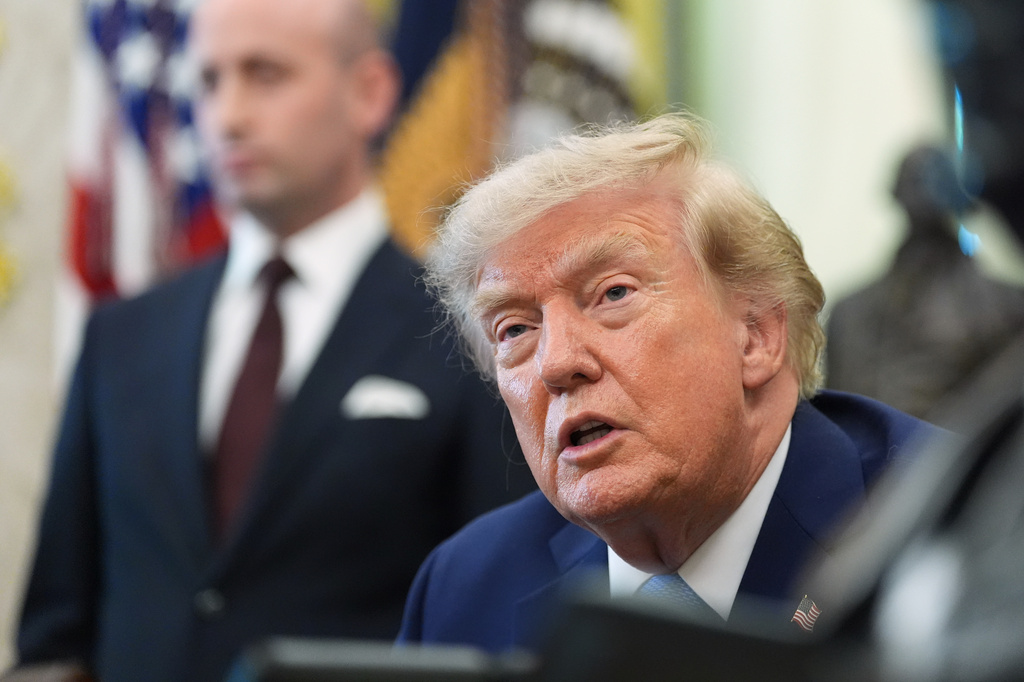
President Donald Trump’s administration says the tariffs are part of a broader effort to strengthen American manufacturing, protect national security, and secure more balanced trade with Canada.
U.S. Trade Representative Jamieson Greer said Canada rejected what he called a generous, forward-looking proposal that would have given Canada the best treatment of any major exporter to the American market. Greer said new Canadian demands and reversals on earlier commitments disrupted what had been a carefully negotiated agreement.
The Canadian government disputes that account.
Prime Minister Mark Carney says the latest American terms were unfair and economically damaging. He announced that Canada would respond with matching tariffs—dollar for dollar—raising the risk of a broader trade conflict between the two longtime allies.
The dispute centers in part on Canadian steel, aluminum, automobiles, and lumber. Canada had sought exemptions or concessions in those sectors, but the Trump administration declined to provide them.
President Trump had delayed the tariff deadline by three days to give negotiators additional time. But no agreement was reached, and no new talks have been scheduled.
The economic stakes are significant. The United States and Canada exchanged approximately eight hundred eighty billion dollars in goods and services last year. About three hundred thirty thousand people and two billion dollars in goods cross the five-thousand-five-hundred-mile border every day.
Canada depends heavily on the American market. Nearly seventy-two percent of Canadian goods exports went to the United States last year. That dependence could give Washington leverage as the Trump administration presses Canada to make broader concessions.
The tariffs also come as the United States, Canada, and Mexico face negotiations over the future of the U.S.-Mexico-Canada Agreement, known as USMCA. The Trump administration negotiated the pact during the president’s first term and has described it as a major improvement over the previous North American trade agreement.
Formal discussions with Mexico have begun, but negotiations with Canada have not. The latest escalation could make a trilateral agreement more difficult to renew.
Canadian business leaders warn that the tariffs could raise costs on both sides of the border. U.S. importers pay the tariffs, and some companies may pass those costs on to consumers.
Still, supporters of President Trump’s approach argue that temporary economic pressure is necessary to correct long-standing trade imbalances and encourage companies to invest and manufacture in the United States.
The political consequences may be greater than the immediate economic impact. Both governments now face pressure from voters, workers, and businesses to defend national interests—while leaving open the possibility of a future agreement.
For now, Washington says the tariffs are aimed at achieving a stronger deal. Ottawa says retaliation is necessary. The longstanding partnership between the two countries is under its most serious strain in decades.
Brought to you by www.srnnews.com
 How bitcoin and gold went from a slump to an MVP week in just a few days
 Mobility tests can offer insights, but they aren’t a crystal ball
 This rare Nebraska district backed Harris but sent a Republican to Congress. Can Democrats win here?
 Inside Trump’s remake of the White House Rose Garden. First a stone patio, then statues