
By Krisztina Than and Krisztina Fenyo
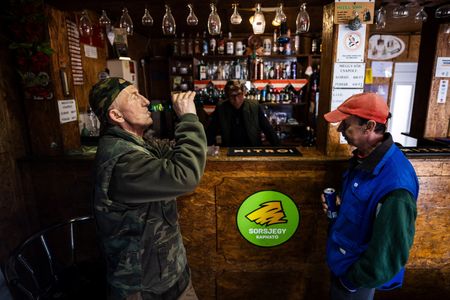
MALYINKA, Hungary, April 2 (Reuters) – Sandor Toth has been running his pub in a small village in the hilly northeast of Hungary for 43 years, witnessing the collapse of communism and since 2010 four victories by the lawmaker for Viktor Orban’s Fidesz party in his constituency.
Toth, 72, has voted for Fidesz each time.
Since last year his pub has been awarded 3 million forints ($9,000) in grants from Orban’s “pub programme” which allowed him to install new windows and air conditioning. Hundreds of pubs got the free state grants under the government slogan that they are “the soul of the villages”.
Poorer rural areas have been a stronghold for the ruling nationalist, socially-conservative Fidesz, partly due to community work projects that depend on funding from Fidesz-controlled local authorities. In many places Fidesz is synonymous with the state, which provides money and jobs.
Fidesz allies also control large parts of Hungary’s private media, while the public media largely serves as a government mouthpiece. Orban’s government denies undermining press freedom.
TOUGHEST RE-ELECTION BID IN 16 YEARS
Orban’s nationalist narrative promoting “Hungarian interests” against the European Union or rejecting funding for war-torn Ukraine has resonated with the older and more conservative demographic in rural areas.
With the veteran leader facing his toughest re-election bid in 16 years in an election on April 12, rural Hungary has again become the most important battleground, with 88 of the 106 constituencies located in the countryside. In parliament, 106 of the 199 seats are won from constituencies.
As he pulls a pint of sour cherry beer – at 800 forints ($2.38) a pint, less than half of Budapest prices – Toth says he believes most people in his village of Malyinka, where about 450 people live, would support Orban again.
“I believe generally here people vote for Fidesz as they help pensioners and also young people,” he says, adding “not all parties” would have granted pubs the money he received.
With 1980s memorabilia on the walls and a 1990s jukebox, Toth’s Sanyi pub has become “the centre of town” in Malyinka, in a strategic location next to the soccer field and with a licence to sell tobacco.
“The village, our direct connection to nature, the land … these are essential parts of human life that must be preserved,” Orban said in a campaign speech in January.
In the constituency that includes Malyinka and 81 other villages, Fidesz candidate Zoltan Demeter won the 2022 election with more than 54% of the vote.
This time he faces a tougher challenge.
OPPOSITION LEADING POLLS, GAINING IN RURAL AREAS
Orban’s challenger is the centre-right Tisza party, launched in 2024 and led by Peter Magyar, who was once inspired by Orban but now wants to unseat him as prime minister.
Opinion polls show Tisza with an overall lead nationally, though many voters remain undecided.
According to an opinion poll by 21 Research Institute conducted in early March, Tisza has a strong lead over Fidesz in all age groups under 50. Fidesz had a clear lead among voters over 65.
Tisza has stepped up campaigning in the countryside, hoping to combat a 16-year legacy of opposition parties largely failing to offer rural areas a viable alternative to Fidesz.
Magyar has been touring towns and villages for two years, promising jobs, roads and better healthcare services. In the run-up to election day he has held campaign events in 5-6 different places a day nationwide.
The 21 Research Institute poll showed Fidesz had a lead of 37% versus 33% for Tisza in villages.
“The mood in small rural towns and villages is different from earlier elections, when the public quickly lost interest at events. Now they turn up and listen to what Magyar has to say,” Eurasia Group said in a note, predicting that Magyar was making headway in rural constituencies.
Tisza’s local candidate and volunteers go door to door in the villages in Toth’s constituency, trying to win over voters by offering support for renovating roads and improving healthcare services and schools.
“This is key, I think this was missing badly from previous campaigns, that we must go to each street,” said Tisza candidate Csaba Hatala-Orosz.
“We can promise to support local small- and medium-sized businesses, rebuild roads … I’ve been doing field work here for almost two years, and I got to know these 82 villages, and I have really put my heart into this.”
(Editing by Janet Lawrence)
Brought to you by www.srnnews.com
 Iran fires missiles at Israel and Gulf neighbors as Trump talks of winding down Mideast war
 Eight Muslim-majority countries condemn Israel’s new death penalty law
 Lithuania to seek US help in Epstein-linked trafficking probe