
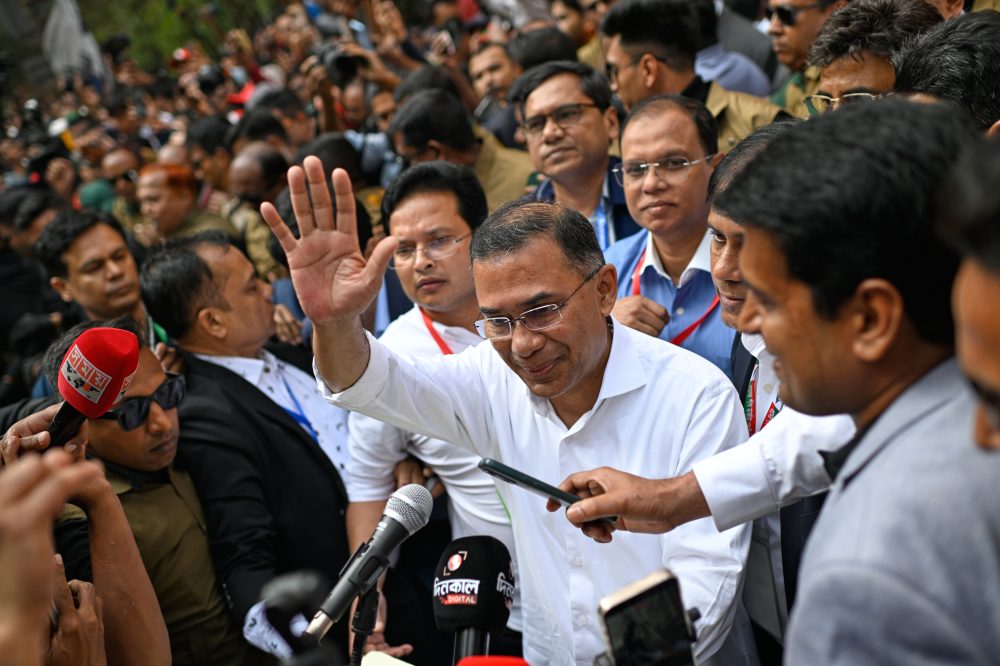
DHAKA, Bangladesh (AP) — The Bangladesh Nationalist Party has claimed victory in the country’s first election since the 2024 uprising, positioning itself to form the next government and potentially reshape Bangladesh’s political landscape after years of intense rivalry and disputed polls.
The party’s media unit in a post on X Friday said it had secured enough seats in Parliament to govern on its own. Final results have not yet been announced by the Election Commission, though several local media outlets reported the party’s win.
BNP is headed by Tarique Rahman, its prime ministerial candidate. Rahman, 60, returned to Bangladesh in December after 17 years in self-exile in London. He is the son of former Prime Minister Khaleda Zia, who died in December.
Ruhul Kabir Rizvi, senior joint secretary-general of the BNP, extended congratulations to the people of Bangladesh on the party’s electoral victory in a statement. Separately, Saleh Shibly, press secretary to Rahman, said the BNP leader called on his supporters to hold special prayers alongside the weekly Friday service and not to hold any celebratory processions.
The U.S. Embassy in Dhaka congratulated Rahman and his party on the win, calling it a “historic victory.”
“The United States looks forward to working with you to achieve shared goals of prosperity and security for both our countries,” U.S. Ambassador to Bangladesh Brent T Christensen wrote on X.
The contest was largely a two-way race between the BNP and an 11-party alliance led by the Islamist Jamaat-e-Islami, a conservative religious party whose growing influence has fueled concern, particularly among women and minority communities.
Shafiqur Rahman, who heads Jamaat-e-Islami, secured a seat in Dhaka and is poised to become the opposition leader in Parliament. But his party voiced objections to the handling of the election results.
The party’s assistant secretary-general, Ahsanul Mahboob Zubair, said the Election Commission had delayed announcing results in several constituencies, calling the holdups “unusual.” In a statement posted on Facebook, the party also claimed that candidates from the alliance it heads were “narrowly and suspiciously losing” in multiple areas.
Thursdays’ vote took place amid tight security and concerns of democratic backsliding, rising political violence and the fraying of the rule of law.
The election was the first since a bloody student-led revolt in July 2024 led to the ouster of previous Prime Minister Sheikh Hasina, sending her to exile in India. Many viewed it as a crucial test of Bangladesh’s ability restore trust in democracy and to transform public protests into tangible political reform.
For much of the past 15 years, the BNP languished in opposition, boycotting several elections and accusing Hasina’s government of systematic vote rigging and political repression. Tarique Rahman himself spent 17 years in self-imposed exile after Hasina’s government pursued multiple corruption and criminal cases against him. He has denied the charges, saying they were politically motivated.
Those cases were dropped after Hasina’s government collapsed, paving the way for his return to Bangladesh. His campaign has cast him as a defender of democracy in a country whose politics have long been shaped by entrenched parties, military interventions, and allegations of electoral manipulation.
Tarique Rahman’s BNP has for decades formed one half of the country’s entrenched dynastic political system. His father, Ziaur Rahman, rose from the ranks of the army to become a dominant political figure, serving as the country’s sixth president until his assassination in 1981.
The party was the principal rival to Hasina’s Awami League party, now banned, and their long-running feud came to define Bangladesh’s political life.
Brought to you by www.srnnews.com
 In Zimbabwe, cash bouquets and scrap metal gifts rival flowers as coveted Valentine’s tokens of love
 Thailand uses a birth control vaccine to curb its elephant population near expanding farms
 Trump’s upheaval of the Atlantic alliance to loom over Munich security forum
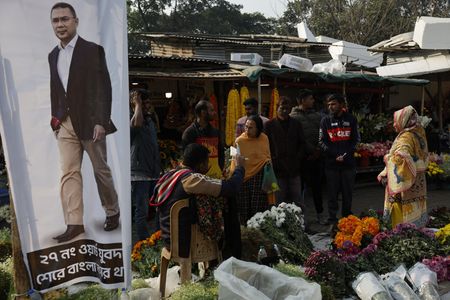 Bangladesh’s BNP wins two-thirds majority in landmark election