
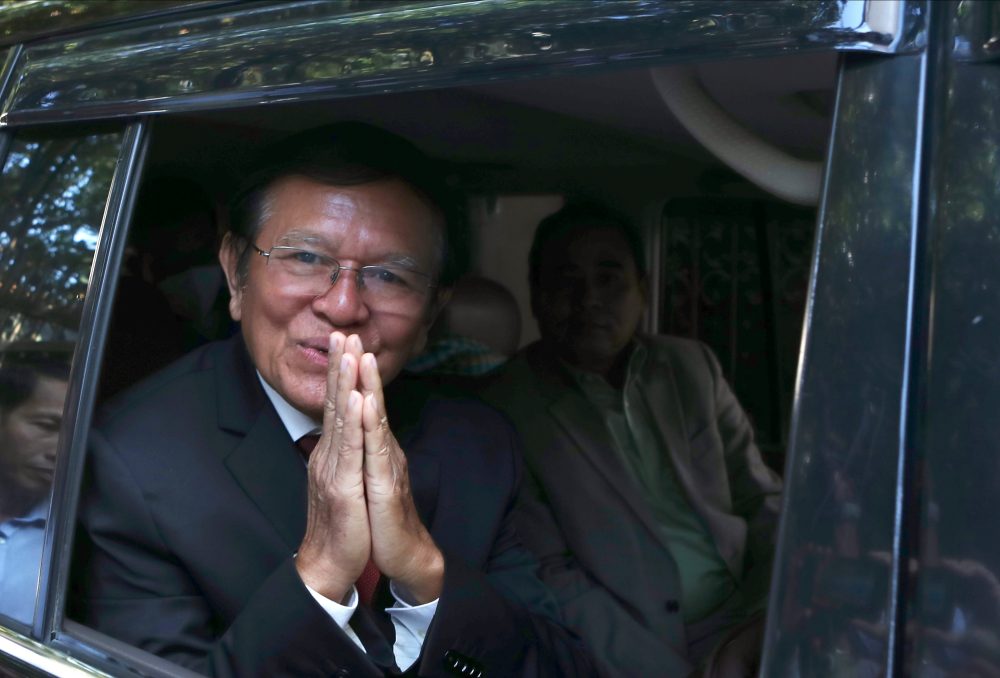
PHNOM PENH, Cambodia (AP) — Cambodian opposition leader Kem Sokha on Monday was granted a royal pardon from his 27-year sentence for treason, a month after an appeals court affirmed his conviction and punishment.
Hun Sen, the Senate president acting as head of state in the absence of King Norodom Sihamoni, issued the pardon freeing Kem Sokha from house arrest. Sihamoni is in China on an extended stay for medical treatment.
Prime Minister Hun Manet, in a statement posted on the Telegram social media platform, described the pardon as a step in strengthening national unity. Kem Sokha made no immediate public comment.
The decision is unlikely to greatly affect Cambodia’s politics, as other top opposition figures are in exile and political and social activists still face restrictions on freedom of speech and actions.
Kem Sokha was convicted in 2023 following a long period of pretrial detention. He was accused of conspiring with the United States to topple the Cambodian government. The primary evidence against him was a video of him discussing political advice from U.S.-based pro-democracy groups.
He has consistently denied the charge, and told the appeals court last month that he had never conspired with any foreign country to cost the lives of Cambodian citizens or the loss of national territory.
His arrest in 2017 marked the start of a broad government crackdown on independent media and political opponents, notably Kem Sokha’s popular Cambodia National Rescue Party.
The Supreme Court dissolved the party shortly after his 2017 arrest. That allowed Hun Sen’s ruling Cambodian People’s Party to sweep all parliamentary seats in the 2018 elections.
Hun Sen was prime minister when Kem Sokha was arrested and convicted. In 2023, Hun Sen became Senate president and his son, Hun Manet, succeeded him as prime minister.
Hun Sen, who served 38 years as Cambodia’s leader, has long been accused of using the judicial system to persecute critics and political opponents. While the government insists it promotes the rule of law under an electoral democracy, the courts have frequently dissolved political parties seen as potential rivals and jailed or harassed their leaders.
Critics charge that the situation has not improved much under Hun Manet.
The Phnom Penh Appeals Court had affirmed Kem Sokha’s 27-year sentence at the end of April, following a much-delayed appeals process. It added a condition barring him from leaving the country for five years after his sentence was over. It is unclear whether that still applies.
Kem Sokha had visited his ailing 101-year-old mother with the court’s permission earlier Monday before the pardon was announced.
He did not speak to the media, but a video posted on social media by his lawyer showed him hugging his mother and saying that if he were free, he would enter the Buddhist monkhood to honor her. He also said he would not seek revenge against those who put him in prison.
Brought to you by www.srnnews.com
 Serbian president deepens ties with China while facing pressure from protests at home
 President Trump say any Iran deal must be “great”
 Ebola patients flee in attacks on Congo health facilities, hobbling response