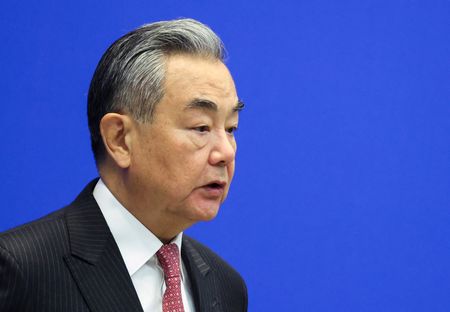
BEIJING, Jan 5 (Reuters) – Chinese Foreign Minister Wang Yi said Beijing cannot accept any country acting as the “world’s judge” after the United States captured Venezuela’s President Nicolas Maduro.
“We have never believed that any country can act as the world’s police, nor do we accept that any nation can claim to be the world’s judge,” Wang told his Pakistani counterpart Ishaq Dar during a meeting in Beijing on Sunday, referring to “sudden developments in Venezuela” without directly mentioning the U.S.
“The sovereignty and security of all countries should be fully protected under international law,” China’s top diplomat added, in his first remarks since images of the 63-year-old Maduro blindfolded and handcuffed on Saturday stunned Venezuelans.
Maduro is in a New York detention centre awaiting a Monday court appearance on drug charges.
Beijing has ambition to become a diplomatic heavyweight, a goal it articulated most clearly after brokering a surprise rapprochement between Saudi Arabia and Iran in 2023, pledging to “play a constructive role in global hotspot issues.” Analysts say Beijing’s success in going toe-to-toe with the U.S. in trade negotiations has only reinforced China’s confidence.
However, President Donald Trump’s assertion that the U.S. will oversee Venezuela’s government for the time being poses a stern test to the “all-weather comprehensive strategic partnership” Beijing and Caracas struck in 2023, marking almost 50 years of diplomatic ties.
“It was a big blow to China, we wanted to look like a dependable friend to Venezuela,” said a Chinese government official briefed on a meeting between Maduro and China’s special representative for Latin American and Caribbean affairs, Qiu Xiaoqi, hours before his capture.
Maduro’s son visited China’s top-ranking Peking University in 2024, where he enrolled in 2016, they said, adding they were unsure whether he would return despite years of diplomatic engagement with Caracas around his education and ties to China.
The world’s second-largest economy has provided Venezuela with an economic lifeline since the U.S. and its allies ramped up sanctions in 2017, purchasing roughly $1.6 billion worth of goods in 2024, the most recent full-year data available.
Almost half of China’s purchases were crude oil, customs data shows, while its state-owned oil giants had invested around $4.6 billion in Venezuela by 2018, according to data from the American Enterprise Institute think tank, which tracks Chinese overseas corporate investment.
(Reporting by Joe Cash; Editing by Stephen Coates)
Brought to you by www.srnnews.com
 Berlin mayor warns on infrastructure after power station attack
 US making preparations in case Trump decides to reopen embassy in Caracas, official says
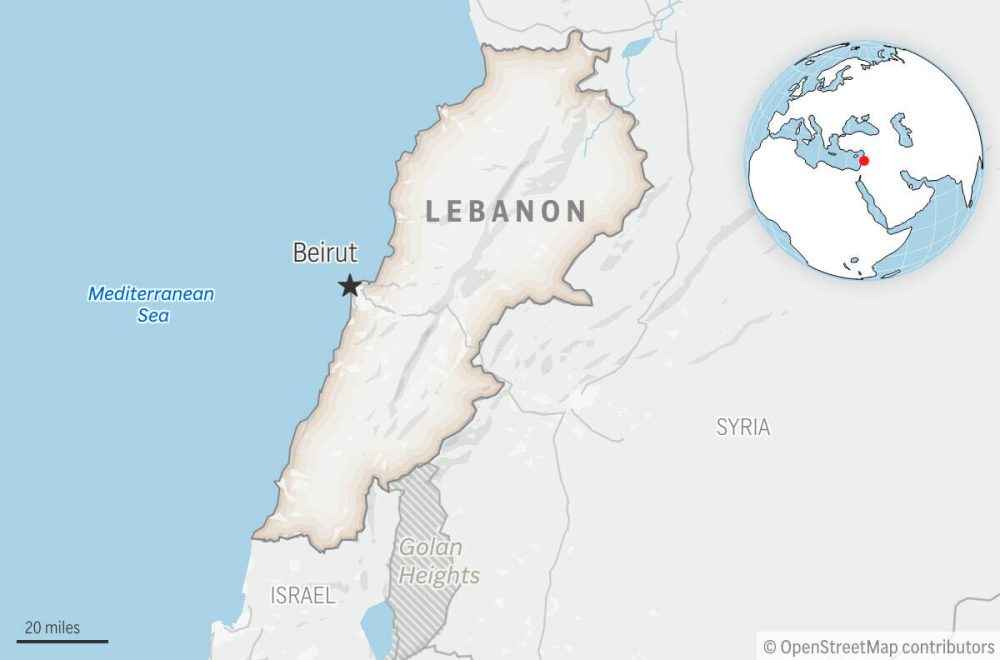 Israel strikes Hezbollah and Hamas targets in Lebanon ahead of a key disarmament meeting