
By Julie Zhu and Sophie Yu
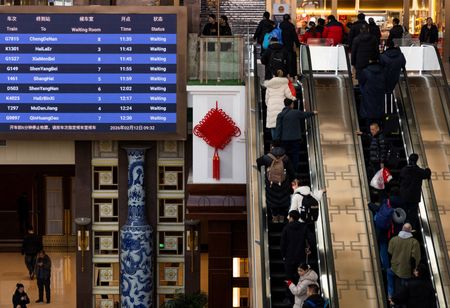
HONG KONG/BEIJING, Feb 12 (Reuters) – More Chinese tourists are expected to travel overseas during next week’s extra-long Lunar New Year break, with top destinations ranging from Russia and Australia to Thailand and South Korea, travel agencies say, but Japan has lost some sheen.
The Lunar New Year, or Spring Festival, is one of China’s longest holidays, running for nine days this year from February 15, or a day longer than usual, to usher in the Year of the Horse in the Chinese zodiac.
Millions traditionally head home for family reunions during this time, boosting spending in shops, cinemas and restaurants as families nationwide and overseas celebrate together.
RECORD TRIPS EXPECTED OVER 40-DAY TRAVEL RUSH
China expects a record 9.5 billion passenger trips during the accompanying 40‑day travel rush, up from 9.02 billion last year, as officials hope this year’s longer event spurs more holidaymakers to make domestic visits or venture abroad.
“Thailand has returned to being the top outbound destination thanks to its weather, when most parts of China remain cold,” said Zhou Weihong, of Shanghai‑based Spring Tour, the travel unit of budget carrier Spring Airlines.
Amid an uncertain economic outlook, many appear to be hoping to leave their troubles behind, however briefly. A prolonged property downturn has eroded household wealth, while uneven growth after the COVID-19 pandemic, has fuelled job insecurity.
Studies show Chinese consumers are prioritising spending on experiences, with consultants McKinsey’s saying in an August market update, “Consumers appear to have quietly moved on … highlighting deeper shifts in how China consumes.”
Domestic leisure demand this year is also split between warm and snowy destinations, with trips to the tropical island of Hainan and northeastern Changbai Mountain popular, added Zhou, a deputy general manager at Spring Tour.
Bookings to Russia on its platform have more than doubled from last year, as have trips to northern Europe.
“For the rest of the year, we’ll probably see increased Chinese travel to Russia,” said Sienna Parulis‑Cook, marketing and communications director of Dragon Trail Research.
She attributed its popularity, rising off a low base, to Moscow’s December move to waive visas for visitors from China.
REBOUND DRIVES UP NUMBERS VISITING AUSTRALIA
China’s largest travel booking site, Trip.com Group, said a rebound in long‑haul travel has driven up visitors to Australia by more than 100% over the year-earlier period.
Seat capacity on international flights during the holiday period, both inbound and outbound, has risen 9% on the year, aviation intelligence firm IBA said.
“The international market is playing an increasingly important role in Spring Festival travel,” it said in a report ahead of the break, adding that available seat kilometers on international flights now make up about half of total capacity.
But for other destinations, the picture is not all rosy.
Simmering political tension with Japan has eroded its appeal for Chinese visitors, who normally made it a top choice.
Flight data for 2026 shows travel to Japan has dropped sharply amid the strained ties and China’s safety warnings to its travellers, prompting airlines to broaden refund and change policies for Japan routes.
In the week starting on February 2, flights between China and Japan were down 49.2% from a year earlier, said travel data provider Flight Master.
And all flights have been cancelled on 58 routes that operated during last year’s Spring Festival, when Trip.com ranked Japan among the most popular overseas destinations, alongside Thailand and other regional markets.
(Reporting by Julie Zhu in Hong Kong and Sophie Yu in Beijing; Editing by Casey Hall and Clarence Fernandez)
Brought to you by www.srnnews.com
 US pushes AI funding, fisheries tech at APEC amid China rivalry
 Barbados PM Mia Mottley wins third election with a clean sweep
 NATO should be more based on partnership instead of dependency, Pentagon policy chief says
 Israeli president ends a fraught Australia visit to comfort Jews as Gaza war protests follow