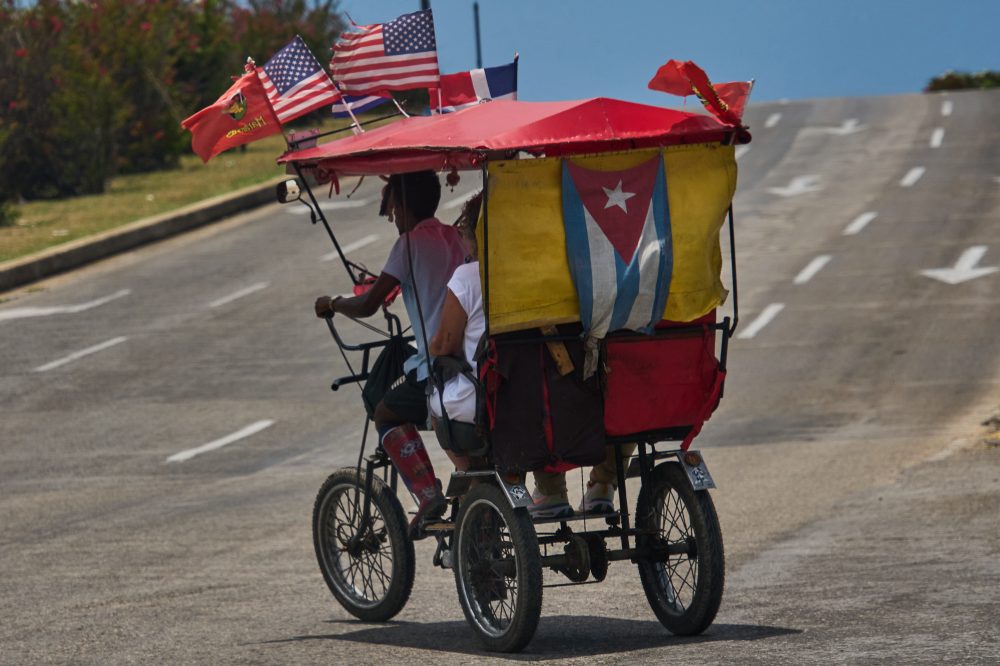
SAN JUAN, Puerto Rico (AP) — On a farm in southeast Cuba in October 1868, an event known as “The Cry of Yara” sparked the island’s quest for independence.
But it wouldn’t arrive until May 20, 1902.
First came the “Great War,” which lasted nearly 10 years, then the “Little War,” which prevailed for more than a year. Then there was the Cuban War of Independence, followed by the Spanish-American War.
Cuba eventually became independent, but the socialist government doesn’t celebrate the date, and neither do its supporters on the island.
Cuba’s independence in 1902 was tied to the Platt Agreement, introduced by a U.S. senator from Connecticut. It gave the U.S. the right to intervene in Cuban affairs “for the preservation of Cuban independence” (among other things) and allowed the U.S. government to lease or buy lands to establish naval bases on the island.
While the agreement was repealed under former U.S. President Franklin D. Roosevelt, it left a bitter taste in the mouth of many Cubans.
“There is only one thing to be grateful for on that day,” Cuban President Miguel Díaz-Canel wrote Wednesday on X. “It instilled in Cubans of that time an anti-imperialist sentiment that each subsequent generation has felt deepen with new and constant threats to the independence and sovereignty of the nation.”
He added that May 20 represents “intervention, interference, dispossession, frustration.”
Cubans and those of Cuban ancestry in the U.S. and elsewhere who oppose the revolution and socialist government celebrate May 20.
“It is their 4th of July,” said Jason Reding Quiñones, Miami’s top U.S. federal prosecutor and son of a Cuba political refugee.
On Wednesday, he joined officials to announce an indictment against former Cuban President Raúl Castro, who is accused in the 1996 downing of civilian planes flown by Miami-based exiles over Cuban waters.
Reding said May 20 “reminds us that the pursuit of freedom, dignity and accountability spans generations and still lives alive and well in the heart of the Cuban community.”
The White House on Wednesday issued a lengthy presidential statement commemorating May 20. It saluted and remembered those “who have sacrificed for a free Cuba,” and cheered new sanctions and the severing of financial lifelines to the island.
“The regime in Havana today is the direct betrayal of the nation their founding patriots bled and died for,” the statement read. “For nearly seven decades, the island’s communist government has violently dismantled political freedom, denied its people fair elections, viciously silenced dissent, and strangled the Cuban economy into a state of collapse.”
Response from the Cuban government was swift.
Cuban Foreign Affairs Minister Bruno Rodríguez called the statement “superficial and ill-informed” in a post on X, adding that it was an “insult” to the people of Cuba.
Cuban officials also decried that U.S. Secretary of State Marco Rubio chose to release a video message in Spanish on May 20, hours before Castro’s indictment was announced. Rubio accused the Cuban government of plundering billions of dollars and leaving people on the island without electricity, fuel or food. He denied that a U.S. energy blockade was to blame.
The Cuban government celebrates Jan. 1, 1959 as its true Independence Day, marking the moment revolutionaries triumphed and forced dictator Fulgencio Batista to flee.
Rodríguez asserted that “the Revolution put an end to almost six decades of economic and political control by the United States, with three military interventions and the political and military support of two bloody dictatorships.”
Cuba also celebrates July 26, known as National Rebellion Day. It commemorates a failed 1953 attack that led up to the revolution.
The foreign affairs minister said the island “has every right” to continue being a free and independent country in charge of its political and economic affairs: “Cuba will defend that right at any cost.”
___
Follow AP’s coverage of Latin America and the Caribbean at https://apnews.com/hub/latin-america
Brought to you by www.srnnews.com
 Sherritt agrees to sell stake in Cuba mining business to company linked to former Trump adviser
 UN backs world court climate opinion; U.S. among few to oppose
 How Trump’s revenge tour against Republicans could cost the party in November
 ‘I’m not greedy’: January 6 rioters and Trump allies eye $1.8 billion ‘weaponization’ fund