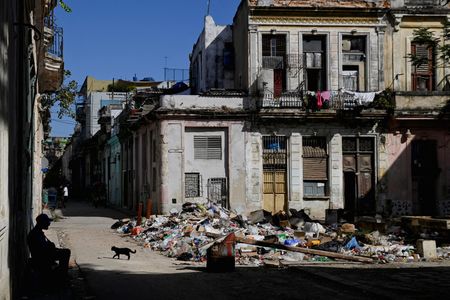
HAVANA, Feb 16 (Reuters) – Garbage has begun to pile up on street corners in the Cuban capital of Havana, attracting hordes of flies and reeking of rotten food, in one of the most visible impacts of the U.S. bid to prevent oil from reaching the Caribbean’s largest island.
State-run news outlet Cubadebate reported this month that Havana only 44 of 106 of its rubbish trucks were able to keep operating due to fuel shortages, slowing garbage collection.
Cardboard boxes, used bags, plastic bottles and rags piled up on street corners across the seafront capital, as some residents sorted through the waste looking for scraps they could re-use, while motorists, pedestrians and bikers are forced to circumvent the imposing heaps.
“It’s all over the city,” said local resident Jose Ramon Cruz. “It’s been more than 10 days since a garbage truck came.”
In other towns on the island – home to around 11 million people – residents took to social media to warn of the risks to public health.
Cuba’s government has implemented rationing measures to protect essential services in the country that was already suffering from severe shortages of food, fuel and medicine.
The country’s oil supply has fallen off dramatically in two months.
Venezuela – once Cuba’s top supplier – effectively stopped sending shipments in mid-December. Mexico’s government also said it was halting shipments after Washington threatened tariffs against countries that send supplies to Cuba.
A Russian newspaper last week reported that Moscow was preparing to send crude and fuel cargoes to the Communist-run island in the near future, without giving a specific date.
The United States has maintained an embargo on Cuba since the 1960s, but in recent months the administration of President Donald Trump has hardened its stance, sanctioning vessels shipping oil to Cuba and threatening tariffs on suppliers.
It argues the measures will pressure a political change in Cuba. The United Nations has long voted for the U.S. to end its embargo, and leaders from Mexico and Venezuela said blocking fuel could have serious humanitarian impacts.
(Reporting by Alien Fernandez and Mario Fuentes; Writing by Sarah Morland; Editing by Dave Sherwood and Nick Zieminski)
Brought to you by www.srnnews.com
 Cuban drivers face monthslong wait for gasoline in a government app designed to reduce lines
 North Korea’s Kim marks completion of Pyongyang housing project as key party congress nears
 Australia rules out repatriating citizens from Syrian camp
 Guthrie family members not suspects in Arizona kidnapping, sheriff says