
By Catarina Demony and Charlotte Van Campenhout
AMSTERDAM, Feb 11 (Reuters) – The Netherlands’ anti-racism chief is hopeful that the new Dutch government will discuss reparations for slavery and colonialism, years after official apologies were criticised by campaigners for falling short of addressing historical wrongs.
Reparations take many forms, ranging from financial compensation to symbolic gestures.
Rabin Baldewsingh, the government‑appointed national coordinator against discrimination and racism, told Reuters efforts to address the Netherlands’ colonial past had come to a “standstill” during the two years that far‑right leader Geert Wilders’ party PVV was, for the first time, in power through a coalition government.
However, a new centrist-right-wing government will take over on February 23, after Wilders’ party lost support in last October’s election.
Rob Jetten, leader of the centrist, pro-EU D66 party that won the last election, agreed to form a rare minority government with the conservative Christian Democrats and right-wing VVD last month.
“If I look at the coalition agreement, hope is there,” Baldewsingh said.
The agreement states “the government will actively promote societal awareness of the country’s colonial and slavery past and its lasting impact”, but does not mention the words “reparations” or “reparatory justice” as such.
Incoming Prime Minister Rob Jetten was not immediately available for comment.
KING AND RUTTE APOLOGISED FOR SLAVERY
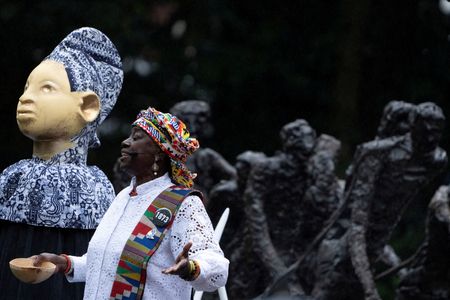
In December 2022, former Prime Minister Mark Rutte acknowledged the Dutch state bore responsibility for transatlantic slavery, and apologised. King Willem-Alexander followed suit months later.
The government at the time ruled out reparations, instead creating a 200 million euro ($238 million) fund for social initiatives.
Baldewsingh called the fund “peanuts”, and said that, although recognising the country’s past was crucial, concrete measures were essential to address the disadvantaged position communities still faced today.
At least 12.5 million Africans were kidnapped and forcibly transported by European ships, then sold into slavery from the 15th to 19th centuries. Advocates say action is needed to confront today’s legacies, including racism.
While calls for reparations have gained momentum, a growing backlash exists, with opponents saying today’s states and institutions should not be held responsible.
Baldewsingh said his priority for 2026 would be reparations and concrete recommendations for the government.
“Without reparatory justice, there will be no healing,” he said.
The Caribbean Community has outlined a reparations plan that includes several demands for a full and formal apology, education and cultural programmes, and debt cancellation.
($1 = 0.8408 euros)
(Reporting by Catarina Demony in London and Charlotte Van Campenhout in Amsterdam; Editing by Alexandra Hudson)
Brought to you by www.srnnews.com
 UN agency begins clearing huge Gaza City waste dump as health risks mount
 Le Pen lawyers tell French appeals court she did not intend to do wrong