
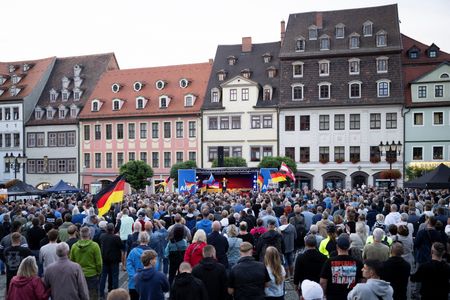
BERLIN, Sept 3 (Reuters) – The eastern state of Saxony-Anhalt holds an election on Sunday that could see the far-right Alternative for Germany (AfD) party win power in a German state for the first time.
The AfD has been leading in polls, with surveys regularly putting support at over 40%, 10 to 15 points or more ahead of the conservative Christian Democrat party (CDU), which currently leads a coalition with the centre-left Social Democrats (SPD) and the pro-free-market Free Democrats (FDP).
But whether the AfD’s main candidate Ulrich Siegmund becomes state premier is likely to depend on whether enough of the other parties opposed to the far-right gain enough votes to enter parliament.
Surveys indicate the FDP is likely to miss out, but if both the SPD and the environmental Greens clear the minimum 5% threshold, their votes — together with those of the CDU and the far-left Left Party — could keep the AfD from forming a government.
Apart from the small far-left BSW party, which polls suggest is unlikely to pass the 5% threshold, all the other parties have ruled out joining a coalition with the AfD, which has also said it aims to govern alone.
Polls have indicated that CDU State Premier Sven Schulze is ahead of Siegmund as voters’ preferred choice for state premier. But whether Schulze would be able to form a government is unclear.
Combining with the SPD and Greens may not be enough for a majority and the CDU has ruled out a coalition with the Left Party. It has not said how it could form a majority without their support.
One possibility is a minority government led by Schulze that would depend on passive tolerance from the Left Party. In the neighbouring state of Thuringia, a CDU premier in coalition with the SPD and the BSW depends on cooperation from the opposition Left Party to pass legislation.
One area of uncertainty is the number of seats in the state parliament or Landtag, which has a minimum of 83 seats but which can have more depending on the breakdown of the vote. Currently there are 97 members of state parliament.
That is due to the mix of constituency seats won directly in single-member districts and seats allocated proportionately based on party-list votes.
If a party wins more of the 41 constituency seats than would be proportionate to its overall share of the vote, it keeps those seats as so-called overhang mandates, with extra balancing mandates awarded to the other parties to ensure proportionality.
(Reporting by James Mackenzie; Editing by Sharon Singleton)
Brought to you by www.srnnews.com
 Algerians battle deadly wildfires as Tebboune seeks death penalty for arson
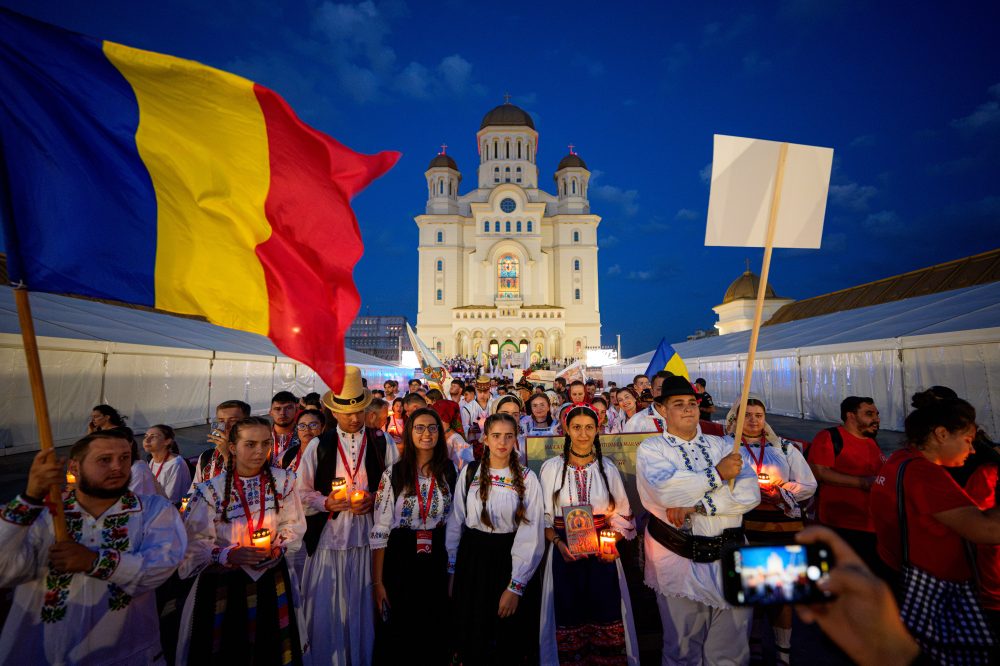 Young Orthodox Christians take part in a lights procession in Romania’s capital
 Britain summons Russian charge d’affaires over Leipzig airport attack
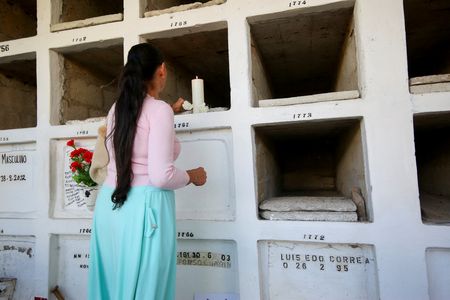 As Colombia slowly identifies conflict victims, families left waiting