
By Philip Blenkinsop
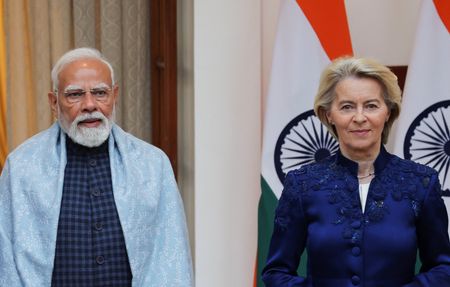
BRUSSELS, Jan 27 (Reuters) – The European Union concluded negotiations on a free trade agreement with India on Tuesday, in the latest of a series of deals designed to offset the impact of U.S. President Donald Trump’s tariffs and reduce reliance on China.
EU trade in goods with the United States was worth 873 billion euros ($1.04 trillion) in 2024 and with China 736 billion euros, according to EU statistics agency Eurostat, respectively 17% and 15% of the EU’s trade with the rest of the world.
The following are the EU’s concluded deals and ongoing negotiations:
MERCOSUR
The deal was struck with the South American bloc of Argentina, Brazil, Paraguay and Uruguay in December 2024, just a month after Trump’s re-election, and some 25 years after talks began.
The agreement is the EU’s largest in terms of tariff reductions, removing over 4 billion euros of annual duties on EU exports such as cars and allowing EU companies to bid for public contracts in Mercosur on the same terms as local suppliers.
The deal has though proved contentious. Critics, such as France, say it will lead to cheap imports of South American foodstuffs, such as beef, undercutting EU farmers. Green groups also say it will lead to further deforestation.
The agreement was signed this month, but the European Parliament has referred it to the EU’s top court, which could lead to a two-year delay. Proponents such as Germany want it to be applied on a provisional basis as soon as possible.
The European Commission says the agreement could boost EU exports to Mercosur by 39%. EU-Mercosur goods trade totalled 111 billion euros in 2024.
MEXICO
In January 2025, on the eve of Trump’s inauguration, the EU revived a stalled free trade agreement with Mexico. The agreement updated a trade accord of 2000, which only covered industrial goods, by adding services, government procurement, investment and farm produce.
The EU believes the update, which awaits approval in the bloc, will increase trade between the two that has risen by over 300% since 2000. In 2024, their merchandise trade was worth 82 billion euros.
INDONESIA
The EU finalised negotiations with Indonesia in September.
The deal will remove some 600 million euros of duties on EU products, including chemicals, machinery, milk powder and cheese.
Indonesia aims to grow its exports of palm oil, coffee and textiles and needs the deal as its economy grows and it loses the preferential access the EU grants to poorer developing countries.
EU goods trade with Indonesia was 27 billion euros in 2024. Indonesia has said it wants the pact to enter force by January 2027 and expects bilateral trade to double in the first five years.
INDIA
The EU’s trade agreement with India is less ambitious than those with other partners, not achieving full liberalisation in sectors such as cars and excluding government procurement, energy and raw materials or investments in manufacturing.
However, the two sides still refer to it as the “mother of all deals”, with large-scale tariff reductions and a combined population of 2 billion people.
EU-India goods trade was 120 billion euros in 2024. The EU estimates its goods exports to India will double by 2032, with nearly 4 billion euros of tariff savings.
OTHERS
The European Union has also accelerated trade negotiations with other ASEAN countries. It resumed talks with Malaysia in January 2025, and had held three sets of negotiating rounds this year with both the Philippines and Thailand. EU trade chief Maros Sefcovic has said he wants to wrap up these negotiations by 2027.
The EU launched negotiations with the United Arab Emirates in May 2025.
It has also said it expects to resume negotiations with Australia early this year after they were shelved in 2023. A deal could also see the EU increase its access to critical minerals like lithium and rare earths.
Combined EU goods trade with these countries was 211 billion euros in 2024.
($1 = 0.8407 euros)
(Reporting by Philip Blenkinsop; editing by Barbara Lewis)
Brought to you by www.srnnews.com
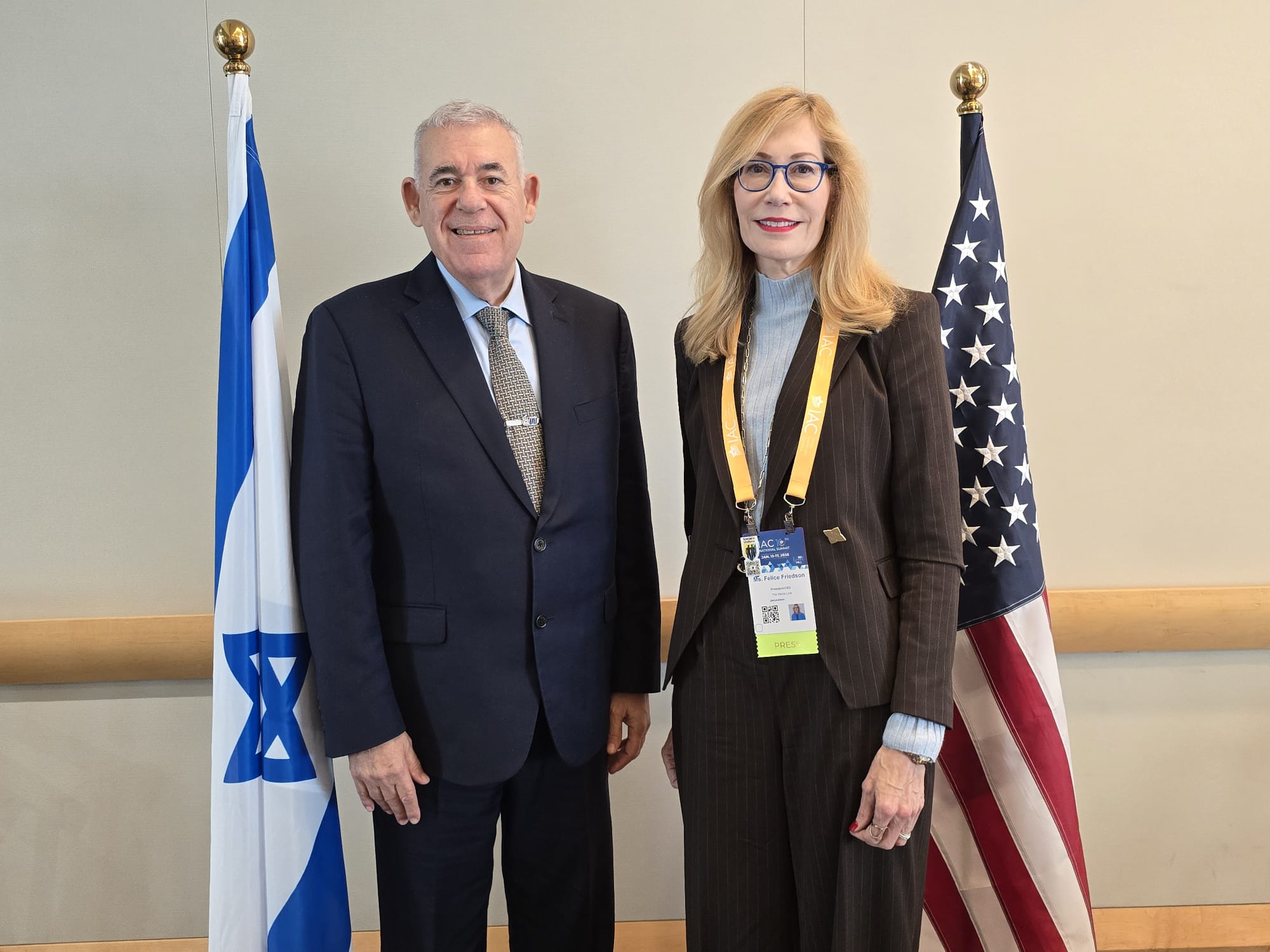 The Media Line: From War Footing to Wall Street: IAI’s Boaz Levy on the Business of Israel’s Missile Shield
 The Media Line: Remembering Miracles: Holocaust Survivors on Memory, Survival, and What Endured
 Tourism in Cuba plummets as tensions with US increase and Venezuela oil shipments drop
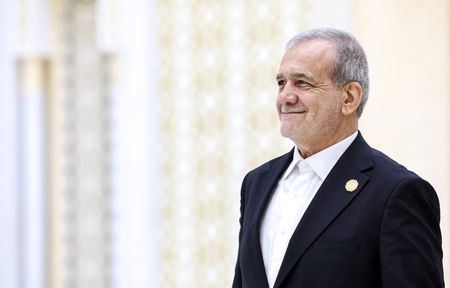 Iran welcomes any process to prevent war, president tells Saudi crown prince in phone call