
JERUSALEM, Oct 27 (Reuters) – Israelis surged to the polls at the fastest rate in nearly half a century on Tuesday to pass wartime judgment on Prime Minister Benjamin Netanyahu, in what voters described as the most consequential election in the nation’s history.
Long lines formed outside polling stations for the first election since the October 7, 2023, Hamas-led attacks, with voters passionately engaged over the trauma of the country’s deadliest day and the ensuing wars in Gaza, Lebanon and Iran.
Policies of Netanyahu’s right-wing coalition have been divisive at home and have deepened Israel’s international isolation, while he has defended his record, calling himself the only leader with the mettle to face down Israel’s foes.
Netanyahu, Israel’s longest-serving leader with 19 years in office, is an unmatched political survivor, and his nationalist politics are increasingly entrenched. Israel’s fragmented system makes it difficult for an array of opponents to force out his coalition of right-wing, far-right and ultra-Orthodox parties.
His main rival Gadi Eisenkot, a military ex-chief of staff and security hawk, aims to unseat him with the support of parties on the right and centre, as well as the rump of an increasingly marginalised left. Opinion polls show a close race, with neither leader facing an easy path to power.
In a message to supporters more than five hours after polls opened, Netanyahu urged them to vote, saying turnout was high among his opponents on the left and among Israelis of Arab heritage, around a fifth of the country.
“We need it to be high too. You all need to stream to the polls,” he said. “This is a fateful moment.”
Brought to you by www.srnnews.com
 Yemen’s Houthis say they hit Saudi Ras Tanura oil refinery with missile
 China hands former security regulator anti-graft official suspended death sentence
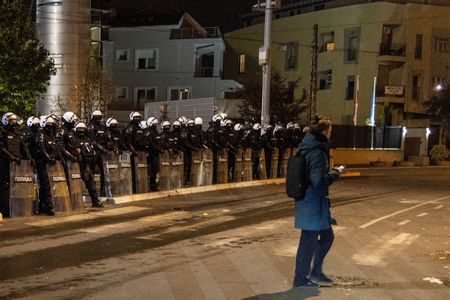 Protesters enter Serbian pro-Vucic TV station, call for arrest of editor