
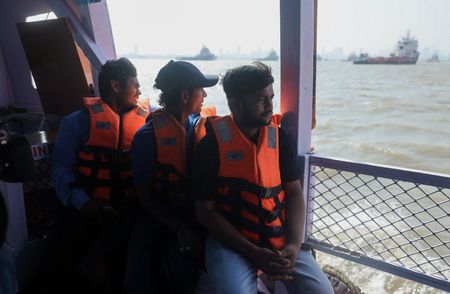
By Sunil Kataria
MUMBAI, May 7 (Reuters) – Nightly explosions of drones and missiles terrified Indian sailor Tithi Chiranjeevi after his ship was stranded in Iran for more than a month by the Strait of Hormuz blockade caused by the Middle East conflict.
“Around 10 to 20 missiles struck every night. No one could sleep,” he told Reuters, describing conditions outside Iran’s port of Khorramshahr on his return home last week, after an arduous 15-day journey through Iraq, Armenia, and Dubai.
The 28-year-old had spent the previous six months working on the Iranian ship Ilda, carrying construction material to Dubai.
The vessel was one of 2,000 trapped in the vicinity of the 104-mile (17-km) waterway that normally carries a fifth of the world’s supplies of oil and liquefied natural gas (LNG).
Violence in the region has killed at least three Indian seafarers so far. Before the conflict began in February, about 138 ships passed through the Strait each day, the Joint Maritime Information Centre says.
As food ran out and communication links snapped, Chiranjeevi lost contact with his widowed mother at home in the southern port city of Visakhapatnam.
“They (our families) were very concerned,” he said.
A colleague, Anant Singh Chauhan, also worried whether he would be reunited with his parents, living in the town of Dewaria in India’s northern state of Uttar Pradesh.
“Sometimes, we used to feel we won’t be able to make it back home,” said Chauhan, who returned along with Chiranjeevi.
The South Asian nation is among the top three global suppliers of seafarers, government figures show, with a workforce 300,000-strong by September last year.
The Indian government says it has helped bring safely home about 3,000 sailors from the Gulf region, and at least 23 this week.
Both men said they borrowed money at exorbitant rates from relatives and moneylenders to pay fees of 450,000 rupees ($4,800) each to secure jobs on international shipping routes.
Despite running out of savings and facing mounting debt, Chauhan said he felt only relief on returning.
“It is like a rebirth for us,” he told Reuters in the financial capital of Mumbai, as he gazed at the city’s Gateway of India monument and the Taj Mahal luxury hotel standing by the water’s edge.
($1=94.2913 rupees)
(Reporting by Sunil Kataria; Writing by Sakshi Dayal; Editing by Clarence Fernandez)
Brought to you by www.srnnews.com
 Israel indicts Jewish man accused of attacking Christian nun in Jerusalem
 Greece, birthplace of democracy, seeks to put humanity ahead of AI in updated constitution
 UK police make third arrest over attempted arson at London synagogue
 EU prosecutors arrest 21 Croatians over suspected farm aid fraud