
BAGHDAD (AP) — Inside a heavily guarded detention facility in Baghdad, men from scores of different countries and nationalities were brought one after another into interrogation rooms and questioned by Iraqi officers.
The prisoners are suspected members of the militant Islamic State group recently transferred from Syria to Iraq at the request of Baghdad — a move welcomed by the U.S.-led coalition that had for years fought against IS.
Over a period of several weeks, the U.S. military escorted more than 5,000 IS detainees from 60 different nationalities from prisons in northeastern Syria run by the U.S.-backed and Kurdish-led Syrian Democratic Forces, to Baghdad.
The transfers have helped calm fears that the fighting in Syria would allow the IS prisoners to flee from detention camps there and join militant sleeper cells that even to this day are able to stage attacks in both Iraq and Syria.
On Thursday, The Associated Press was given rare access to the sprawling detention facility in western Baghdad — now known as Al-Karkh Central Prison but more widely known as Camp Cooper after the 2003 U.S.-led invasion that ousted Saddam Hussein — where the men are being interrogated.
Iraq is looking to put on trial some of the thousands of the IS detainees who were held for years in Syria without charges or access to the judicial system.
Iraqi Judge Ali Hussein Jafat, who is heading the committee interrogating IS detainees brought from Syria, says it’s not easy because of the sheer numbers of prisoners involved.
It’s “complicated and not easy at all,” he said, adding that the detainees are from 14 Arab and 46 other countries.
Many of the detainees have respiratory diseases so a medical center was set up to treat them, he said.
To make room for the newcomers from Syria, thousands of prisoners long held at Al-Karkh were transferred to other prisons in Iraq.
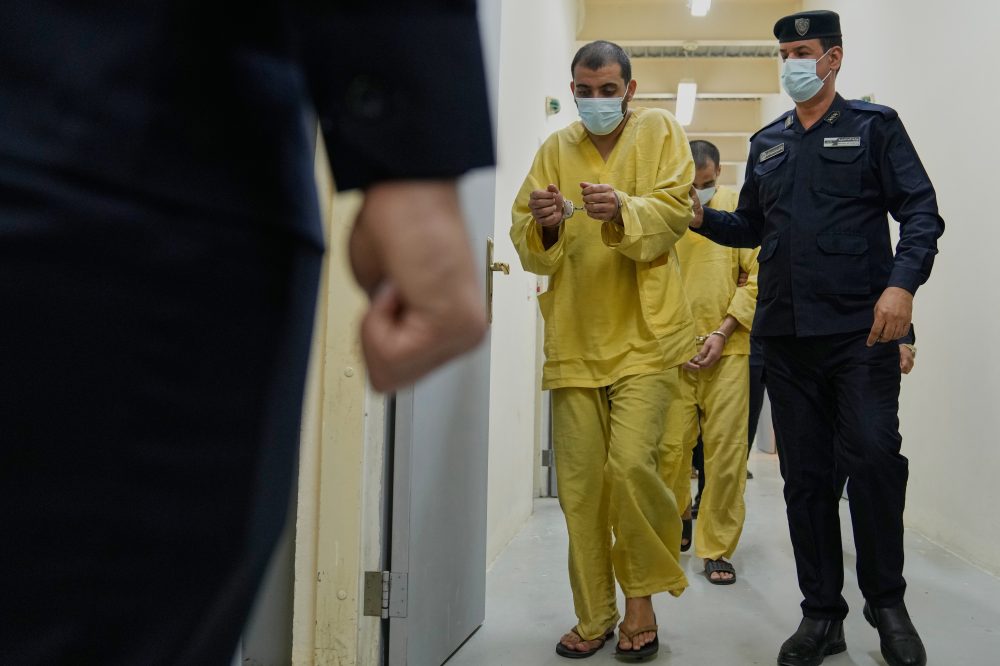
The interrogations are usually a staggered affair — the men were brought in batches, handcuffed, in yellow or brown uniforms and wearing medical facemasks, and taken into a long corridor with rooms on both side.
One by one they are then taken into interrogation rooms, where they sit on a chair as an officer takes down their information. From behind a small window, the AP could observe the questioning but not discern the questions or the detainnees’ answers. It wasn’t clear if the prisoners were under duress.
Some of the prisoners are taken to the medical center for a checkup.
The forces of Syria’s new government that in December 2024 ousted strongman Bashar Assad launched an offensive in January, capturing wide swaths of territory from the Kurdish-led SDF.
A ceasefire was later reached, ending the fight and the SDF withdrew as part of the agreement.
At the time, the United States announced that many of the nearly 9,000 detainees held in more than a dozen Syrian detention centers will be transferred to Iraq.
So far, 5,383 IS suspects have been brought to Iraq. The last batch is expected to arrive on Sunday, Jafat said.
When IS declared a caliphate — a self-proclaimed territory under a traditional form of Islamic rule — in large parts of Syria and Iraq that the militant group seized in 2014, it attracted extremists from around the world.
From the caliphate, the extremists plotted attacks around the world that left hundreds dead from Europe to Arab countries and Asia.
The group also carried out brutalities in Syria and Iraq, including the enslavement of thousands of Yazidi women and girls who were taken when the militants overran northern Iraq. Strict rules were implemented, with IS beheading its opponents, thieves having their hands amputated while women accused of adultery were stoned to death.
Over the years, an international campaign by a U.S.-led coalition defeated IS in Iraq in 2017 and in Syria in 2019.
“Some of them are extremely dangerous,” Jafat said about the detainees.
He added that he has so far seen detainees from Australia, Canada, Turkey, Germany, Britain and the former Soviet Union. There is even one Israeli-Arab man among them, he said.
Many of the countries don’t want the militants who are their nationals back and Jafat said it is too early to say whether the detainees could be extradited or repatriated to their countries of origin.
Those who committed crimes in Iraq will stand trials in Iraq and the proceedings will be open to the public, he added.
Brought to you by www.srnnews.com
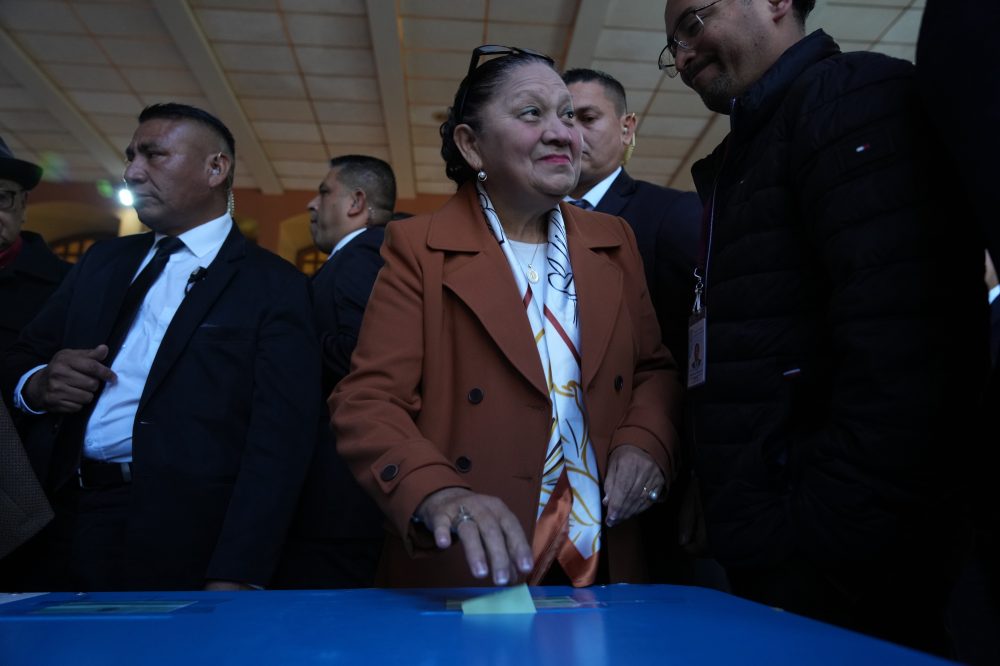 Guatemala begins high-stakes top court magistrate elections, a fresh test for democracy
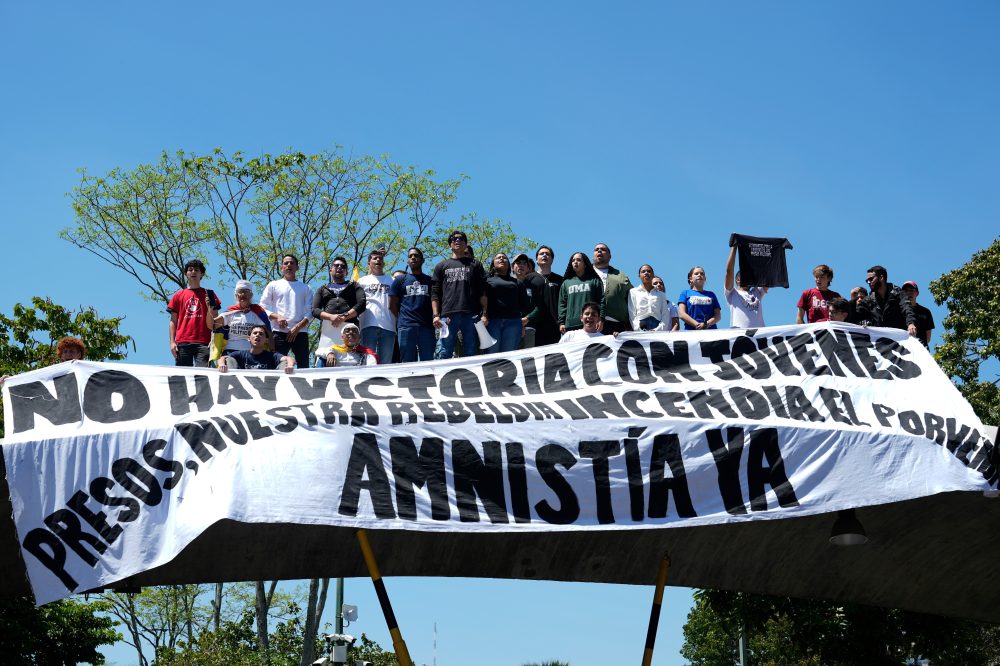 Venezuela’s parliament is to debate an amnesty bill that could free hundreds
 The Media Line: Who Really Governs New York Under Mayor Mamdani?