
JERUSALEM (AP) — The Israeli military said it launched strikes on Hezbollah targets in Beirut on Sunday despite ongoing efforts to negotiate an end to the U.S.-Iran war. Smoke could be seen rising over the Lebanese capital.
The strikes threatened to hamper negotiations over a deal, which in its current form is a deep disappointment to Israel’s government. The last time Israel struck the Beirut suburbs a week ago, it set off the most serious escalation of fighting between Iran and Israel since the tenuous ceasefire took hold April 7.
The office of Israeli Prime Minister Benjamin Netanyahu said the strikes were in response to Hezbollah attacks on the north of the country. Israel’s military said earlier in the day that Hezbollah had launched three projectiles into northern Israel, releasing footage where an audible boom was followed by a column of smoke rising above the tree line.
An Associated Press photographer at the scene in Beirut said the building struck was a five-story apartment building with shops on the bottom floor. The two lower floors were the most heavily damaged by the strikes. There was no word on casualties. Residents of the southern suburbs, many of whom had returned to their homes after a period of relative calm in recent weeks, could be seen fleeing the area.
Hezbollah fired missiles into Israel on March 2, two days after the U.S. and Israel attacked Iran, sparking war in the Middle East. Israeli troops have pushed their invasion of Lebanon deeper than at any point in over a quarter century.
Iran wants a ceasefire deal to include the fighting in Lebanon and seeks the release of billions of dollars in frozen funds. But as talks continued, Israel has been sidelined in negotiations led by Pakistan and others.
“Israel will not tolerate firing into its territory,” a statement from Netanyahu and Defense Minister Israel Katz said Sunday. Trump has pressed Netanyahu to stop hitting Lebanon hard while a deal is near, but the prime minister has defied him.
Iran’s parliamentary Speaker Mohammad Bagher Qalibaf warned on X that Israel’s strikes on Beirut’s suburbs show that “America either lacks the will to fulfill its commitments or the ability to do so.” He warned that the strikes could imperil the final stage of negotiations.
There was no immediate comment from Hezbollah.
Qatari mediators traveled to Tehran on Sunday to finalize the agreement, according to two regional officials.
The officials, who spoke on the condition of anonymity because they were not authorized to speak to the media, expressed cautious optimism that the U.S. and Iran were finally approaching an agreement that could halt hostilities that have killed thousands of people and reopen the Strait of Hormuz, whose closure has thrown world markets into disarray.
U.S. President Donald Trump and Pakistani Prime Minister Shehbaz Sharif said Saturday that the deal would be signed on Sunday, while Iran’s foreign ministry spokesperson Esmail Baghaei said it could happen in the coming days. Trump said that the Strait of Hormuz would open immediately after the signing.
The deal is expected to be signed electronically, without an in-person ceremony, though it’s unclear when or how the signing will take place.
The deal does not solve the thorniest issues between the U.S. and Iran, including Iran’s nuclear program or its frozen assets, but offers a 60-day framework for technical discussions on those issues, according to Pakistani and regional officials familiar with the ongoing negotiations who spoke on the condition of anonymity because they were not authorized to speak publicly. The officials described Pakistan’s monthslong effort leading the negotiations, struggling to keep both sides from walking out of the room and a total collapse of the negotiations on multiple occasions.
Under the current deal being discussed, U.S. and Israel appear to have fallen short of their original goals of destroying Iran’s missile and nuclear programs and ending its support for proxies. It is not clear how the deal will address these issues, or if they will be part of the final agreement.
Critics in Trump’s own Republican Party, struggling with an unpopular war ahead of the midterm elections, criticized the deal. Some said it did not improve on the terms of the 2015 Iran nuclear deal that Trump withdrew the U.S. from during his first term and which he still describes as “bad.”
Meanwhile, Trump was expected to discuss demining the Strait of Hormuz during the Group of Seven summit that starts Monday. The waterway is crucial to significant shipments of oil, natural gas and related products like fertilizer, and its effective closure rocked the global economy.
Iran’s nuclear program and highly enriched uranium have long been at the center of tensions with the U.S. and Israel and an international source of concern.
Trump on social media asserted that “when all is calm,” the U.S. would go in and “downblend and destroy” the enriched uranium in Iran or in the U.S.
Iran has 440.9 kilograms (972 pounds) of uranium that is enriched up to 60% purity, a short, technical step from weapons-grade levels of 90%, according to the International Atomic Energy Agency.
Iran has long maintained its nuclear program is peaceful and has not publicly committed to giving up the enriched uranium, which is believed to be buried under three nuclear sites that were badly damaged by U.S. strikes last year.
___
Frankel from Jerusalem, Ahmed from Islamabad, Magdy from Cairo and Sewell from Beirut. Associated Press writer Melanie Lidman in Tel Aviv, Israel, contributed to this report.
Brought to you by www.srnnews.com
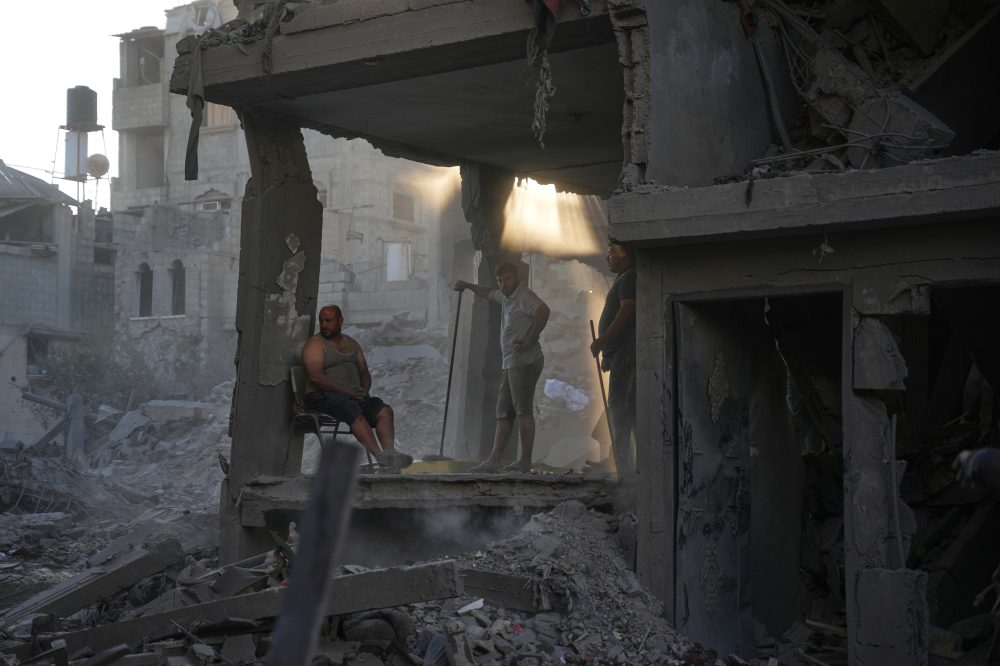 Palestinian death toll in Gaza tops 73,000, officials say, as Israel strikes despite ceasefire
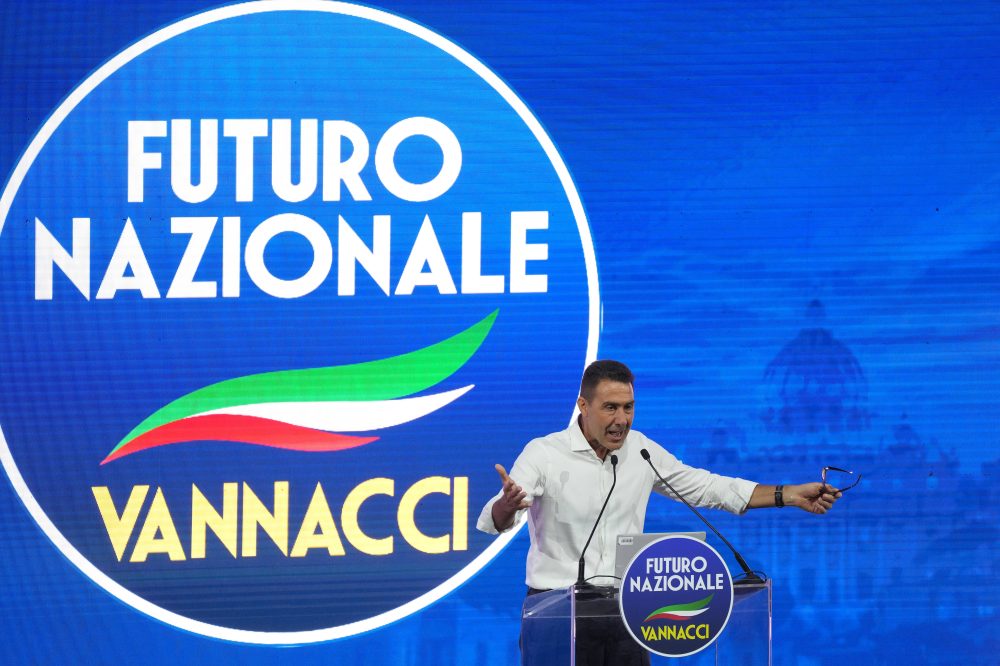 Italy’s Meloni faces a far-right dilemma as ‘Il Generale’ Vannacci rises
 Italian general launches far-right party, threatening Meloni’s election hopes