
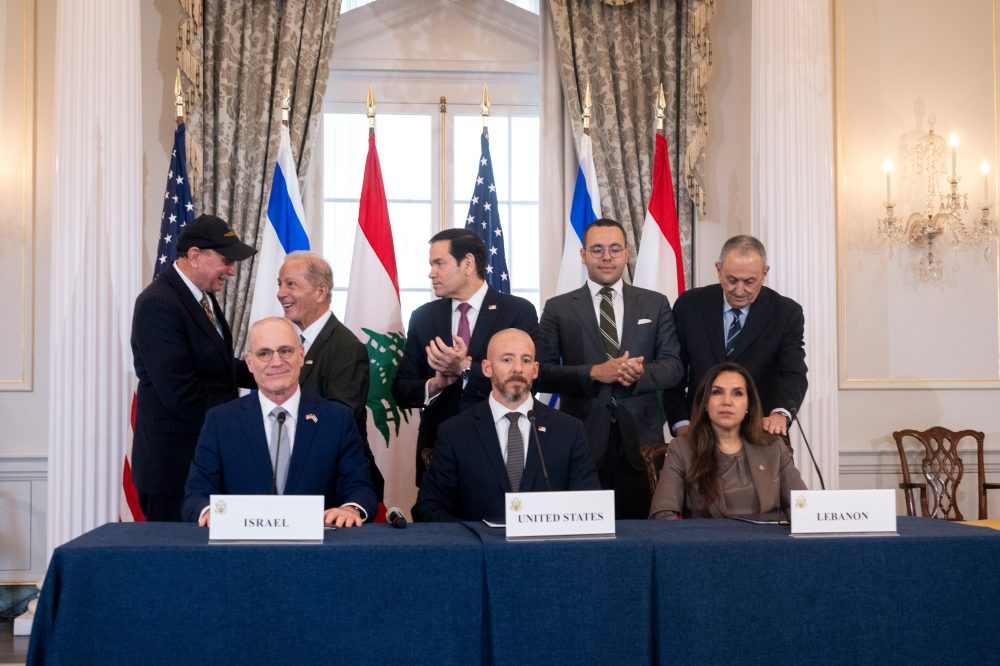
BEIRUT (AP) — Hezbollah’s leader on Saturday criticized a framework agreement that Israel and Lebanon signed a day earlier to end months of conflict between the militant group and Israel, raising concerns about its effectiveness.
Lebanon and Israel signed the deal in Washington on Friday without Hezbollah. The agreement links Israel’s withdrawal from Lebanon to the Iran-backed militant group’s disarmament, something Hezbollah rejects.
Several previous ceasefire agreements that Lebanon has negotiated with Israel since the outbreak of the latest Israel-Hezbollah war were never implemented on the ground.
In a statement Saturday, Hezbollah leader Naim Kassem said his group will keep fighting until Israel is forced to leave Lebanon. The group’s supporters protested in the streets of Beirut following the announcement of the agreement.
Despite the deal, the Lebanese state news agency reported an Israeli drone strike near the southern city of Nabatiyeh.
It also reported that the Israeli military released three Lebanese and three Syrian workers who were taken near the southern village of Ain Arab on Friday.
Details of the deal that the U.S. State Department released Saturday state that Lebanon and Israel aim to eventually end the state of war between them that began when Israel was created in 1948.
The deal says Israel will withdraw from Lebanon provided Hezbollah disarms.
It calls for Israel to initially withdraw from two small areas — called pilot zones. It did not say where those two initial zones will be. The Lebanese army will gradually assume full security responsibility over those areas. The two countries will agree to future pilot zones for Israel’s withdrawal in the future, the agreement says.
The deal has a security annex that includes the details of the deployment of the Lebanese army and redeployments of Israeli troops. The security annex was not made public.
As part of the deal, Israel stresses that the disarmament of Hezbollah throughout Lebanon and additional security measures to be agreed upon between the two countries will eliminate any future need for Israeli army’s military action or presence in Lebanon.
The talks between Israel and Lebanon were separate from the interim deal that was signed earlier this month by the leaders of the U.S. and Iran to end the fighting in the Islamic Republic.
From Hezbollah’s point of view, the deal is nonexistent, Kassem said Saturday.
He called the agreement a “humiliation,” adding that linking Israel’s withdrawal to Hezbollah’s disarmament as a “very dangerous suggestion.”
The deal prompted one of the group’s officials, Hassan Fadlallah, to warn that it could result in civil war because Hezbollah won’t give up its weapons and will resist any measures taken by the Lebanese army.
Judge Ahmed Rami al-Hajj, Lebanon’s top public prosecutor, on Saturday told the heads of the country’s security agencies to take measures to prevent riots.
The deal states that both Lebanon and Israel recognize that the restoration of security in southern Lebanon through the deployment of the Lebanese army, the safe return of its civilian population, and the security of Israel’s northern communities, are essential to long-term stability and peace.
“Personally, I don’t think it will be lasting because the Lebanese military cannot really stand a chance against Hezbollah,” said Israeli citizen Ronit Belson while visiting the town of Metula along the border with Lebanon.
In Lebanon, people were divided with Rabie Sammour, a resident of the southern city of Sidon saying: “People just want to rest for good. I support the Lebanese authorities in the decision” taken.
Another Sidon resident, Khaled Ghannoum, said the deal “legitimized Israel’s occupation.”
In an apparent reference to Iran, that has sent billions of dollars in cash to Hezbollah over the past four decades, the deal states that Lebanon and the United States commit to preventing funds from flowing to any entity, organization, or individual affiliated with non-state armed groups and to take available legal measures to proscribe the activity of any such entity, organization or individual.
The deal states that the Lebanese government explicitly commits to prevent reconstruction funds from flowing to non-state armed groups and connected entities.
_____
Mor reported from Metula, Israel. Associated Press journalist Ibrahim Hazboun contributed to this report from Jerusalem.
Brought to you by www.srnnews.com
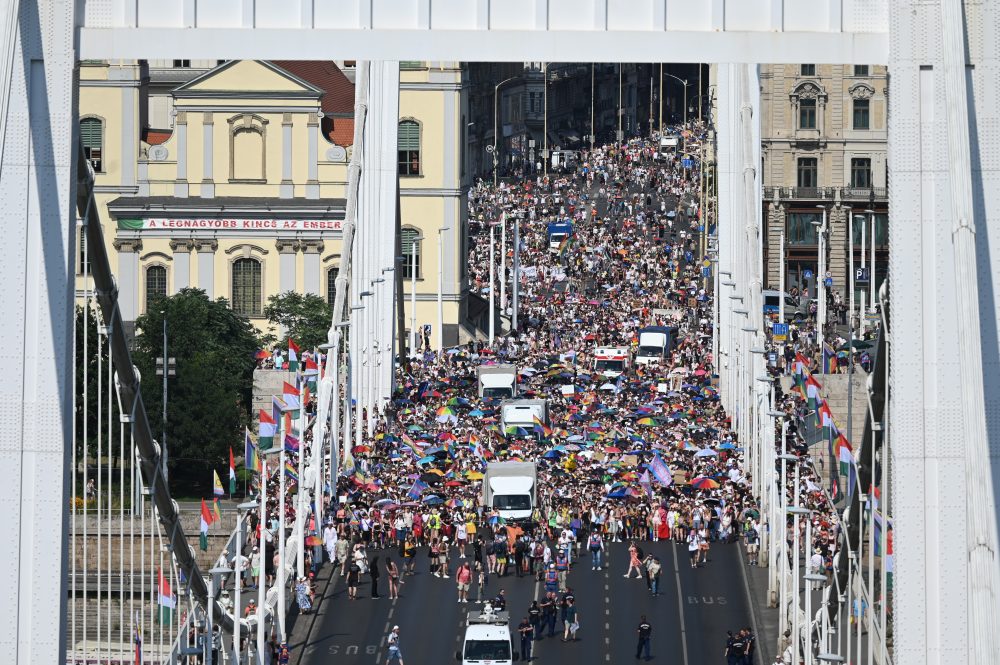 Tens of thousands march in the first Budapest Pride since Viktor Orbán was voted out
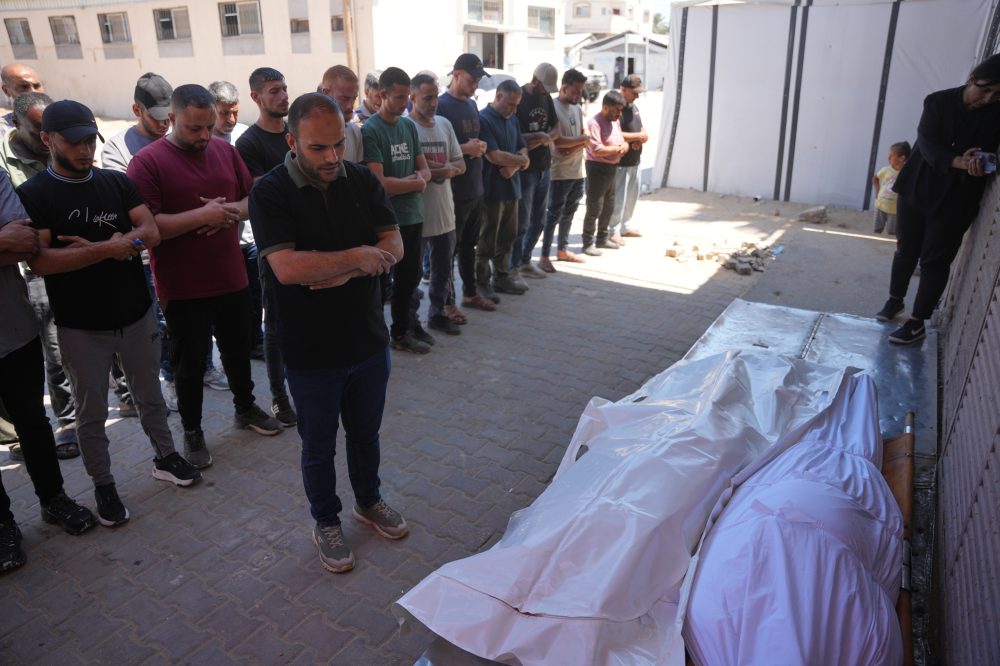 Israeli drone strike kills Palestinian siblings in a Gaza tent camp
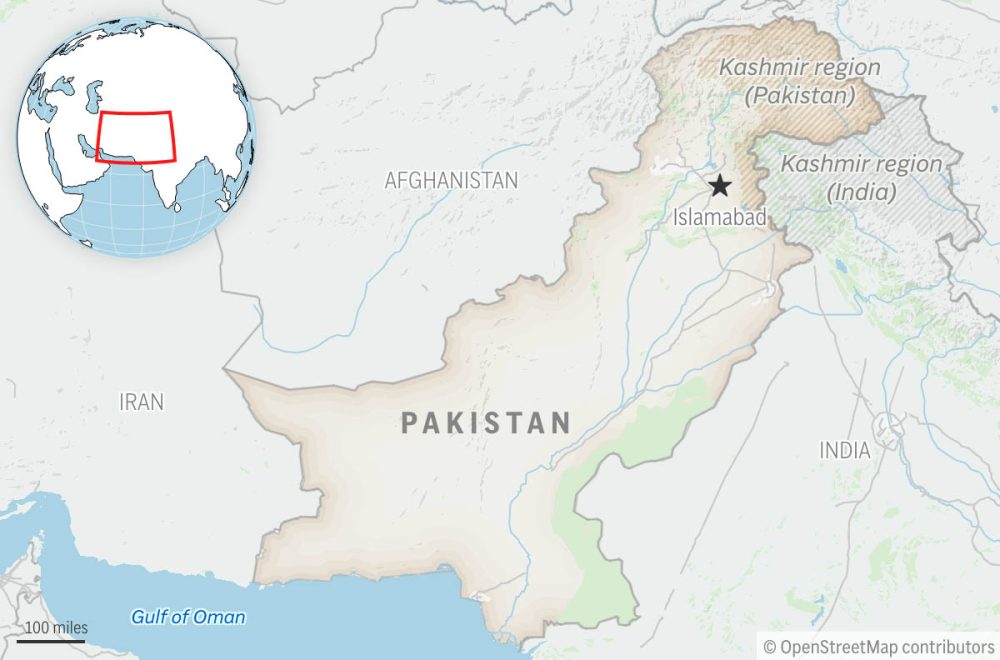 5.9 magnitude earthquake shakes Pakistan and Afghanistan, no damage reported
 Senior US officials frustrated by Machado bid to return to Venezuela after quakes, White House official says