
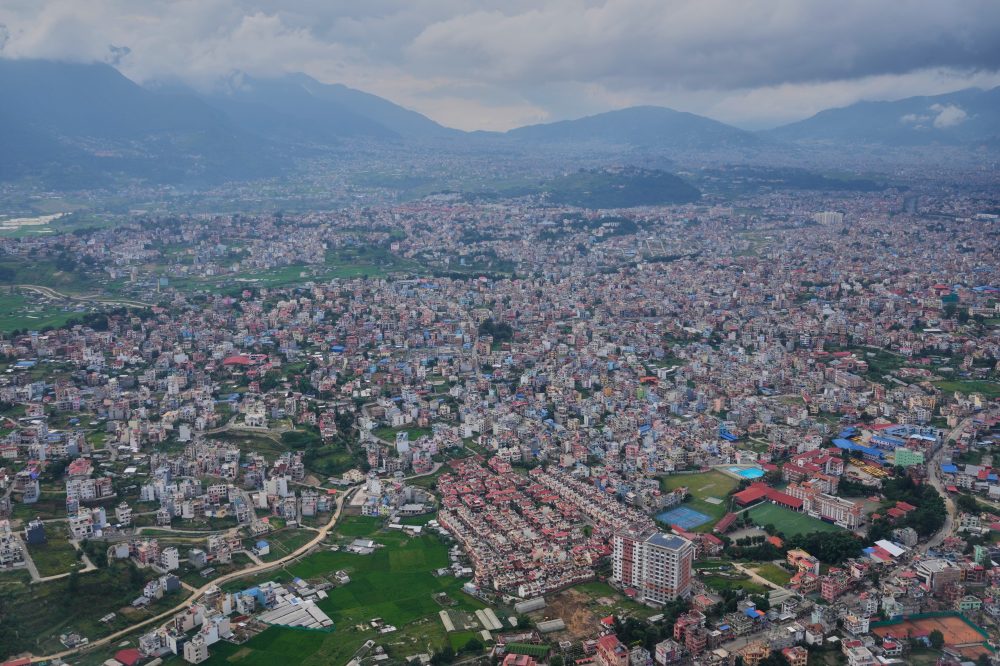
The mountain range along the Nepal-China border has its dangers, most recently seen this week in the flash floods spurred by a glacier collapse that have killed hundreds and brought a wide swath of destruction.
The mountains are also a draw — home to millions of people with generations of connection to their environment, as well as many visitors who come to trek up some of the world’s highest peaks or visit religious sites.
That has become clear in the aftermath of the floods, with people from at least 30 countries joining the hundreds of the region’s residents among the missing.
People in that region of Asia have been traversing the mountains for centuries, such as traders moving their goods along a part of the route system known as the Great Silk Road.
Certain ethnic groups like the Sherpas in Nepal developed an expertise in mountaineering. In the mid-20th century, when the modern-day nation started welcoming in foreigners and tourism, Nepalis were tapped for their knowledge and guidance by explorers from elsewhere looking to make the climbs.
In 1953, one of them, Tenzing Norgay, connected with New Zealand climber Edmund Hillary and the two men became the first to reach the summit of Mount Everest, the highest peak in the world.
In the decades since, interest in trekking has burgeoned, making tourism a bigger part of Nepal’s economy. But it’s also brought concerns about how to manage it.
Among the popular places for visitors to make a climbing attempt are Mount Everest and Everest Base Camp, as well as the trails of the Annapurna conservation area in Nepal. In May, a record 274 climbers reached the Everest summit in a single day. The uptick in mountaineers has drawn discussions about how to keep Everest pristine and managing issues like garbage and debris.
The area closer to Kathmandu, where flooding took place this week, is also a part of the country that sees wide trekking interest.
The increase in interest has spurred change in the country overall, said Rajendra Lama, general secretary of the Nepal Mountaineering Association, who lives in Kathmandu and has been working as a guide for more than two decades.
There’s been infrastructure improvements like better roads in some areas, the rise of places to stay and eateries along the way, even the possibility of pizza.
“There’s a big difference from when I started … Nowadays people need more facilities,” Lama said in a phone call with The Associated Press.
Despite the growing trappings of modern mass tourism, many are drawn to and love the country because of its natural beauty and unforgettable vistas, and the people and cultures that call it home.
That’s the draw for Ariel Estulin. The photographer from Toronto has visited Nepal four times, his first visit more than 15 years ago.
He’s traveled around the mountainous country to see different regions, some of them so remote that getting to them required “two full days of travel on the most unimaginable bus ride from Hell you can imagine,” he said. They were places where finding a place to sleep took knocking on a farmer’s door and asking if he could spend the night, sharing their meals.
“It is changing,” he said, “but it will always remain wild.”
Lama is counting on that love to help Nepal get through this catastrophe, as rescuers are still trying to find survivors while a threat of more flooding looms.
He recalled the 2015 earthquake in Nepal that killed thousands and injured many more. He remembers how worried he was that it would keep visitors afraid and away, and how heartened he was when that didn’t happen.
He’s hopeful that same kind of energy will come through now, and said he’s been getting numerous messages of support.
“It means,” he said, “that people love Nepal.”
Brought to you by www.srnnews.com
 A Dutch institute issues a ‘Red Alert’ over potentially lethal Trump-shaped ecstasy pills
 Ecuador finds ex-President Moreno guilty in hydro plant bribery case
 US officials backpedal on claims that government agencies were hacked by Chinese, now say they were targets
 Nearly 200,000 people forcibly returned to Haiti so far this year, UN says