
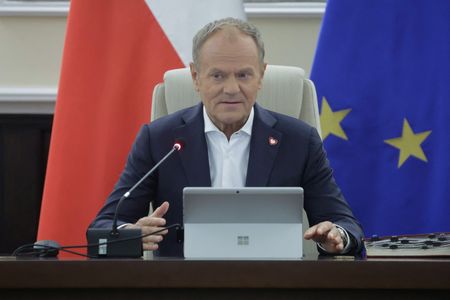
WARSAW, April 13 (Reuters) – Hungary’s election shows that Europe is not on an inevitable path toward authoritarian rule, Polish Prime Minister Donald Tusk said on Monday, after the center-right Tisza party nL1N40V01B ended Viktor Orban’s 16‑year grip on power.
“Everyone feared there was a trend toward authoritarian, corrupt regimes,” Tusk said while on an official visit to South Korea nP8N40E02Y, according to Polish state-owned news agency PAP.
“That’s not the case. First Warsaw, then Bucharest, Chisinau, now Budapest.”
In 2025, centrist Nicusor Dan won a presidential election in Romania and Moldova’s pro-European ruling party won a resounding victory over its Russia-aligned rival.
Tusk had repeatedly criticized nL8N40C139 Orban’s government for its close ties with Moscow.
“I’m glad that this part of Europe is showing that we are not doomed to corrupt and authoritarian governments, because that’s what Victor Orban’s government unfortunately became after many years in power.”
Neighbors Poland and Hungary are linked by their long, shared history, close trade ties and cooperation within the European Union and NATO.
Tusk said he had spoken with Tisza leader Peter Magyar to congratulate him on his victory.
“We briefly discussed his visit to Warsaw,” Tusk said.
“As you know, he long ago chose Warsaw as his first visit for quite obvious reasons. I think our relationship will be absolutely exceptional.”
(Reporting by Pawel Florkiewicz; Editing by Kevin Buckland)
Brought to you by www.srnnews.com
 Sánchez returns to China as Spain seeks deeper ties amid Iran war tensions
 The Latest: Ship traffic appears to halt in Strait of Hormuz after Trump’s blockade announcement
 Exclusive-Chilean copper miner Codelco, contractors fined after deadly mine collapse
 Argentina credit stress deepens as inflation and utility costs hit households