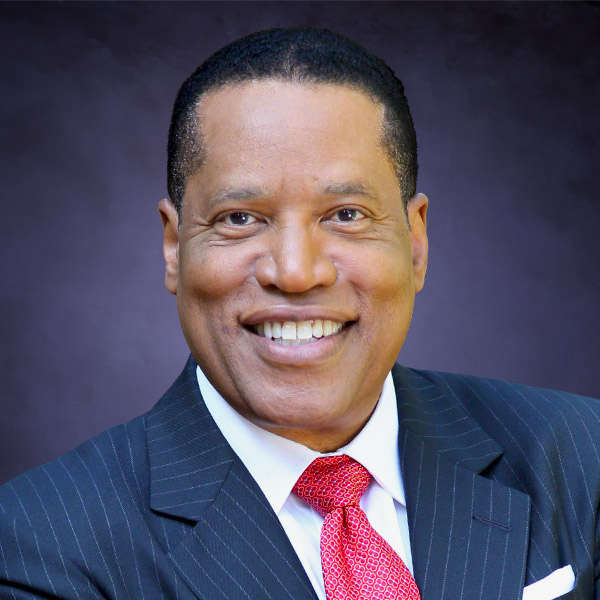
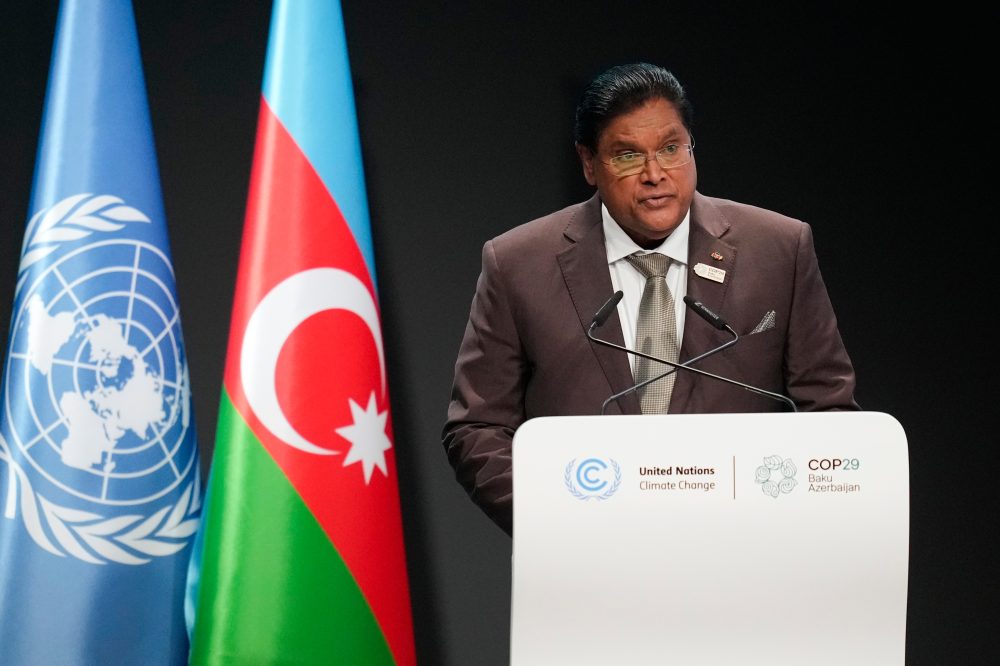
PARAMARIBO, Suriname (AP) — Suriname’s former president, Chandrikapersad Santokhi, an ex-police commissioner who investigated the 1982 killings of more than a dozen political opponents that deeply scarred the South American country, has died. He was 67.
Santokhi, who was also known as “Chan,” led the troubled country as president from 2020 to 2025, and previously served as minister of justice and police from 2005 to 2010.
Suriname President Jennifer Geerlings-Simons confirmed Santokhi’s death in a statement on social media, writing that “his years of service in various public functions will be remembered.”
The cause of death was not immediately known.
Rob Jetten, the prime minister of the Netherlands, wrote on X that he was “grieved and shocked by the sudden passing” of the former president: “As president, and in his other roles, he meant a great deal to Suriname. He also tirelessly worked to strengthen the ties between the Netherlands and Suriname.”
Suriname is a former Dutch colony.
Also mourning Santokhi’s death was Caricom, a Caribbean trade bloc that saw him as chairman from July to December 2022: “The community has lost a dedicated regionalist.”
Irfaan Ali, president of neighboring Guyana, described Santokhi as a “man of quiet strength” who served his people and country “with dedication and conviction.”
“The region has lost a fine statesman, one who carried the mantle of leadership with grace and humility,” he wrote on X.
Santokhi took over a bankrupt Suriname from his predecessor, former dictator Desi Bouterse, and led the country to economic stability, partly supported by an International Monetary Fund program. However, austere measures implemented to comply with the program translated into big sacrifices for the Surinamese people, including the phasing out of fuel, water and electricity subsidies.
In February 2023, hundreds of demonstrators stormed Suriname’s Parliament to protest high fuel and electricity prices as they demanded Santokhi’s resignation.
Voters denied Santokhi a second term following the May 2025 general election.
Earlier, as minister of justice and police, Santokhi cracked down on drug trafficking and other crimes, earning him the nickname “The Sheriff.”
Before entering politics, Santokhi was a police commissioner, leading the investigation into the so-called “December killings,” in which 15 political opponents of the military regime led by Bouterse were shot and killed in December 1982.
Bouterse faced a criminal trial that began in 2007, a quarter-century after the killings took place. He was eventually sentenced to 20 years in prison after being convicted twice in the killings but remained a fugitive up until his death in late 2024.
Bouterse had accepted “political responsibility” for the killings but always denied he was present for them.
Even before the trial began, Bouterse accused Santokhi of wanting to imprison and kill him. The two were fierce political opponents.
Santokhi’s success as a police officer and later as a minister paved the way for him to claim the chairmanship of the Progressive Reform Party in 2011 following the resignation of then-chairman Ramdien Sardjoe.
Brought to you by www.srnnews.com
 The Media Line: Knesset Passes Death Penalty Law for Terrorists With Netanyahu’s Support; Lapid Calls It ‘Distorted PR Maneuver’
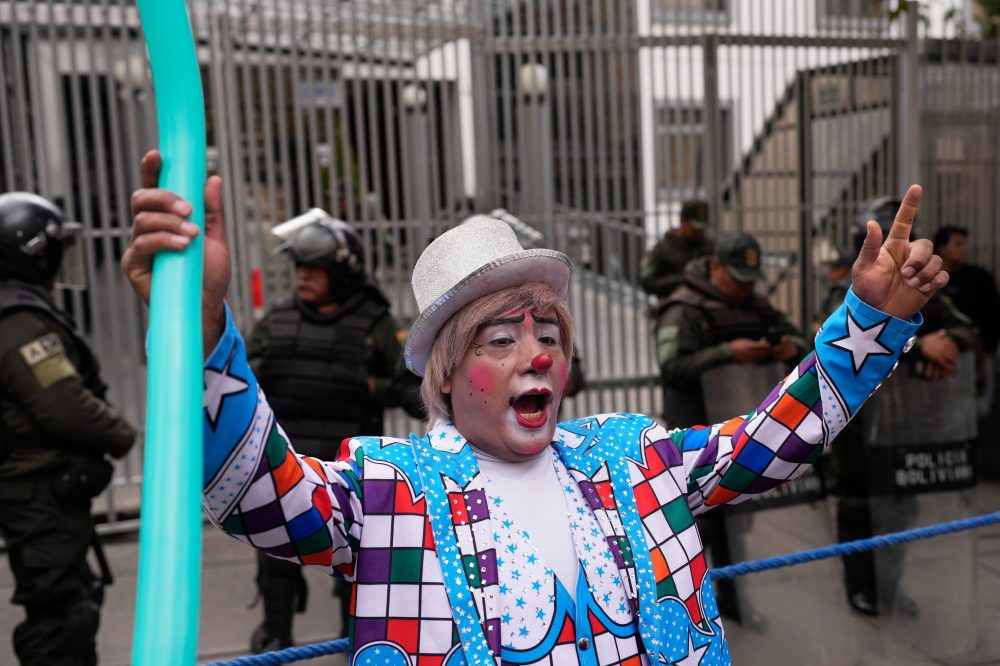 Clowns take to the streets of Bolivia to protest decree that could crush their livelihoods