
Iran launched strikes toward Israel and neighboring Gulf countries early Wednesday, with explosions heard in the United Arab Emirates and Qatar and interceptions reported in Saudi Arabia.
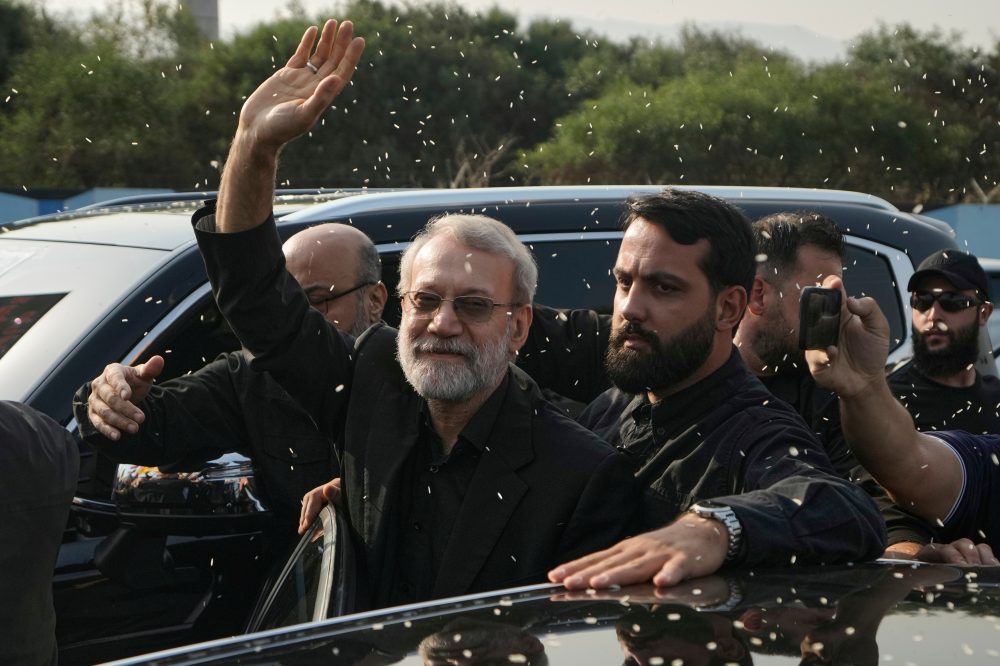
The attacks came hours after Iranian state media confirmed Israel’s military killed top Iranian security official Ali Larijani in an overnight strike, as well as Gen. Gholam Reza Soleimani, the head of the Revolutionary Guard’s Basij force, known for its role in suppressing protests.
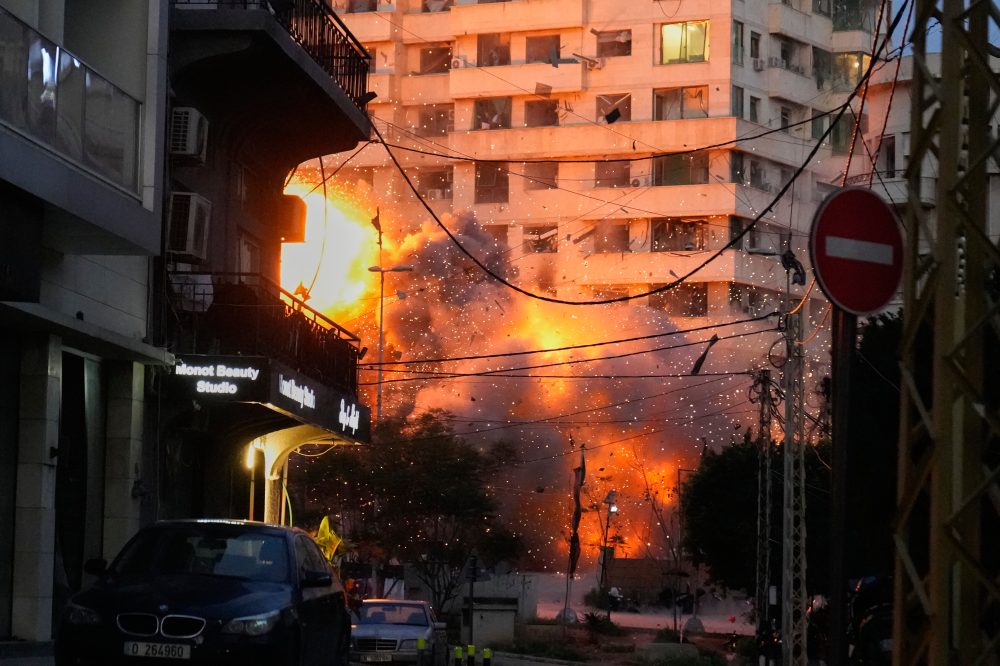
An Israeli airstrike struck an apartment building in Bachoura, central Beirut, completely flattening it as day broke. Two earlier strikes on residential apartments in other central Beirut neighborhoods early Wednesday killed at least six people and wounded 24 others, according to the Lebanese Health Ministry.
Israeli strikes targeting central Beirut have become increasingly frequent in recent days, with or without prior warning. The attacks have hit far from the city’s southern suburbs, for which the army issued evacuation notices early in the war with Hezbollah.
The U.S.-Israeli war with Iran has killed at least 1,300 people in Iran, more than 900 in Lebanon and 14 in Israel, according to officials in those countries. The U.S. military says 13 U.S. service members have been killed and about 200 wounded.
Here is the latest:
Israel said it detected a new missile launch from Iran targeting it Wednesday morning.
Iran’s judiciary said Wednesday it executed a man it accused of spying for Israel’s Mossad intelligence agency.
The judiciary’s Mizan news agency identified the man as Kourosh Keyvani.
It alleged he “provided images and information on sensitive locations” to the Mossad.
Iran, one of the world’s top executioners, long has killed people convicted of spying charges in closed-door hearings where they can’t fully contest the cases against them.
Activists and rights groups have warned since Iran’s nationwide protests in January that the Islamic Republic could begin conducting mass executions. Iran violently suppressed the protests through violence that killed thousands and saw tens of thousands detained.
In the aftermath of Iran’s eight-year war with Iraq in the 1980s, international rights groups estimate as many as 5,000 people were executed.
A senior Australian government minister said he isn’t aware of any formal U.S. request for military support to keep the Strait of Hormuz open.
Treasurer Jim Chalmers was responding Wednesday to U.S. President Donald Trump’s complaint that Australia, Japan, South Korea and NATO had rejected his calls to help secure the strait from Iranian attack.
Asked if Australia had received any formal U.S. request for extra military support to keep the strait open, Chalmers told Australian Broadcasting Corp: “Not that I’m aware of.”
“It’s not something that we’ve been considering, in terms of sending battleships to the Strait of Hormuz,” Chalmers told Sky News television in another interview.
Brought to you by www.srnnews.com
 Man arrested after climbing into pygmy hippo Moo Deng’s enclosure at Thai zoo
 Iran lashes out with attacks on Israel and Gulf neighbors as Israel hits Beirut
 What to know about Iran’s Bushehr nuclear power plant after report of projectile hitting its complex
 Thai court accepts petition challenging legality of election ballots