
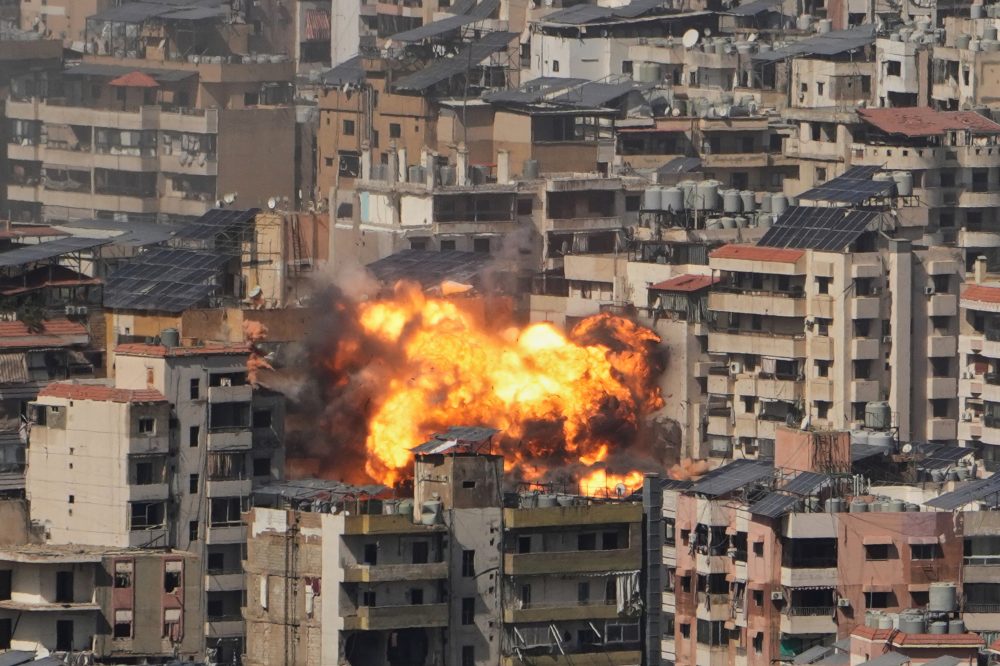
Iran’s Supreme Leader Ayatollah Mojtaba Khamenei issued his first statement on the war on Thursday, saying that the leverage of closing the Strait of Hormuz should be used and that Iran will keep attacking its Gulf Arab neighbors. Khamenei also called on Gulf countries to “shut down” U.S. bases, saying promised U.S. protection is “nothing more than a lie.”
Khamenei did not appear on camera. Israeli intelligence assessed that he was likely wounded in the war’s opening salvo, which also killed his wife, one of his sisters, his niece and his father, Supreme Leader Ayatollah Ali Khamenei.
Iran’s unrelenting attacks on shipping traffic near the Strait of Hormuz and energy infrastructure in the Persian Gulf had earlier pushed oil back above $100 a barrel, as American and Israeli strikes pound the Islamic Republic with no sign of an end to the war in sight.
U.S. President Donald Trump has promised to “finish the job,” even though he claimed Iran is “virtually destroyed.” The first week of the war cost the United States $11.3 billion, according to the Pentagon.
The U.N. refugee agency says up to 3.2 million people in Iran have been displaced by the ongoing war. It said most have fled from Tehran and other major cities toward the north of the country or rural areas. Israel’s military on Thursday warned residents of a large area of southern Lebanon to leave their homes, saying it would act “forcefully” against the Iran-backed Hezbollah militant group.
Here’s the latest:
The U.S., which holds the Security Council presidency this month, had been pushing for a meeting on sanctions that were reimposed on Iran last September because of growing concerns over its nuclear program.
It received support from 10 other members of the council, who voted in favor of holding the meeting amid ongoing conflict in Iran after U.S. and Israel launched a war on Feb. 28. Iran’s two allies on the Security Council, Russia and China, were opposed, and Pakistan and Somalia abstained from Thursday’s vote.
Russia’s U.N. Ambassador Vassily Nebenzia argued that reimposing the sanctions would be a “flagrant violation.”
The investment bank said early Thursday that the Iran war could have a sustained, if modest, impact on the U.S. economy, with inflation and unemployment higher and growth slower.
Goldman now thinks the Federal Reserve won’t cut its key interest rate until September, and its forecasts suggest Americans will keep seeing higher costs for gas, utilities and potentially groceries as they prepare to vote in this year’s elections.
Before this war began, Goldman forecast that inflation would cool as the impact of Trump’s tariffs fades. The bank now expects the Fed’s preferred inflation measure to end this year at 2.9%, remaining above the Fed’s target of 2%.
And that’s based on average oil prices rising 40% to $98 a barrel in March and April. Should the war cause oil prices rise to an average $110 over those two months, inflation would hit 3.3%, Goldman economists estimate.
The U.S. Navy said the fire Thursday on USS Gerald R. Ford originated in the main laundry area.
“The cause of the fire was not combat-related and is contained,” the Navy said in a post on X. “There is no damage to the ship’s propulsion plant, and the aircraft carrier remains fully operational.”
Two sailors are receiving medical treatment “for non-life-threatening injuries and are in stable condition,” the post continued.
The world’s largest aircraft carrier has been operating in the Red Sea for the last few weeks as part of U.S. operations in Iran.
A Foreign Ministry statement said the attacks in Lebanon have led to a humanitarian crisis and constitute a violation of international law.
Turkey also accused Israel of expanding its “destructive” policies in Gaza into Lebanon.
“We will continue to stand in solidarity with the Lebanese people and state,” the statement read.
The army announced the decision in the high-profile case at a time when much of the country’s attention is focused on the war with Iran.
Leaked video of the abuse was aired last year by Israel’s Channel 12 and purported to show the soldiers sodomize the Palestinian detainee from Gaza at the notorious Sde Teiman prison facility.
Hard-line ultranationalists were furious that the soldiers were arrested. Members of Netanyahu’s government were in uproar, leading to the resignation of the military’s top legal official, who had filed the indictment and authorized the leak.
Israel has long been accused of failing to hold its soldiers accountable for crimes committed against Palestinians. The allegations have intensified during the war in Gaza. Israel says its forces act within military and international law and says it thoroughly investigates any alleged abuses.
▶ Read more
Chief Cabinet Secretary Minoru Kihara told reporters that the Japanese government is paying “serious attention to the situation surrounding the Strait of Hormuz.”
Mitsui O.S.K. Lines confirmed Thursday that a Japanese-flagged container ship One Majesty sustained damage to its stern a day earlier while anchored in the Persian Gulf, however all crew members were safe and the ship had no fire, flooding or oil leak.
A Mitsui-operated oil tanker took minor damage from unidentified falling objects last week while in the Gulf of Oman. Mitsui says the damage is under investigation and it’s not known whether the ships were attacked.
Foreign Secretary Yvette Cooper condemned Iran’s “reckless attacks,” which included hits on Saudi oil facilities and the U.S. Embassy in Riyadh.
She is due to discuss ways of ensuring “continuity of oil supply” with regional partners as Iran attacks shipping in the Strait of Hormuz.
Khamenei said he, like the Iranian public, only learned about being selected as supreme leader from Iranian state television.
He did not mention his location in the statement as well as he’s likely in a secure, secret location to avoid a threatened Israeli operation to kill him. Minutes after the speech ended, the sound of airstrikes again boomed across Iran’s capital.
Khamenei acknowledged in his speech the death of his father, signaling he was there in the aftermath and saw his father’s body. Khamenei also confirmed his wife, one of his sisters, his niece and the husband of his other sister also were killed in the airstrike.
“I had the honor of seeing his body after his martyrdom,” Khamenei said of his father. “What I saw was a mountain of steadfastness, and I was told that the fist of his intact hand had been clenched.”
The Israeli military’s Arabic-language spokesperson, Avichay Adraee, said on X that Lebanese residents should move north of the Zahrani River, which at its midpoint is about 35 miles (56 kilometers) away from the border with Israel.
Over 800,000 people in Lebanon have been displaced over the past 10 days in the latest conflict between Israel and Hezbollah, part of the wider Iran war.
Ayatollah Mojtaba Khamenei’s remarks suggested Iran may open up new fronts in the war if it continues. That likely would signal a return by Iran to the militant attacks the United States has blamed on it in the past, including the 1983 U.S. Marine Barracks bombing in Beirut and others.
“One point I must emphasize is that, in any case, we will obtain compensation from the enemy,” Khamenei said. “If it refuses, we will take from its assets to the extent we deem appropriate, and if that is not possible, we will destroy its assets to the same extent.”
When Ali Khamenei took over from the late Grand Ayatollah Ruhollah Khomeini, he did not immediately make a public speech in person, instead waiting until after a 40-day mourning period. However, Mojtaba Khamenei finds himself and the Iranian government he leads in perhaps its most-desperate fight since the 1979 Islamic Revolution.
Khamenei acknowledged in his speech the death of his father, signaling he was there in the aftermath and saw his father’s body. Khamenei also confirmed his wife, one of his sisters, his niece and the husband of his other sister also were killed in the airstrike.
Khamenei also said that the leverage of closing the Strait of Hormuz should be used and that attacks on Iran’s Gulf Arab neighbors will continue.
Poland’s National Centre for Nuclear Research defeated a cyber attack “in the last few days,” Minister for Digital Affairs Krzysztof Gawkowski said Thursday.
“The attack may not have been massive, but there was an attempt to breach security, which was prevented,” Gawkowski told broadcaster TVN24. “We will verify it, but there are many indications that it took place from Iranian territory.”
It’s also possible the attack was only made to appear as originating from Iran, as a form of “camouflage,” he said.
It is unclear why Poland would be a target for Iran. Poland is a NATO member and staunch U.S. ally, but its officials have not been especially vocal in expressing support for the war. Unlike Romania, which has allowed the U.S. to use its air bases for refueling and other military support, Warsaw has made no such announcement.
Top Iranian security official Ali Larijani responded on X Thursday to US President Donald Trump’s threat to target electricity sites in Iran.
Larijani wrote that destroying Iran’s electricity would quickly create a regional blackout, and the darkness “would provide a good opportunity to hunt fleeing American soldiers in the region.”
Sirens warned of incoming missiles in the Tel Aviv metro area and parts of the Israeli-occupied West Bank. Meanwhile on the northern border, sirens warned of multiple drone infiltrations from Lebanese territory.
This is the fifth warning of missiles from Iran on Thursday alone. The sirens in the north are sounding several times an hour.
Another sailor is missing after the “maritime incidents” involving foreign-flagged vessels, India’s shipping ministry said Thursday. Rajesh Kumar Sinha, an official with the ministry, said four other Indian sailors were wounded but remain in stable condition.
“It’ll happen relatively soon, but it can’t happen now,” Wright said in an appearance on CNBC. “We’re simply not ready.”
Wright said the U.S. is currently focusing military assets “on destroying Iran’s offensive capabilities and the manufacturing industry that supplies their offensive capabilities.”
Secretary Chris Wright offered the assessment as oil prices surged in morning trading in the U.S. after more oil tankers were attacked by Iran and the critical Strait of Hormuz remains effectively closed.
“We’re in the midst of a significant disruption in the short term to fix the security of energy flow for the long term,” Wright added.
He added the world will face “short term pain to solve long term problem” as the U.S. and Israel try to “defang” Iran.
The emergency controls Thursday are in response to global market turmoil caused by the war. Government spokesman Pavlos Marinakis said the measures take immediate effect through June 30, capping profit margins mostly at 2025 levels.
The controls affect retail and business sales of gasoline and diesel, as well as a list of household products including food, cleaning supplies and personal hygiene items.
Marinakis separately announced a government working group to study the feasibility of adopting microreactor technology. Earthquake-prone Greece has previously avoided investing in nuclear power but now views emerging modular technology as safer and a potential complement to renewable energy for price stability and decarbonization.
Some commercial ships near or in the Strait of Hormuz and Persian Gulf have declared themselves as China-linked since the Iran war began, marine traffic data show, as their operators apparently try to reduce risks of being targeted in attacks.
At least eight vessels in or near the Persian Gulf and the Gulf of Oman changed their declared destination signals to short messages such as “CHINA OWNER” or “CHINA OWNER&CREW,” according to data on the ship tracking platform MarineTraffic analyzed by The Associated Press.
“The main goal of vessels publicly identifying themselves as ‘Chinese’ while transiting the Gulf or the Strait of Hormuz is primarily to reduce the risk of being attacked rather than to facilitate passage through the strait itself,” said Ana Subasic, a trade risk analyst at data and analytics firm Kpler, which owns MarineTraffic.
Iran and affiliated groups have generally avoided targeting ships linked to China, Subasic said, given China’s relatively neutral stance and stronger economic ties with Iran.
Thailand’s Foreign Ministry conveyed its “strongest protest” to the Iranian ambassador in Bangkok after a Thai cargo ship was struck and set ablaze in the Strait of Hormuz. Thailand requested a statement of apology from the Iranian authorities.
The deputy permanent secretary for foreign affairs, Sirilak Niyom, also requested clarification of facts surrounding the incident, according to the ministry’s statement. The ambassador, Nassereddin Heidari, “expressed his condolences and gave assurances to promptly convey Thailand’s protest to the capital,” the statement said.
A search is still ongoing for three crew members while 20 others were rescued on Wednesday without serious injuries but might need psychological support, Thai officials said.
Qatar’s Defense Ministry said the missile was intercepted on Thursday.
The Israeli military said Thursday it struck a nuclear facility in Iran in recent days.
Israel had destroyed the “Taleghan 2” site in an airstrike in October 2024. Earlier this year satellite photos raised concerns that Iran was working to restore the facility.
In a statement, the Israeli military said it hit the facility again in recent days.
An airstrike on a base of an Iran-aligned Iraqi militia known as the Popular Mobilization Forces killed at least 14 fighters in western Iraq early Thursday.
According to two officials from the PMF, 36 other fighters were injured in the Akashat area. It was the biggest loss suffered by the force since the start of the U.S.-Israel war on Iran.
The officials said the airstrike targeted a site belonging to the 19th Brigade of Ansar Allah al-Awfiya in the desert area near Iraq’s western border. They spoke on condition of anonymity because they were not authorized to discuss the attack, which was also reported by the Iraqi military. The officials accused the United States and Israel of being behind the strike.
The PMF is a coalition of Iran-aligned militias under the control of the Iraqi army. Iraq has been drawn into the latest fighting, with some PMF factions targeting U.S. bases in Iraq, including in northern Iraq’s Kurdistan region in recent days.
— By Qassim Abdul-Zahra
It said Thursday that most have fled from Tehran and other major cities toward the north of the country or rural areas.
Kremlin spokesman Dmitry Peskov said Thursday that cooperation between Russia and the United States could be a “very important factor” helping stabilize global oil markets.
Peskov made the statement when asked to comment on whether Russian President Vladimir Putin’s envoy Kirill Dmitriev discussed the possible easing of U.S. sanctions against Russian oil during his talks Wednesday in Florida with President Donald Trump’s envoys Steve Witkoff and Jared Kushner.
Peskov said “it’s too early to talk about any effective cooperation yet,” but added without providing details that “the issue is certainly being discussed.”
Iran’s paramilitary Revolutionary Guard claimed attacking a vessel off Iraq, with a video showing the moment it was struck.
The footage showed explosions striking the Safesea Vishnu, flagged in the Marshall Islands, overnight.
In the footage, a man can be heard shouting: “Allah is the greatest! The destruction of an American tanker in the northern district of the Persian Gulf! I obey you Khamenei! Hail be the Islamic Republic of Iran! Soldiers of the Islamic Revolutionary Guard Corps Navy!”
Israel Katz held a security assessment with military officials Thursday in the army’s headquarters in Tel Aviv, after the largest attack yet by Hezbollah in the Iran war.
He warned Lebanon that if its government does not prevent Hezbollah from attacking, Israel “will take the territory and do it ourselves.”
In a video statement released by his office, Katz said he and Prime Minister Benjamin Netanyahu instructed the military to prepare for “an expansion” of its activity in Lebanon “and to restore calm and security to the northern communities.”
President Volodymyr Zelenskyy says Ukraine seeks to sign a major agreement with the United States on drone production but requires White House approval.
The deal would cover various types of drones and air defense systems operating as a single system capable of protecting against hundreds or even thousands of Iranian-designed Shahed drones and missiles, Zelenskyy said on Telegram Thursday.
Zelenskyy says he hopes U.S. officials may be more inclined to support such an agreement in light of Middle East security challenges.
The Iran war has shifted global attention from Ukraine’s fight with Russia’s larger army, prompting Kyiv to promote battlefield technology that could help the U.S. and its allies defend against Shahed drones.
Russia has earned nearly $7 billion in fossil fuel exports during the Iran war.
The Centre for Research on Energy and Clean Air found Russia’s daily revenues have averaged 14% higher than in February. The Europe-based think tank tracks Russian fossil fuel export revenues in real time.
The analysis was published Thursday by Urgewald, a German nonprofit that campaigns against fossil fuel financing.
The organization is seeking tougher sanctions on Russia’s fossil fuel exports as the Trump administration weighs easing them.
Australia will provide humanitarian assistance to members of the Iranian women’s soccer team who have been granted asylum there, Deputy Prime Minister Richard Marles said.
Marles said during a visit to Jakarta on Thursday that it was a “a sensitive issue” since Australia granted asylum to seven team members. One changed her mind and departed Australia with the remainder of the team.
“From here, those six people have stayed and they will be given all the assistance that people on humanitarian visas in Australia are given,” Marles said.
Hezbollah launched some 200 rockets at Israel’s north and deeper into the country overnight, the Israeli military says.
Many rockets were intercepted and no serious injuries were reported.
Sirens started blaring Wednesday evening across the north and continued almost nonstop for hours, warning of incoming attacks from Lebanon and Iran.
“The noise was extraordinary, it was really scary,” said Naama Porat, a resident of rural Klil, about 15 kilometers (9 miles) from the Lebanese border.
The explosions and interceptions overhead were so loud that Porat dashed outside with her son and spent the night there, she said.
Northern residents repeatedly have heard from Israel’s leaders that Hezbollah was dealt a devastating blow in the previous conflict.
“They have stocks of weapons and it just doesn’t end. We don’t know how much and what to expect,” Porat said.
Brought to you by www.srnnews.com
 International court drops investigation into US sanctions on Venezuela
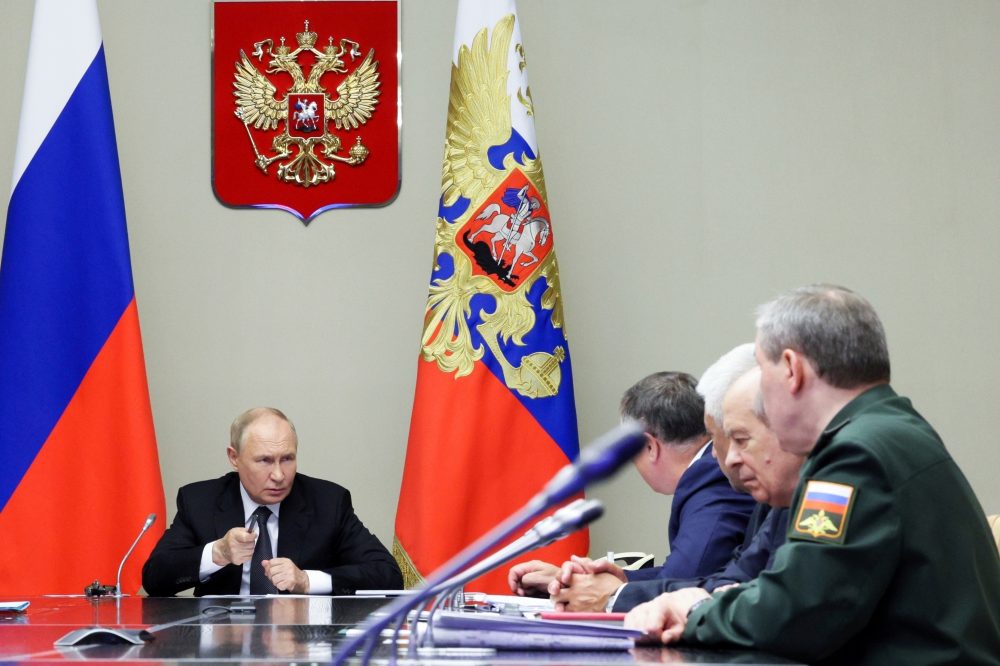 Latvia’s security service says 2 people set fire to a train and rail equipment for Russia
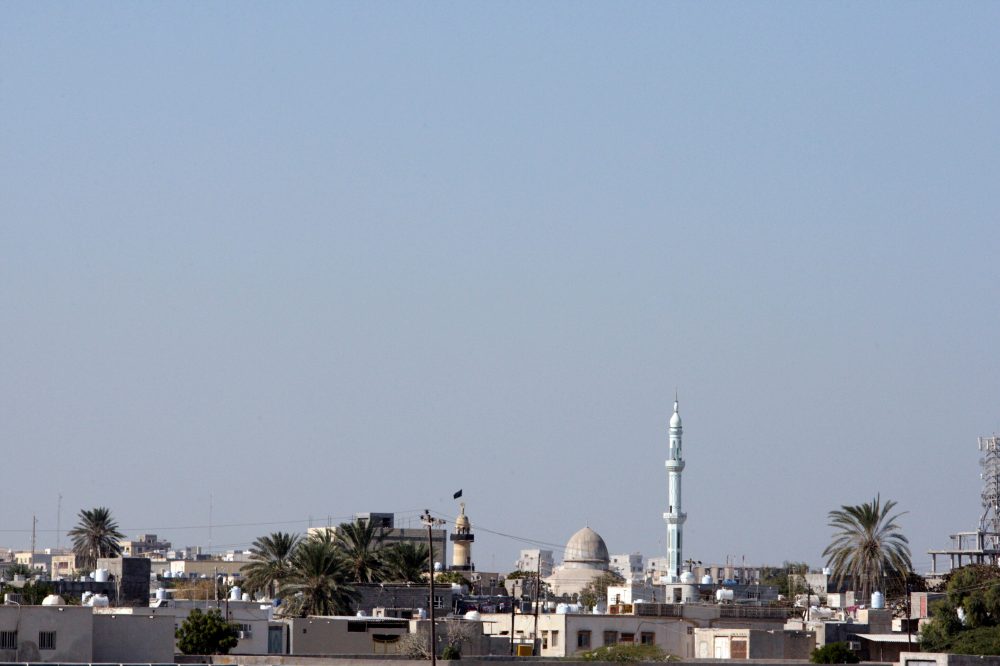 The islands off Iran’s southern coast are key to its economy and security. What to know about them
 Starmer’s pick of Epstein ‘pal’ as top British envoy haunts prime minister