

Despite Martial Law, Iranian Protesters Determined To Battle Regime
The Iranian regime’s crackdown empowered protesters to come back stronger as the IRGC weakens; one young woman, Nazli Janparvar, wrote her will as she headed off for demonstrations to “fight till freedom”
Omid Habibinia/The Media Line
Nearly twenty days have passed since Iran was completely cut off from external communications. Despite the bloody suppression of massive demonstrations against the government, during which independent medical sources estimate that 30,000 people, and likely more, were killed, the streets of most Iranian cities remain under de facto martial law, with armored vehicles and heavily armed units of the Islamic Revolutionary Guard Corps (IRGC) deployed across urban areas.
Nevertheless, despite the visible presence of fully armed IRGC units, including the Imam Ali, Tharallah, and Mohammad Rasulollah brigades, equipped with heavy machine guns and armored vehicles throughout Tehran, particularly in the western, eastern, and southern districts, many young people remain determined to return to the streets.
Nushin, a 20-year-old student at one of Tehran universities who was present during the massacre in one of its main epicenters, Tehranpars in eastern Tehran, told The Media Line: “The deployment of special armed IRGC units at close intervals throughout Tehranpars and other parts of the city to suppress and kill people is not a sign of strength, but of martial law and the regime’s fear of its imminent collapse, not the stability and calm it repeatedly claims to have restored.”
She explains that while the presence of armed guards in the streets instils fear, it simultaneously intensifies public hatred, because people are constantly reminded that these forces are the killers of their loved ones.
According to Nushin, during the IRGC gunfire on Thursday and Friday, January 8 and 9, in Tehranpars and surrounding areas, so many protesters were killed that numerous neighborhoods have been draped in black. In some alleys, multiple black banners have been hung as signs of mourning, and in certain cases, families have been permitted to erect traditional mourning shrines outside their homes.
At the same time, many families are still unaware of the fate of their children, not knowing whether they are wounded, killed, or detained. Nushin says that many of the wounded avoided clinics and hospitals and instead took refuge in private homes after hearing that IRGC forces were abducting the injured and placing them in body bags to die. As a result, many wounded protesters, lacking medical care, developed serious complications, and some died in those homes.
One of the most harrowing images to emerge so far is the death of 20-year-old protester Faezeh Mos’taan, who died in her mother’s arms after being shot in Fardis-Karaj. Her mother was forced to take her home, where she died; her lifeless body remained in her mother’s embrace until morning, when relatives insisted on transferring it to the forensic medical office. Karaj, near the capital, was also among the cities where the massacre of protesters was carried out with extreme brutality, reportedly under the direct orders of Supreme Leader Ali Khamenei.
Multiple sources say that the day before the nationwide, million-strong demonstrations on Thursday, Khamenei ordered live fire against protesters through the Supreme National Security Council chaired by President Masoud Pezeshkian, with secretary Ali Larijani and composed of heads government, military, security, and intelligence.
Sara, an employee at a private company, wrote to a journalist from The Media Line after briefly getting online via a proxy and reported that on the night of Thursday, January 8, at HaftHoz Square, in east Tehran, she witnessed Basij forces attacking protesters with machetes before the shooting began, specifically targeting young women and teenage girls by striking them on the head. After this, IRGC forces opened fire on the crowd.
According to Sara, protesters resisted the attacks, and some Basij and IRGC forces who were unable to retreat were captured and seriously injured. Several days after the bloody crackdown in Tehran, the government held funerals for 100 individuals labelled as “security martyrs.” However, no official figures have been released regarding the number of security or military personnel killed in clashes with unarmed civilians, as the authorities routinely include the names of protesters among their own casualties.
Armin, a young business owner in western Tehran, told The Media Line, “Contrary to what the regime is trying to project, nothing is normal. We are ready to return to the streets at any moment—but this time, we will return for revenge!”
Despite the communications blackout, hundreds of images, videos, and messages continue to reach the outside world from Tehran and many other Iranian cities, showing that people are continuing their protests in various forms. These include nighttime rooftop chants, participation in mourning ceremonies for those killed while chanting slogans against Khamenei and the Islamic Republic, graffiti, and the burning of images of Khomeini and Khamenei displayed in public spaces. Some slogans explicitly call on Trump to fulfill his promise that “help is on the way.”
Nazli Janparvar, a 27-year-old fashion designer, was killed in Bojnord. Before taking to the streets to join the demonstrations, she wrote her will. A message attributed to her, which circulated on social media, concluded: “We will fight till freedom.”
In spite of killing of tens of thousands of people in Iran over the course of just two days, an unprecedented event in modern Iranian and global history, the morale of regime supporters has sharply deteriorated. Even Telegram channels close to the IRGC, which until recently hosted most pro-regime supporters, have seen a significant drop in membership, alongside a notable surge in critical comments condemning the regime’s actions against protesters.
A Tehran resident familiar with the condition of security forces told The Media Line on Monday afternoon that IRGC personnel are in their worst psychological state. Not only have they killed their own people—many of whom were their neighbors or relatives—but they are also severely depleted both mentally and physically. Many mid-level commanders have not returned home since Thursday, January 8, and if the undeclared martial law continues, they lack the capacity to seriously confront another massive uprising.
Across Telegram channels and social media platforms, many protesters—even using their real names—openly express hatred toward the Islamic Republic and Khamenei, stating that they are counting every moment until they return to the streets. But this time, they say, they will not return to be killed; they will come to put an end to what they call the “Murderous Regime.”
Brought to you by www.srnnews.com
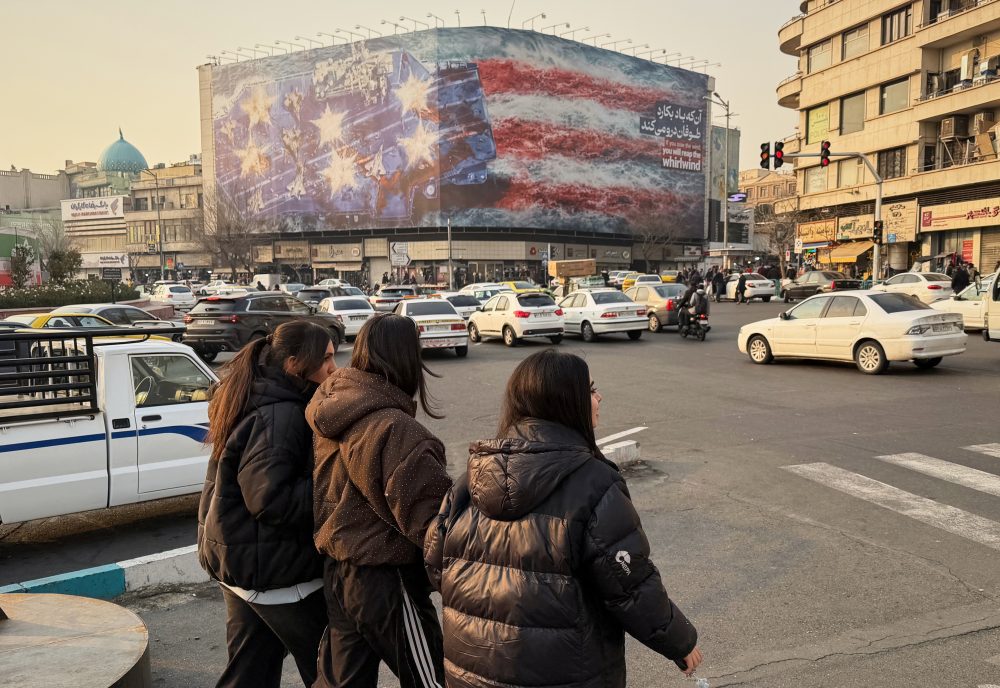 Activists say at least 6,126 people killed in Iran’s crackdown on nationwide protests
 Fearing China clash, Japan asks fishermen to avoid flashpoint islands