
He Couldn’t Sleep After War. Now He Says He’s ‘Post-PTSD.’ Here’s How
Ketamine therapy and nerve-block treatment help an Israeli combat veteran regain stability after years of post-traumatic stress, as clinicians explore new approaches to trauma care
By Maayan Hoffman / The Media Line
Micha Stiebel could not sleep at night. He was short-tempered. Certain sounds would make him jump. “I wasn’t comfortable,” he told The Media Line. “I was always checking people out and looking for threats. I was living in survival mode.”
Stiebel has fought in multiple Israeli wars, including Operation Protective Edge in 2014 and 15 months of the two-and-a-half-year multifront war that began on October 7. Every other year, he served in reserve duty in the West Bank. In 2014, his brigade was ambushed by Hamas in Gaza. Some of the experiences, he said, remain too difficult to share.
Over time, he tried nearly everything to cope: medication, traditional therapy, somatic yoga, meditation, and breathwork. Still, he said, he continued to spiral deeper into post-traumatic stress disorder (PTSD).
A resident of Ra’anana, Stiebel was eventually introduced to one of the founders of KetaMind, who told him about a trial initially conducted on survivors of the Nova massacre and later opened to soldiers.
“I was looking for the next level because I was still feeling a lot of the physical symptoms of PTSD, the claustrophobia, hypervigilance, arousal, sleep issues, mood issues, all the normal stuff one has in a treatment-resistant PTSD situation,” Stiebel explained.
He decided to try ketamine treatment. Today, he said, “I consider myself post-PTSD.”
Although PTSD is not considered curable in the traditional sense, and Stiebel acknowledges that he will continue working on himself, he said his daily reality has changed.
“I don’t live with the symptoms anymore. I don’t live with day-to-day issues. I feel really good. I am able to do things I couldn’t before.”
He added that combining ketamine with stellate ganglion block (SGB) treatment “took me to the next level. Without those treatments, I am not sure where I would be today at all.”
KetaMind, acquired by Stella Israel at the beginning of 2026, was founded by Professor Michael Drescher, Dr. Stuart Seidman, and Aron Frankel.
Stella Israel administers SGB treatment, a medical procedure that targets a cluster of nerves in the neck that helps regulate the body’s fight-or-flight response.
Seidman, a psychiatrist, travels regularly between Israel and New York. In the US, he said, ketamine is already a well-known treatment. The drug was originally developed in the 1970s as an anesthetic. It went off patent in the 2000s, and by the time its antidepressant effects were identified, it had become a generic medication. When used as an anesthetic, it is administered in high doses—around 2 or more milligrams per kilogram—and is considered safe because it does not significantly suppress breathing.
Although some refer to ketamine as a psychedelic, Seidman said it is not psychedelic in the traditional sense, though it can produce similar effects. When used to treat depression, it is given in much lower doses, around 0.5 milligrams per kilogram.
“Ketamine is an NMDA blocker; it works on the glutamate system,” he said.
NMDA stands for N-methyl-D-aspartate. In this context, it refers to NMDA receptors—sites on nerve cells involved in brain signaling. These receptors are part of the glutamate system, one of the brain’s main communication networks, helping regulate learning, memory, and mood. Ketamine works by blocking NMDA receptors in the brain.
At higher doses, especially when administered intravenously, the experience can feel dissociative. Patients may feel detached from their bodies or surroundings.
“You’re like out of your own consciousness, as if your consciousness is floating outside of your head,” Seidman said. “Most people find it very pleasant.”
This state typically lasts about 45 minutes during treatment. About 50–70% of patients report improvement the next day, though the effect often fades within a week. Repeated treatments—typically twice a week over several weeks—can produce longer-lasting results.
“Something about having multiple treatments makes it last for the majority,” Seidman said.
Despite its promise, ketamine treatment is not always easy to access, particularly in intravenous form. Although research has confirmed its antidepressant effects, its generic status has limited commercial incentives for broader development.
Seidman explained that ketamine is a molecule with two mirror-image forms: right-handed (R-ketamine) and left-handed (S-ketamine). The ketamine used by KetaMind is racemic, meaning it contains both. Johnson & Johnson’s Janssen unit isolated S-ketamine and developed Spravato, a nasal spray that can cost hundreds of dollars per dose, sometimes approaching $1,000 depending on coverage and setting. Compounded racemic ketamine can cost far less—sometimes about $1 per dose. Both have shown effectiveness, though Spravato is approved by the US Food and Drug Administration (FDA) for treatment-resistant depression, while compounded ketamine is generally prescribed for depression without specific FDA approval for that use.
In Israel, Spravato is included in the health basket but is rarely used due to cost, bureaucracy, and limited clinic availability. Patients must take it under supervision and remain at the clinic for about two hours. Seidman said intravenous ketamine is generally more effective.
In the US, physicians can prescribe ketamine off-label. In Israel, patients typically require Health Ministry approval.
“The intravenous ketamine has been approved for anesthesia, and so when I have a patient who has suicidality or treatment-resistant depression, I send a form to the government,” Seidman said. “I’m essentially asking permission to be able to use this treatment. Now it turns out they’ve always said yes after we prescreen the patients. We’ve done hundreds of patients, so it’s not a big issue, but it’s a real barrier to treatment.”
October 7 changed everything
Seidman said the three Ra’anana-based founders started KetaMind almost by chance. They were out for a drink when they realized how important it would be to make this treatment available in Israel. Drescher was heading an emergency department at one of the country’s hospitals, and together, the group used its medical and operational experience to get started. They rented a small dental clinic and began offering treatments, initially as a side project aimed at helping others, until everything changed on October 7.
After the massacre, when trauma levels spiked across the country, a donor from the United States reached out to the team and wanted to support its work with survivors of October 7. They started with 12 patients with PTSD who had survived October 7, offering intravenous ketamine and ketamine-assisted psychotherapy. The response, in Seidman’s words, “was dramatic. It was really amazing. Better than I expected. I was personally blown away by how well people did.”
The process is structured and closely supervised. It begins with a pretreatment evaluation, followed by IV ketamine sessions with a standard talk therapist present in the room. Patients typically undergo treatment twice a week for three weeks and then once a week for another three weeks, for a total of nine treatments.
“Usually, the nine treatments are enough to push them into remission,” Seidman said. “We take on the toughest of the tough. And it’s not cheap. It’s about NIS 1,700 per treatment. And it’s a real commitment from everyone. But the results are amazing.”
Still, he acknowledged that for many people, private treatment at this level is simply too expensive. Until October 7, he asserted, psychiatry in Israel appeared to be a low priority: “No one took it seriously.”
Since the massacre, that reality has begun to shift.
“It’s smacking us in the face, right? You’ve got suicides and PTSD all over the place. You’ve got anxiety, you’ve got the knife in the heart of all of us losing so many soldiers and the hostages,” Seidman added. “It is really painful to see people come into the clinic who were essentially abandoned by their psychiatrist after trying one SSRI [selective serotonin reuptake inhibitor] after another. The system does not really do justice to the tough patients. Many of them have just given up on ever feeling well again. It’s very sad.”
How the ketamine IV works
Drescher walked The Media Line through the treatment process. It begins with a nurse or paramedic inserting an IV line into the patient’s arm. The patient is then led into a treatment room. The facility in Ra’anana does not look particularly medical. Instead, it is designed to feel comfortable, calm, and low-key.
The patient sits in a comfortable chair or recliner and receives the dose through a syringe pump that carefully regulates the rate of medication injection into the vein over 40 to 45 minutes.
During the session, experiences can vary. Some patients become emotional. Others report having expansive or unusual thoughts, sometimes about the universe or their place in it. Most, Drescher said, find the experience pleasant.
A clinician may accompany the patient during the treatment. Once the infusion is complete, the patient typically remains in the room for another 15 minutes before going home. The clinic requires patients to be accompanied by another person to assist them.
Drescher emphasized that while having a therapist present can be helpful, it is not essential.
“Ketamine treatment causes a biochemical response in the brain where certain receptors are affected by the ketamine itself in a parallel way to other antidepressants,” Drescher explained. “The ketamine itself is the treatment.”
Jason Blankfield, who runs Stella Israel, offered another way to understand its effects.
“You have neural pathways in the brain that, when you’re depressed, you can’t get out of that way of thinking,” he said. “One of the brilliant things about ketamine is it actually creates new pathways for you to be able to think, and you will be able to process the world and process what’s going on with you so that you can use that as a catalyst to then get a lot better.”
While the treatment is not 100% effective or long-lasting for everyone, Drescher said the success rate so far appears much higher than that of traditional methods. He noted that existing research suggests about 50% effectiveness for SSRIs and similar therapies. By contrast, preliminary research from KetaMind’s protocol indicates that most patients experience significant reduction in symptoms. Although the full results of the Nova massacre survivors study have not yet been released, Drescher said about 70% of patients showed clinical success, meaning a measurable improvement in symptoms.
There is still some public resistance to the treatment, Blankfield added. Ketamine carries a stigma as a street drug, sometimes used recreationally at parties.
“People do use it illicitly as a party drug, so it has that kind of reputation,” Drescher agreed. “That’s something we need to diminish.”
He stressed that ketamine is not addictive in the traditional sense. Patients do not develop physical dependence, although psychological dependence can occur. Side effects, he added, are generally minimal.
Drescher, like Seidman, noted that KetaMind was founded in 2022 but only began gaining major traction after October 7. The next step, he said, is to build a strong body of research and data analysis to support broader adoption and potential inclusion in the health system so that costs can be subsidized.
Blankfield said the goal is to drive systemic change by presenting clear, evidence-based results to decision-makers.
He added that IV treatment is far less expensive than the Johnson & Johnson spray. Even so, the roughly NIS 15,000 (around $5,000) cost for a full course of treatment can be life-changing.
“We now see people from the beginning of their treatment to the end of the treatment with massive improvements in their lives in terms of ability to work, relationships, communication, and mood,” Drescher said. “We really have seen people who have turned their lives around from one end to the other.”
‘The very bottom of God’s big toe’
Stiebel described some of the experiences during treatment as intense and, at times, surreal. His first few sessions, he said, were “very guided,” with his therapist holding his hand and speaking to him throughout.
“I was aware that my body was there and I was kind of going in and out of the trip, experiencing very real, tangible, relived experiences, but doing them in a cleaner way,” Stiebel said. “I would go on the trip and just kind of go where it took me. … The whole thing was a deep spiritual experience that I found incredibly eye-opening, cathartic, and healing.”
As the sessions progressed, he found himself repeatedly returning to past trauma, but with a different sense of control and understanding.
“We would go back and relive the trauma. I would sort of wake up in a different place, and then someone from my past would show up and guide me through it. I would relive memories from the war, times I was ambushed or under sniper fire, all kinds of traumatic scenarios. You experience them again, but also in a different way. You remember things you didn’t even realize you still had inside you. It was all buried. It was intense. It was crazy.”
Many of the sessions began with an encounter. At times, he met a younger version of himself, about 12 years old, wearing his old Hill Academy of Pittsburgh uniform. Other times, it was his grandmother. In some cases, he described what felt like nonhuman intelligences, almost like emissaries, guiding him in ways that felt warm and supportive.
At one point, Stiebel said he felt he had seen God.
“I was lying in what felt like warm, floating water, completely at ease, just looking up. And this presence let me see what felt like the very bottom of God’s big toe,” he recalled. “It looked like the largest mountain I had ever seen. It was overwhelming. I could barely breathe because of how vast it felt.”
In another session, he said he was brought into a vast, empty space, floating in what felt like a comfortable void. There was no fear, only a sense of weightlessness and a feeling that his soul had separated from his body.
“I could see how events from the 2014 war connected to my children, and how the 2023 war connected to ideas and projects that could save lives. I could see how every difficult experience led to something meaningful. It was like time no longer moved linearly. I understood my life in a completely different way, and I felt a deep sense of acceptance,” Stiebel said.
That shift in perspective, he explained, has stayed with him.
Today, he said, he has a much deeper sense of purpose and connection, and an easier time navigating life’s difficult moments. Before ketamine, he worked in high tech. Now, he has shifted his focus toward more meaningful work.
“I was putting my energy into the wrong things,” Stiebel told The Media Line. “Now, I just want to spend time doing what I enjoy with the people I care about, and I am much clearer about what I will and will not accept in my life.”
His relationship with his children has also improved. He can give them baths without being triggered by the heat, noise, or splashing. He can travel without struggling with claustrophobia on planes. He can sit in a restaurant without constantly scanning the room for potential threats.
“After the ketamine, a lot of my traumas just no longer felt like traumas per se,” Stiebel continued. “I had reached a new way of understanding them, and they no longer sat with me in the same heavy way.”
Blankfield said the combined use of ketamine and SGB treatment for PTSD is also being explored in the United States, and that research in Israel could help shape future treatment protocols.
“It’s a very, very interesting and very, very exciting pathway that we can start to build, and we can start to collect data on that to show that down the line,” Blankfield said. “We have an internationally renowned, top-of-the-line medical team that has decades of experience working with ketamine, working with SGB. Now we’re able to bring all of that access to care to Israel. It’s a massive breakthrough. We’re the only company in Israel that, under one roof, can give psychiatric care, ketamine, and SGB, and in the near future, there will be additional biological treatments.”
For Blankfield, the focus is ultimately simple.
“I am 100% focused on what treatments are delivering results,” he said. “Even if it’s the hardest thing in the world, we’re gonna find a way to make sure that people in Israel have access.”
This report is part of Traumatech, a series developed and created by Maayan Hoffman and debuting on The Media Line. The series explores how Israel is building and exporting breakthrough mental health technologies that can transform life at home and bring hope to communities worldwide.
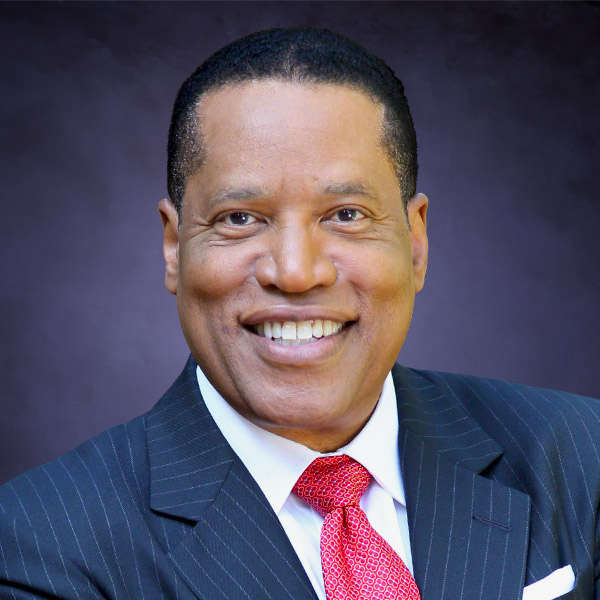
Screenshot 2026-04-25 075103.jpg – Micha Stiebel. (Courtesy)
Brought to you by www.srnnews.com
 More than fashion: A pin worn by Venezuela’s Rodríguez on state visits riles Guyana