
Lack of Legislation Sustains Donor Secrecy, Enabling NGO Funding to Hamas, NGO Monitor Tells TML
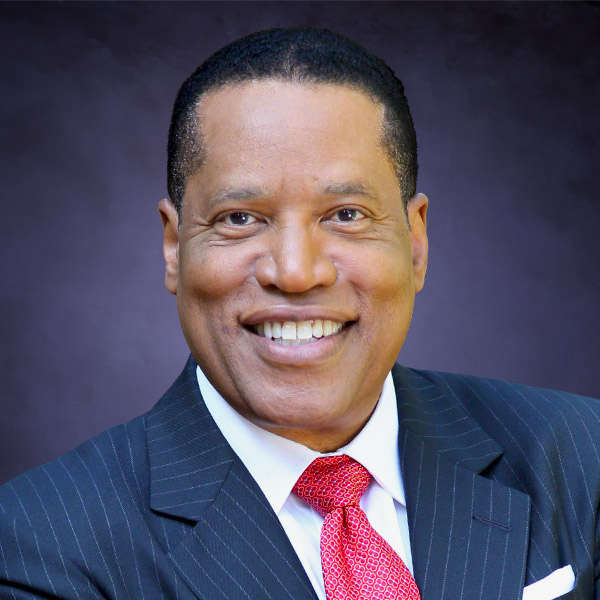
Gerald Steinberg, NGO Monitor president, says captured files and photos reveal a network of Hamas liaisons inside aid agencies and medical centers, allegedly including a hospital director who wrote op-eds for The New York Times
By Felice Friedson / The Media Line
Documents captured by the Israel Defense Forces in Gaza over the past two years provide new details on how Hamas allegedly monitored and influenced humanitarian organizations and hospitals, according to Gerald Steinberg, founder and president of NGO Monitor. Speaking to The Media Line, Steinberg said the records describe Hamas-installed “guarantors” embedded inside NGO structures to collect information, pressure staff, and steer aid toward the group’s priorities. He said the material moves long-running claims about Hamas diversion and infiltration from suspicion to what he described as documented internal protocols, while noting that most of the cache remains unreviewed.
Steinberg pointed to the seized material as the basis for his argument that allegations now rest on internal paperwork, not inference. “The documents that we have examined recently that [we] reported on were found [and] captured by the IDF [Israel Defense Forces] in Gaza during the last two years in operations,” he said. “There are thousands, perhaps tens or hundreds of thousands of such documents, most of which have not been examined or been sorted through.”
Some of the material has begun to surface publicly, he said, and NGO Monitor has focused on documents that reference humanitarian organizations and their dealings with Hamas.
Even within that narrower slice, Steinberg described the review as preliminary. “We’ve managed to examine closely around 50 of those documents and translated them from Arabic,” he said, adding that the translation process relied on expert review and cross-checking.
In Steinberg’s account, the documents reflect a wider system in which Hamas used civilian frameworks while building military infrastructure beneath them. “There are many, many examples of the way that Hamas planted their people … not just in humanitarian organizations … but also in the frameworks of hospitals,” he said. “They used the hospitals, they used the mosques, they used all this massive underground network under schools, all of that.”
Foreign staff working in Gaza were aware of Hamas’ influence, Steinberg argued. “Many of the foreign workers, foreign officials from organizations, were obviously aware of this.”
At the center of his account is what he called a “guarantor” system—Hamas-appointed liaisons assigned to aid organizations. “These documents consist of protocols of meetings that were held with what they call guarantors,” he said.
Steinberg said the arrangement placed a Hamas-linked figure inside NGO operations. “Oxfam, Norwegian Refugee Council, Doctors Without Borders … across the board, these organizations had assigned to them by Hamas an individual who was both reporting to Hamas and part of the organization’s structure itself.”
NGO Monitor has described the “guarantor” structure as a tool for monitoring and influencing NGO activity. Steinberg characterized it as a coercive mechanism that went beyond coordination. “Hamas first of all used these people to spy on, to collect information that they could use to manipulate the organizations and the leaders of those organizations,” he said. He added that the information could be used “to manipulate and blackmail officials, staff members of the organizations, and also to direct aid to the areas that Hamas emphasized and prioritized.”
Aid organizations did not publicly raise alarms about operating under pressure, Steinberg contended. “None of the NGOs, in any way, manner, or form, said publicly, or to the Israeli officials, ‘Hey, you know, Hamas is putting the squeeze on us in various ways, and that makes us uncomfortable.’”
To illustrate diversion claims and disputes over oversight, Steinberg pointed to a case predating the current war: World Vision.
In 2016, Israel arrested Mohammad El Halabi, the head of World Vision’s Gaza operation. He was “accused of taking $50 million in aid … and transferring them directly to Hamas for very specific military operations,” Steinberg said, including money “allocated for fishing” that went to “Hamas’ military undersea terror framework.”
Steinberg contrasted that allegation and Israel’s legal outcome with World Vision’s public stance. “For years, he was tried, he was convicted, and the World Vision framework … repeatedly said, this was a show trial, that he was innocent, that Israel had no evidence,” he said. He then cited what he viewed as a politically telling detail: “One of the first people that Hamas demanded to be released in the prisoner exchange … was El Halabi.” Steinberg said documents now describe closer coordination between Hamas and El Halabi and efforts to pressure the Israeli legal process.
Hospitals and clinics were similarly embedded within Hamas governance and operations, Steinberg argued, shifting from NGOs to the medical sphere. “The entire medical framework that operated in Gaza, hospitals, clinics, and doctors, was permeated by Hamas and controlled by Hamas,” he said. He claimed Hamas used areas of hospitals “both for command-and-control and terror operations,” adding, “hostages were brought into those wings.” Steinberg also asserted that foreign staff knew. “Every doctor and foreign worker that was at those hospitals knew that they were permeated.”
One person Steinberg cited was Dr. Hussam Abu Safiya, a Palestinian pediatrician and hospital director who wrote op-eds for The New York Times. Steinberg said he could not fully map Abu Safiya’s personal networks but claimed there was visual evidence tying him to Hamas. “We don’t know at this stage what the various individuals, like Abu Safiya, who they were in connection with,” he said. “But we do know, because we now have pictures of him sitting with Hamas military leaders, we know what his rank was.” Abu Safiya is currently held in Ofer prison in Israel.
Writer and commentator Eitan Fischberger located early material, Steinberg said, and additional photographs reinforced the claim. He framed the issue as one of credibility and ethics: Abu Safiya wrote publicly “as a doctor, as an expert in theory,” while “at the same time, he was a colonel in Hamas.” Steinberg called such conduct, and the use of hospitals for armed purposes, “absolutely a violation of all medical ethics and international law.”
Another allegation raised by NGO Monitor involved Ahmed al-Kahlout, a hospital director and Hamas officer, according to Vincent Chebat, a senior researcher at NGO Monitor. Chebat told The Media Line that a Facebook post pictured al-Kahlout alongside other Hamas officials, including Safiya.
Israel’s Foreign Ministry issued a statement citing information from the Israel Defense Forces and Israel’s Security Agency that said al-Kahlout, a director of Kamal Adwan Hospital in Jabalia in northern Gaza, was a member of Hamas and admitted that the group “turned Gaza hospitals into military facilities under their control.”
“I was recruited to Hamas in 2010,” the statement quotes al-Kahlout, “with the rank of brigadier general. There are employees in the hospital who are military operatives of the Izz ad-Din al-Qassam Brigades–doctors, nurses, paramedics, clerks, and staff members.”
Steinberg argued that the documents, taken together, point to a persistent donor problem: large spending without enforceable monitoring. Funding rose sharply after Oct. 7, he said, and oversight did not keep pace. “After October 7th … every government involved in providing aid massively increased … by hundreds of millions of dollars … again, with no oversight,” he said. “There is no mechanism for oversight.”
Beyond wartime funding, Steinberg said the underlying weakness is structural. “There is a very thin layer of oversight in the United States. It’s called the Internal Revenue Service, the nonprofit framework, 501c3 and 501c4 regulations,” he said. “And basically, all they can do under current legislation and regulations is to ensure to the best that they can that proper audits are being done.”
A change in the US administration altered the landscape, Steinberg said. “When President Trump started his second term a little bit over a year ago, the USAID budget was frozen,” he said. He added that an inspector general was appointed and investigations were conducted, and he cited scrutiny of communications and alleged links to Hamas-related structures, including “propaganda and promoting the genocide blood libel,” adding, “the NGOs were involved in that as well.”
Donor questions, in Steinberg’s view, also intersect with Israeli regulation and diplomatic pushback. He described an Israeli requirement instituted “over almost a year ago,” under which “every NGO that operates in Israel as an aid source must register and provide certain information.” He framed the move as a response to failed due diligence and described staff background checks as “routine and certainly justified.”
Steinberg said some European governments, joined by Canada, demanded that Israel allow NGOs to operate without meeting registration requirements, and that Israel refused to waive them.
Those rules will remain in place regardless of political changes in Jerusalem, Steinberg predicted. “No Israeli conceivable leadership or government, even in what we might call the post-Netanyahu era, is going to be able to relax those requirements and to waive them, precisely because of October 7th.”
International bodies also came in for criticism. Steinberg named “the UN and UNRWA and OCHA and UNICEF,” and said: “They all knew what was being built and what was being done in the hospitals, and they all stayed silent.”
Gaza’s governance proposals, Steinberg said, run into the same practical obstacle. He pointed to plans that would rely on technocratic administration alongside security arrangements, then returned to what he called the core issue: disarmament. “The next stage is supposed to be disarming of Hamas,” he said, but “Hamas has said very clearly we are not going to disarm.”
He argued that international security forces have not demonstrated a record of disarming entrenched armed groups, pointing to “no precedent, no successful precedent, of a foreign force, an international force, disarming a terror organization,” and citing UNIFIL in Lebanon and Hezbollah’s rearmament as a cautionary comparison.
Israel would not accept a similar outcome in Gaza, Steinberg said, describing what he sees as an enduring Israeli enforcement posture. Turkey or Qatar, he added, would not be credible contributors of troops, since Israel is likely to refuse them. Steinberg referenced President Trump’s warning of “total disaster for Hamas if they don’t disarm,” but questioned how that translates into action, given that Hamas forces are “in underground bunkers” and “completely integrated within the civilian population,” concluding that continued Israeli action would be required “until Hamas is disarmed at whatever time it takes.”
Beyond Gaza, Steinberg widened the lens to what he described as a broader ecosystem of NGO funding and political influence. He called NGOs “a massive industry,” measured in “billions of dollars,” and argued that oversight is thin compared with other regulated spheres. In the US, he described the nonprofit framework—”501(c)(3) and 501(c)(4) regulations”—as focused largely on audits, and he said NGOs are “easy takeover targets,” pointing to ideological shifts within major organizations.
A separate thread in the interview focused on protest funding and the WESPAC Foundation. Steinberg described it as “a major, what’s called a pass-through for the IRS,” adding: “We don’t know who the donors were. Again, it could have been a foreign government. It could have been Qatar.” He described lawsuits and heightened scrutiny: “WESPAC now is in deep trouble and may not be able to function anymore.”
NGO Monitor’s reporting on WESPAC’s IRS filing described large funding flows, including a $1 million transfer to a framework listed as “Honor the Earth,” designated for a Palestinian youth movement.
Steinberg said NGO Monitor has remained in contact with members of Congress and their staff regarding possible changes to IRS regulations and investigations into nonprofit political activity and foreign funding. Regarding Qatar, he said the limits of current disclosure rules leave a central question unanswered: “In terms of Qatar’s involvement in NGOs, precisely because the IRS regulations allow these massive organizations to hide, not to report on their foreign and foreign government funding, we do not have concrete evidence.” Steinberg added, “No nonprofit organization registered in the government should be allowed to have secret funding from foreign governments.”
Media ecosystems can amplify narratives tied to state influence, Steinberg argued, naming Al Jazeera and outlets he said were “reported to be connected to Qatar, like things called Middle East Eye and Middle East Monitor,” and urging scrutiny of how those channels shape what NGOs and prominent figures treat as credible reporting.
Brought to you by www.srnnews.com