
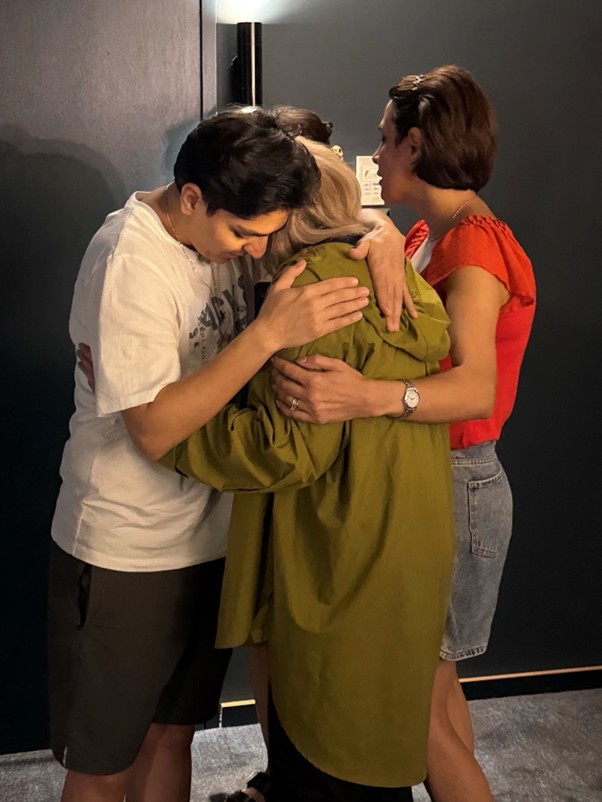
Meanwhile, heavy pressure is being placed on other members of the Iranian delegation who traveled to Malaysia, apparently to prevent them from seeking asylum before returning home. They have reportedly been promised clemency and told that, through the intervention of the sports minister, they may avoid punishment for refusing to sing the anthem.
The exact number of delegation members seeking protection remains unclear, with accounts from activists, officials, and Iranian state media differing. Supporters assisting the players say that up to 11 members of the delegation, including players and staff, initially refused to board a flight from Australia, though only some ultimately applied to remain in the country. Details about who ultimately stayed in Australia and who traveled onward to Malaysia could not be independently confirmed.
In recent days, dozens of Iranians have followed Iran’s women footballers in Australia in an effort to stop them from being forced back to Iran, where they could face punishment for refusing to sing the anthem during Asian football matches. One person involved told The Media Line on Tuesday afternoon that, so far, “we have managed to save some of them.” He said the number might be as high as 11 members of the Iranian delegation, though relevant sources have so far confirmed that seven delegation members asked to remain in Australia and did not board the flight to Malaysia. An Iranian in Sydney following the situation told The Media Line on Wednesday afternoon that one of the seven players—whose family in Iran had come under intense pressure—had changed her mind and withdrawn her application to remain in Australia.
The crisis began before the Iranian women’s team played its first match in Australia. At a time when war had broken out involving the Islamic regime, the United States, and Israel, the Iranian players refused to sing the anthem of the Islamic Republic and remained silent while it was played before the opening match against South Korea in the AFC Women’s Asian Cup in Australia. Their silence was widely interpreted as an act of protest against the regime following its deadly crackdown on protesters earlier this year. The gesture quickly drew attention in Persian-language media in London and on social media.
Soon afterward, a state television presenter branded the players traitors and described their action in wartime as “the height of dishonor,” saying it deserved punishment. Other sports officials also condemned the gesture.
Under mounting pressure and threats, during the second match against Australia, the Iranian players were forced not only to sing the anthem but also to perform a military salute. That move also drew a negative reaction on social media.
Pressure on Iran’s women footballers continued, contributing to the team’s third defeat and elimination from the tournament in only its second appearance in the competition. What alarmed many Iranians even more was the scene as the players left the stadium. Some appeared to signal distress by flashing their phone lights while Iranians gathered around them and urged them to seek asylum, as their bus departed for their accommodations ahead of a planned return to Iran.
That moment sparked a social media campaign and an online petition, backed by 10,000 signatures, calling on the Australian government to prevent the women footballers from being forced to return to Iran, where they could face severe punishment.
The campaign drew the attention of Australian celebrities and prominent Iranians and prompted President Donald Trump to post on Truth Social. The US president called on Australian Prime Minister Anthony Albanese to come to the players’ aid and said that if Australia failed to do so, the United States would be prepared to grant them asylum.
Australian Home Affairs Minister Tony Burke later posted images on the X platform showing himself with five Iranian women players, including national team captain Zahra Ghanbari. Burke announced that those five had been granted humanitarian visas.
https://twitter.com/Tony_Burke/status/2031104424765174251
Publication of those images enraged officials in the Islamic Republic, and the regime’s prosecutor’s office formally threatened the players, saying they must return to the country. Mohammad Reza Aref, Iran’s vice president, described the move as “psychological warfare” and interference in the “family affairs” of the Iranian nation.
Concern continued over the remaining players and team members. On Monday, a message circulated on social media saying that the mother of the team’s best-known player, Golnoosh Khosravi, had urged her not to return to Iran. Because of internet shutdowns and severe restrictions on communication with the outside world, the player’s family appealed to the public to help save their daughter.
After the message appeared online, dozens of Iranians gathered around the clock at Sydney Airport hoping to reach her. According to Shahrouz, one of those Iranians who spoke to The Media Line, by Tuesday morning, Khosravi had also joined the other Iranian players seeking asylum. According to him, 11 players and team members from Iran’s delegation had remained in Australia and refused to board a flight that was meant to take them onward toward Iran.
Accounts then began to diverge over which players had remained in Australia.
An Iranian state television sports presenter denied that Khosravi had sought asylum and said the Iranian team had flown to Malaysia and would remain there for a few days until a way could be found to return to Iran away from public attention.
But one of those present at Sydney Airport told The Media Line they had been informed that not only Khosravi but also five other players and team members had remained in Sydney. An hour later, Mojtaba Poorbakhsh, a sports presenter on Iranian state television, denied the report and said Khosravi was already on a flight to Malaysia and would be returning to Iran.
On Wednesday evening, state media in Iran reported that Mohaddeseh Zolfi, a national team player who had previously applied for asylum in Australia, had reversed her decision. As the Iranian women’s national football team delegation had already arrived in Malaysia, she now appears set to rejoin them. Iranian community members in Australia assisting the players say the reversal likely came under intense pressure from the Iranian regime’s security and judicial institutions on the players’ families.
The five players granted humanitarian residence visas are Ghanbari, the captain; Mona Hamoudi; Atefeh Ramezanizadeh; Zahra Sarbali; and Fatemeh Pasandideh.
In the final moments, player Zolfi and Zahra Soltan Moshkedar, a member of the national team’s support staff, also refused to board the team’s flight to Malaysia and remained in Australia. Australia’s Home Affairs Minister Tony Burke said on Wednesday that Zolfi had changed her mind. “After speaking with her teammates, the player came to this decision and contacted the Iranian Embassy,” he said. “In Australia, people are free to change their minds, and we respect that decision.”
Medis Tavakoli, a clinical psychologist in Madrid who has been following the case, told The Media Line: “In the current hard situation, psychologically we are supporting one another so that no one feels alone, because we know our situation does not matter to many people in the world. We have learned this lesson: only we ourselves can look after one another. Many Iranians feel that if this tragic event had happened to another nationality, it would have received far more attention. But we Iranians are among the most abandoned people on earth, and we have to create psychological support for ourselves.”
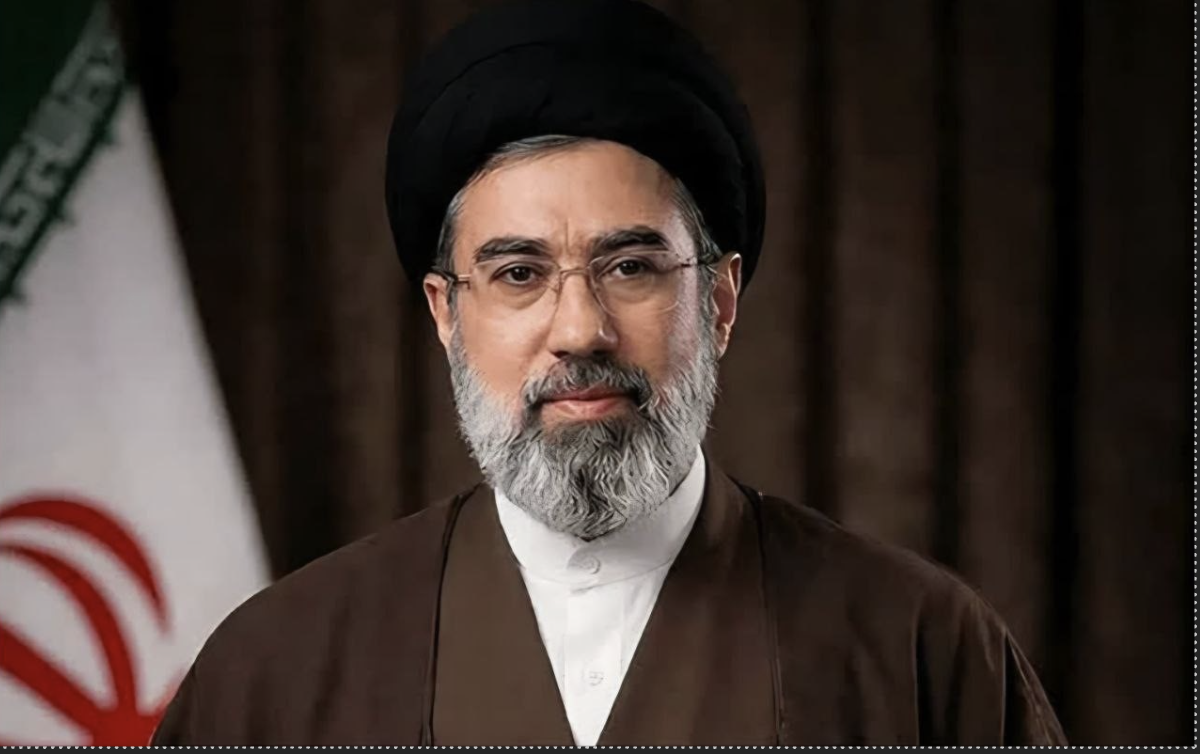
The refusal of Iranian women players to return during the first days of Mojtaba Khamenei’s rule as supreme leader, a period of heightened political tension in Iran, is likely to provoke even greater anger among officials in the Islamic Republic and may intensify pressure on their families. At the same time, it has become a symbol of solidarity among Iranians inside and outside the country.
Shahrouz told TML on Wednesday afternoon that he was deeply sorry that Khosravi was unable to stay in Australia because of pressure from minders and threats, and that Zolfi, faced with similar threats, also withdrew her decision. He said everyone is now worried about what may happen to them if they return to Iran and, above all, concerned for their families, who are under severe pressure.
Meanwhile, the remaining players and staff in Malaysia are reportedly under tight watch by the Iranian Embassy and security personnel linked to the Ministry of Sport, even as a group of Iranians is trying to persuade them not to return to Iran and risk possible punishment. It also remains unclear how long they may be forced to stay in Malaysia, given that flights to Iran are still suspended.
This marks the first time in recent decades that several members of Iran’s national team have sought refuge abroad and refused to return. Supporters say the fear now is not only what may happen to those still caught between Australia, Malaysia, and home, but also what consequences their families in Iran could face.
Brought to you by www.srnnews.com
 Photos: Charcoal workers in a quiet Kurdish village carry on as war unfolds
 Drone strike in Sudan near the border with Chad kills 4, injures many more
 Venezuela’s Machado calls Trump a ‘fundamental ally’ despite US support for Delcy Rodríguez
 The Media Line: Errors in Mojtaba Khamenei’s First Message Dictated by IRGC Raise Questions About His Condition