

Pickaxe Mountain Exposes Divide Between President Trump and Netanyahu on Iran, Expert Says
Netanyahu brought new intelligence on activity at Iran’s fortified underground site to Washington, but the White House offered no public commitment on how it would respond
By Gabriel Colodro/The Media Line
Hours before Prime Minister Benjamin Netanyahu entered the Oval Office on Tuesday, President Donald Trump publicly questioned why the Israeli leader had announced that he was bringing new intelligence about an Iranian site known as Pickaxe Mountain.
“I don’t need Bibi to tell me that. Bibi is telling me that because he wants me to stay involved,” President Trump told Fox News. He then sharpened the rebuke: “Why don’t you just tell it to me? Why do you have to announce it to the world?”
The exchange turned a little-known underground complex near Natanz into the clearest point of friction surrounding Netanyahu’s Washington visit. The meeting ran for about 90 minutes. When it ended, Netanyahu did not appear with President Trump, and neither government announced a decision on Pickaxe Mountain. White House Press Secretary Karoline Leavitt later called the talks “good and productive.” Netanyahu’s office said both leaders agreed that Iran must not be allowed to acquire nuclear weapons. Its statement did not say whether Washington accepted Netanyahu’s assessment of the site or planned to act on the intelligence he presented.
This visit also lacked the public welcome often associated with a White House meeting. President Trump did not greet Netanyahu at the main entrance, and there was no joint press conference. The Israeli prime minister’s office released photographs after the talks, while the White House provided only a brief account. What the United States intends to do about Pickaxe Mountain remained unanswered.
Their advisers attended the meeting and, according to sources, left no private one-on-one session of the kind that preceded earlier military coordination. Netanyahu’s office released photographs afterward, but neither government issued a detailed account of what was decided.
Netanyahu presented President Trump with new intelligence concerning developments at the site, according to Israel’s Channel 13. Israeli officials cited by the network said Iran was undertaking a substantial reconstruction effort with help from foreign countries and planned to provide additional details to Washington. A US official said the activity was also known to American intelligence through its own sources.
President Trump downplayed the facility’s immediate significance before the meeting, calling Pickaxe Mountain “not a big problem” and saying the United States already knew what was happening there. At the same time, he warned that Washington could resume strikes if Iran refused to sign a new agreement. He also said the United States had reinstated its blockade after accusing Tehran of violating the previous arrangement.
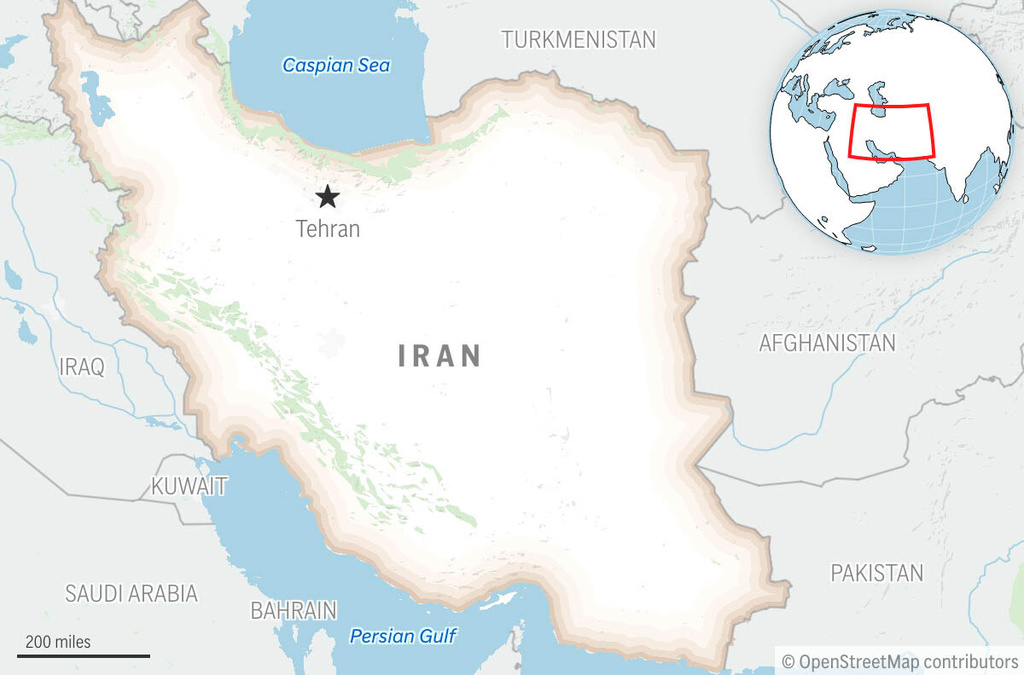
Since the meeting ended, the United States launched a major wave of strikes against dozens of Revolutionary Guard targets across Iran after an attempted Iranian missile attack on US forces in Jordan, while President Donald Trump weighed options for further military action or diplomacy. As explosions were reported on Thursday across southern Iran, Pakistan called for renewed US-Iran negotiations, and Iran-backed militias in Iraq threatened retaliation within 72 hours.
Netanyahu’s office offered a more conciliatory account after the meeting. The prime minister said the conversation was among the best the two leaders had held and that they shared an understanding that Iran must not acquire a nuclear weapon. White House Press Secretary Karoline Leavitt called the meeting “good and productive.”
The official language covered the objective but not the dispute over how to reach it. Professor Eytan Gilboa, an expert on US-Israel relations and international communication at Reichman and Bar-Ilan Universities, told The Media Line that the real disagreement lies between President Trump’s preference for diplomacy and Netanyahu’s apparent belief that further military action may be necessary.
Gilboa said Pickaxe Mountain had previously received little public attention because it was not considered active. He said new intelligence indicated significant activity at the entrances and raised the possibility that Iran had moved centrifuges and enriched uranium to the underground complex. The facility, which he described as Iran’s best-protected nuclear site, would be difficult to reach at its deepest levels even in another American or Israeli campaign.
That depth does not make the complex immune from attack, Gilboa said, but it changes what an attack could be expected to accomplish. American forces could inflict serious damage and obstruct access to the facility, he said, without necessarily destroying its lowest levels. The likely objective would be to delay Iran’s nuclear work for years rather than claim that every part of the program had been eliminated.
By publicizing the intelligence before his meeting with President Trump, Gilboa said, Netanyahu was signaling that the nuclear threat had not been resolved by the earlier strikes and that he did not trust Iran to honor a diplomatic agreement. But Gilboa argued that the decision carried its own cost.
“I think it was a huge mistake,” he said. “You challenge the president or the American intelligence community, with which you have to cooperate all the time.”
The disclosure also highlighted the limits of the available military options, Gilboa said. Although the United States could inflict substantial damage on the site, Iran has demonstrated a strong capacity to rebuild, particularly in its ballistic-missile program. That record complicates any claim that a renewed campaign would produce a lasting result.
Gilboa said those limits help explain why a significant group within the White House continues to favor negotiations. President Trump also faces warnings from Republican candidates that a return to full-scale war could damage the party before the November 3 midterm elections, he said. The US president may prefer to preserve economic pressure and avoid a major campaign until then, although attacks by Iran and its allies leave open the risk that miscalculation could pull both countries back into a wider conflict.
The question is especially sensitive after the collapse of the memorandum of understanding signed by the United States and Iran in June. Netanyahu opposed the framework but did not attack it publicly, according to US and Israeli accounts. Israel was not a signatory, and the agreement fell apart several weeks later as hostilities resumed and disputes over the Strait of Hormuz returned.
Mediators have since sought to revive the framework or replace it with a new understanding. President Trump has said talks with Tehran are going well, while keeping the prospect of renewed strikes on the table. Netanyahu arrived in Washington seeking closer coordination before the United States made its next decision.
Attorney Nitsana Darshan-Leitner, founder and president of Shurat HaDin-Israel Law Center, told The Media Line that Israel would not be legally bound by an agreement it did not sign. In practice, she said, the government would still be constrained by its dependence on Washington.
“Friendship and respect are not leverage,” Darshan-Leitner said. “Israel does not have any leverage over the United States, and Prime Minister Netanyahu understands it very well.”
She said Netanyahu could present intelligence and press Israel’s case, but would be careful not to push the relationship to a breaking point. In her formulation, Israel would not be legally obligated by a US-Iran agreement, but would feel compelled to respect Washington’s demands because the United States remains its essential ally. Darshan-Leitner did not expect the meeting itself to produce a major decision, arguing that President Trump wants to avoid a wider confrontation before the November midterm elections.
Darshan-Leitner also questioned whether another round of conventional attacks could stop Iran from rebuilding. She argued that sustained financial pressure, including restrictions on oil revenue and access to shipping, offered a better chance of weakening the regime than intermittent strikes.
Her preferred strategy would keep Iran’s access to oil income, ports and shipping under pressure long enough to worsen the regime’s financial crisis. In her assessment, that pressure could revive domestic unrest in a way that military strikes alone have not. She acknowledged that such an approach carries costs for Washington, including higher energy prices, and may not produce results on the timetable President Trump wants.
The legal route is limited as well. Darshan-Leitner said Shurat HaDin and other plaintiffs hold judgments worth more than $150 billion against Iran over attacks carried out by groups it supported. Yet victims could not sue the US administration or banks for releasing Iranian funds under an American agreement, she said. Their practical option would remain the pursuit of Iranian assets when jurisdiction and law allow it.
That makes the terms of any sanctions relief central to Israel’s concerns. Darshan-Leitner warned that funds returned to Iran could eventually reach Hezbollah, Hamas or other armed groups backed by Tehran. She acknowledged, however, that no money had been transferred to Iran under the expired memorandum.
The administration and Netanyahu’s office rejected the idea that the disagreement over Iran amounted to a rupture. Netanyahu Communications Director Tzipi Hotovely said Israel was not trying to push the United States toward a specific course and that both governments recognized several possible ways to prevent a nuclear-armed Iran.
US Ambassador to Israel Mike Huckabee went further, dismissing reports of a frosty relationship as a media construction. He said he frequently deals with Netanyahu’s office and officials in Washington and sees no rift between the leaders.
“I can tell you firsthand, there is not this frosty relationship. It is not a rift,” Huckabee told Newsmax. He said President Trump and Netanyahu maintain personal trust even when they disagree, and argued that the partnership remains in both countries’ interests.
Huckabee also argued that Iran has refrained from launching missiles or drones directly at Israel since mid-April because Tehran expects a large Israeli response. Hezbollah has continued rocket and drone fire from Lebanon, he said, but most of Israel has remained relatively calm. His assessment presents the current pause as evidence of deterrence rather than proof that the nuclear and regional threats have been resolved.
The meeting nevertheless produced little public evidence that the differences had narrowed. The two sides discussed possible Saudi-Israeli normalization in connection with the US-Saudi nuclear agreement, according to the Israeli account. A proposed sale of F-35 aircraft to Turkey, which Israel opposes, was not raised.
Darshan-Leitner said she expected President Trump to protect Israel’s qualitative military edge even if Washington moved ahead with the Turkish aircraft sale and civilian nuclear cooperation with Saudi Arabia. She argued that the American president sees Israel as the only regional ally that fought alongside the United States against Iran. That confidence, however, was her assessment; neither government announced a new defense commitment after the meeting.
Lebanon presents a parallel dispute. Gilboa said Israel, the United States and the Lebanese government share the goal of disarming Hezbollah but differ over the pace, security guarantees and forces needed to carry it out. As a limited test, Israel withdrew from two Lebanese villages and the Lebanese army deployed there, he said. The question is whether the army can prevent Hezbollah from restoring military positions in the south.
Gilboa said Israel does not believe the Lebanese army can disarm Hezbollah on its own. A separate international force involving American, French or other foreign troops has been discussed as a possible alternative to the United Nations force already operating in Lebanon. If a credible force were established, he said, Israel might accept a gradual withdrawal, but not the rapid timetable sought by Lebanese President Joseph Aoun. Iran’s demand to keep Lebanon tied to its negotiations with Washington creates another obstacle.
Darshan-Leitner viewed a Lebanese agreement more favorably if it required the government and army to disarm Hezbollah and move its armed presence away from Israel’s northern border. She cautioned that both institutions remain weak and contain officials sympathetic to Hezbollah. Even so, she described the Lebanese government’s stated willingness to confront the organization as an opening Israel should try to use.
Pickaxe Mountain remains the more immediate test. The intelligence Netanyahu took to Washington was meant to show that Iran’s nuclear infrastructure is again changing beneath the ground. President Trump answered that Washington already knew, preferred that such warnings remain private, and was still giving diplomacy room to work.
Darshan-Leitner said the minimum acceptable outcome for Israel would be assurance that it could retaliate if Iran attacked it. She did not expect President Trump to authorize Israel to begin another war on its own. No such public guarantee emerged from Tuesday’s meeting, leaving the response to Pickaxe Mountain dependent on the next stage of US-Iran talks and on what American and Israeli intelligence shows in the weeks ahead.
Brought to you by www.srnnews.com
 US launches strikes on Iranian targets a day after it foiled missile attack on American forces
 Wildfires force George Clooney’s family to evacuate their home in southern France
 Ceuta asks Madrid to declare a national emergency as thousands cross into the Spanish territory
 Bank of England keeps key rate at 3.75% for the fifth time this year