
Remembering Miracles: Holocaust Survivors on Memory, Survival, and What Endured
At a gathering in Jerusalem, Holocaust survivors shared personal accounts later compiled in a new book, describing survival through chance encounters, human decisions, and the lives built afterward
By Gabriel Colodro / The Media Line
During the week of International Holocaust Remembrance Day, survivors gathered in Jerusalem to speak in terms rarely used in official ceremonies. Their stories focused on brief, fragile moments that kept them alive. The word used throughout the event was “miracle,” though not in a religious sense. What was described instead were decisions, coincidences, and human interventions whose meaning only became clear years later.
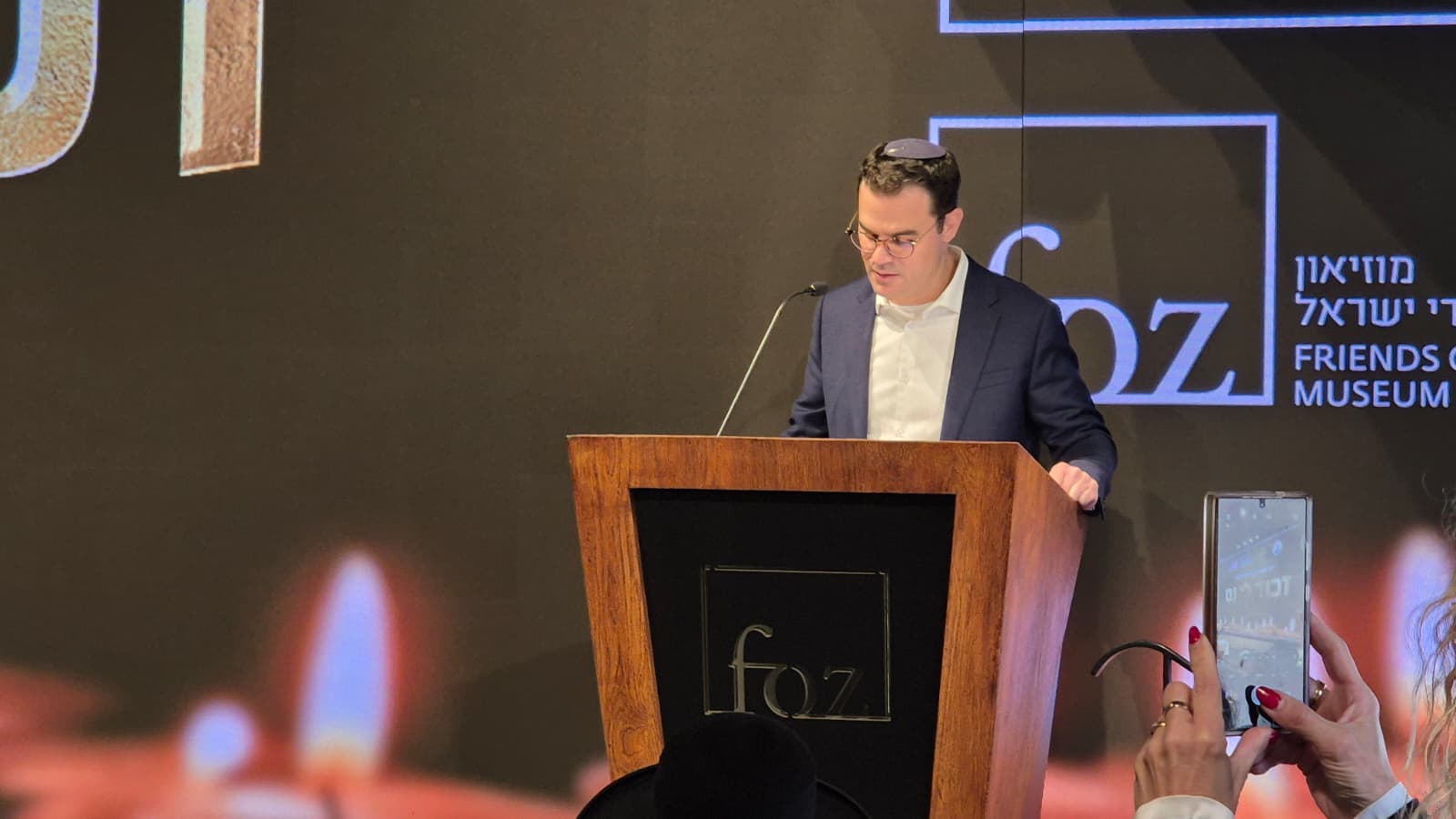
The gathering, held at the Friends of Zion Museum, marked the launch of a new book compiling 52 personal testimonies produced by the Jerusalem-based initiative Bobot veChalomot (Dolls and Dreams). The book brings together accounts that place remembrance alongside continuity, pairing memories of the war years with the lives survivors built afterward. For many participants, the act of remembering was inseparable from the fact that they survived at all.
The combination of memory and survival shaped the structure of the ceremony. Testimonies were first shown on screen, followed by the survivors appearing on stage and lighting memorial candles alongside Israel Defense Forces soldiers. In total, six candles were lit, each corresponding to a personal account. Remarks by Jerusalem Mayor Moshe Lion, former Chief Rabbi David Lau, and Bobot veChalomot founder Michal Fundaminsky framed the testimonies.
Daniel Voiczek, CEO of the Friends of Zion Museum, told The Media Line after the event that the project was shaped by a sense of urgency rather than just commemoration. “These voices won’t be here forever,” he said. “If we don’t record them now, we lose them.” He explained that the museum worked closely with the participants to document their testimonies in their own words. The aim, he said, was preservation.
One of the testimonies shared was that of Beni Harel, born in Tripoli in 1936. He described growing up during the persecution of Libya’s Jewish community under Italian fascist rule and later by Germany. One Friday afternoon, he recalled, his mother pulled him inside moments before their home was hit. The building collapsed. His mother was left paralyzed. His brothers were killed. Later that same night, after the family fled to what they believed was a safer location, the area was bombed again. Harel survived both attacks. He spoke briefly about the events themselves and then about what followed. Today, he said, he has children, grandchildren, and great-grandchildren.
Haia and her brother, Mordechai, spoke about their childhood in Hungary. Born in 1942 and 1936, they were separated from their parents at an early age. Their father was sent to a forced labor camp. Their mother was deported to Austria. The children remained in the ghetto with their grandmother. Haia was 2 years old. Someone protected her, she said, and without that intervention, she would not have lived. Months later, after leaving the ghetto, the siblings were sent to live with an uncle. One day, Mordechai was sent to fetch an ax. On the road, he noticed a man sitting, bent over. As he approached, he recognized his father. None of them expected to meet that way.
Hari Gimpovich, born in Bukovina in 1940, described a moment that determined the rest of his life. Deported with his grandmother, he was placed on a transport bound for a camp from which few returned. At the last moment, his grandmother pushed him toward a Jewish man nearby and threw him off the transport. “If my mother had been there,” he said, “she would not have done it. And I would not be here.” He added that he was the only child from that group who survived.
For years, Gimpovich told The Media Line, following the event, the Holocaust was rarely discussed at home. Daily life was shaped by scarcity and fear, but without explicit reference to the past. The Oct. 7 attacks, he said, shattered a sense of distance from the past he believed he had finally achieved. “I thought that part of my life was closed,” he said. “Then it felt present again.” What worried him most, he added, was not himself, but his children and grandchildren.
Another testimony came from Orna, born in Paris in 1935. She spoke about her mother’s involvement in the resistance and repeatedly crossing through wooded areas while fleeing. At one point, the group was warned that if they heard German boots, they had to stop moving immediately. Everyone scattered. Orna crouched down, unable to move. A priest accompanying the group noticed her, pulled her close, and pretended to pray. The soldiers passed without stopping. At the time, Orna said, she could not imagine a future beyond the next day. Today, she is surrounded by children, grandchildren, and great-grandchildren.
Meir Reichert described a childhood marked by concealment and constant movement. Hidden among non-Jewish families, he moved from place to place while still a child. After he was identified as Jewish, he was expelled and left to fend for himself. The notion of survival did not end with the war. The real shift came years later, when he built a family and slowly regained a sense of belonging.
Naomi Cassuto, born in Strasbourg in 1939, recalled an incident her family later understood as decisive. While fleeing France toward Switzerland, her father stopped to teach her brother how to put on tefillin, causing them to miss their intended train. They boarded another instead. Only years later did they learn that the original train went directly to Auschwitz. That delay, she said, changed everything that followed.
Fundaminsky, a therapist, has worked with Holocaust survivors in Jerusalem for more than 16 years. She told The Media Line after the event that her focus on moments of survival emerged gradually over the years of weekly meetings. “I came to support them,” she said. “But I kept leaving stronger.” Over time, she noticed that many participants spoke less about violence and more about decisions that allowed them to go on living.
After Oct. 7, Fundaminsky said, the mood within the group shifted. Survivors who had built lives defined by resilience began to express renewed concern about the future facing their descendants. The book places photographs from the war years alongside images of the lives built afterward, often with families spanning several generations. According to Fundaminsky, some participants said the process helped restore a sense of dignity they felt had been taken from them during the war. One survivor told her, “They took my dignity, and you returned it.”
Jerusalem Mayor Moshe Lion told attendees that survival itself deserves recognition. Holocaust remembrance, he said, should not focus only on destruction. Endurance, in his view, is also part of the story, and resistance takes many forms.
Former Chief Rabbi David Lau spoke about the risk of anonymity in memory. He recalled postwar pogroms in Europe where victims were buried without names, identified only by numbers. Survivors who speak, he said, prevent that erasure.
As six candles were lit during the ceremony, each representing one of the testimonies for each million Jews murdered, the room remained quiet. The stories told that evening reflected diverse firsthand accounts highlighting themes of memory and survival.
Photo Credit: Gabriel Colodro/The Media Line
Brought to you by www.srnnews.com
 Chanel couture gets a breath of fresh air — and a star-studded audience
 Explainer-What do Democrats and Republicans want in fight over ICE operations?
 EU expected to approve new Iran sanctions in response to crackdown
 Analysis-Scandal tests Peru’s China ties as U.S. scrutiny intensifies