
The $50 Billion Roadmap: Can Abu Dhabi Engineer Regional Stability Through Syria’s Reconstruction?
Rizik Alabi/The Media Line
[DAMASCUS] Damascus and Abu Dhabi on Monday, May 11, launched a comprehensive economic road map valued at more than $50 billion in what officials described as a major turning point in Syria’s recovery efforts and a new phase of Arab-led development in the Eastern Mediterranean.
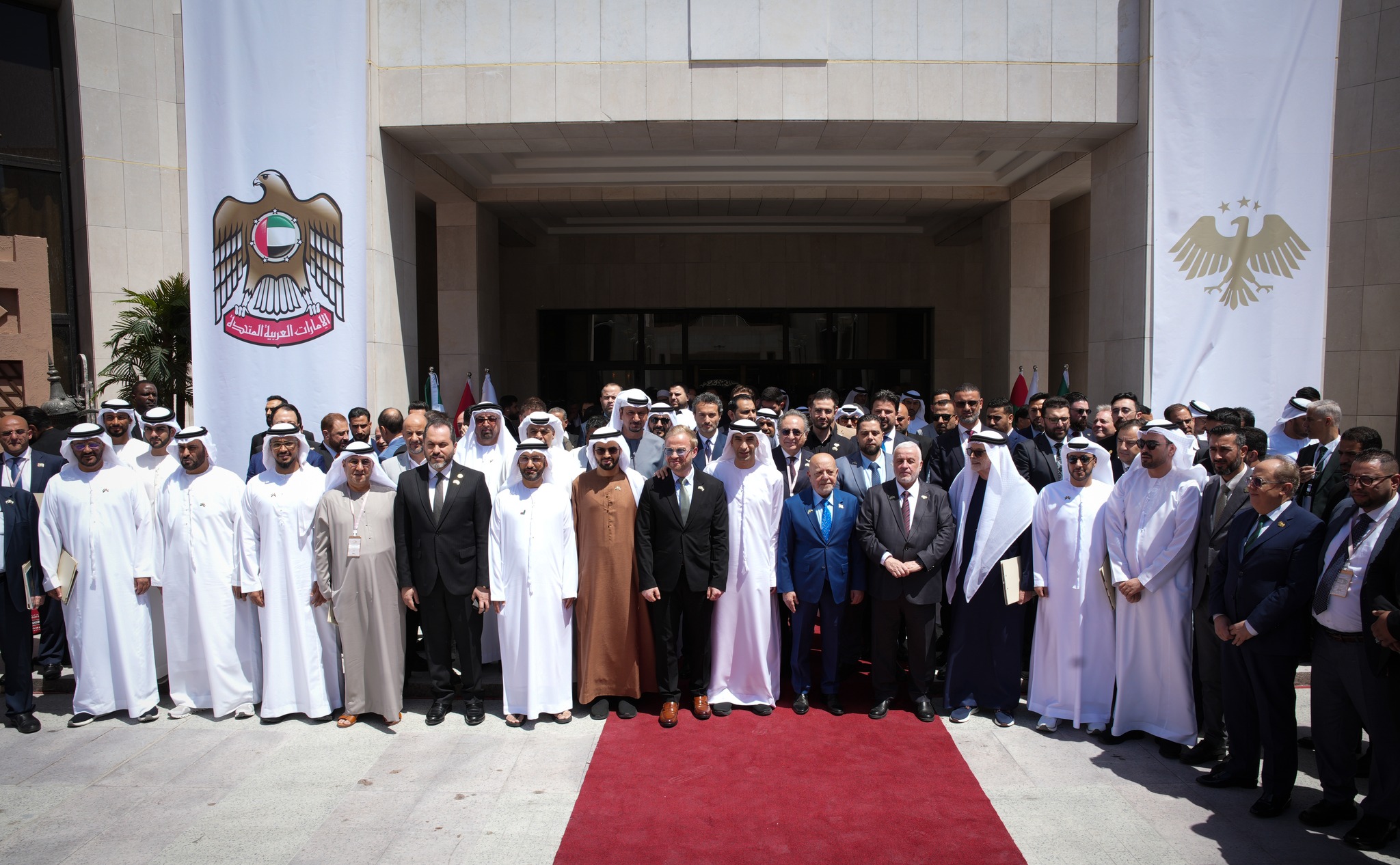
The announcement came during the first Syrian-Emirati Investment Forum, hosted in Damascus, with the participation of a high-level Emirati delegation led by Minister of State for Foreign Trade Thani bin Ahmed Al Zeyoudi, alongside senior leaders from the UAE private sector, most notably Eagle Hills founder Mohamed Alabbar.
Opening the forum, Al Zeyoudi outlined the UAE’s broader strategic direction, emphasizing that the initiative aims to “advance bilateral relations across investment and trade sectors in a manner that serves the shared interests of both countries and their brotherly peoples.” He stressed before Syrian officials and investors that the UAE believes “economic integration and direct dialogue remain the optimal path toward sustainable growth.”
The development was met with strong official support from Damascus. Syrian Minister of Economy and Industry Dr. Mohammad Nidal al-Shaar described the forum as “a restoration of trust and natural communication between brothers.” In remarks that resonated strongly with attendees, he praised the Emirati development model, saying: “What we see in the UAE is the result of genuine effort and vision. We seek to benefit from an experience that turns the impossible into reality.”
The Syrian minister also said the government is committed to providing all necessary support and facilitation to ensure the success of Emirati projects, describing Syria today as “a major investment opportunity and a platform for launching toward the future.”
At the center of the discussions stood Alabbar, who drew significant attention after announcing Eagle Hills’ intention to launch massive urban and logistics projects worth $50 billion. Speaking directly to participants, Alabbar said the region is “undergoing a very major political transformation,” a shift that he said has given investors the confidence to commit large-scale investments matching Syria’s historical stature and the aspirations of its people.
The proposed investment vision includes the construction of integrated smart cities in Damascus and Latakia, providing more than 100,000 housing units, in addition to the redevelopment of strategic infrastructure, including the airports of Latakia, Qamishli, and Deir ez-Zor. The broader goal is to position Syria as a logistical hub linking the Arabian Gulf to the Mediterranean.
The forum itself was not an isolated event, but rather the culmination of a gradual political track pursued by Abu Dhabi over several years. Observers point in particular to Syrian President Ahmed al-Sharaa’s visit to the UAE last April, which many viewed as the political green light for major Emirati companies to begin implementation.
The Syrian community in the UAE—estimated at around 250,000 people—is also emerging as a key bridge for transferring expertise and capital. Mahmoud al-Dharawi, deputy head of the Syrian Economic Forum for Development, stated that Syria has now become “a major investment opportunity” capable of attracting long-term strategic partners.
Despite challenges related to international financing mechanisms and the lingering effects of sanctions, the heavy Emirati presence in Damascus sends what analysts describe as a powerful signal: that economic realities may ultimately override political hesitation.
The success of this multibillion-dollar partnership would not merely mean rebuilding Syria’s physical infrastructure. It could also reshape the balance of power across the eastern part of the Arab world by presenting economics as the only sustainable guarantor of regional stability, and by demonstrating that development and joint economic interests may succeed where years of conflict failed.
As the forum concluded, it became increasingly clear that Damascus and Abu Dhabi are seeking to write a new chapter in the modern history of the region —one built on the premise that durable alliances are founded on economic integration and development, and that Syria may once again reclaim its traditional role as a commercial and investment crossroads in the Arab world.
Syrian-Emirati relations have passed through several pivotal stages. Since the era of Zayed bin Sultan Al Nahyan, the UAE has been a key supporter of development efforts in Syria, while Dubai and Sharjah became major hubs for Syrian business communities beginning in the 1990s.
Despite periods of diplomatic stagnation ushered in by the beginning of the Syrian Civil War in 2011, Abu Dhabi has maintained relatively friendly relations with Damascus before initiating a phase of what observers called “active engagement” in 2018. That trajectory accelerated dramatically after the devastating February 2023 earthquake, when Emirati humanitarian aid evolved into a political bridge that paved the way for Syria’s return—under former President Bashar Assad—to the Arab League.
Today, bilateral ambitions extend far beyond the real estate sector into strategic logistics cooperation. Discussions during the forum included opportunities to invest in and operate the airports of Latakia, Qamishli, and Deir ez-Zor, part of a broader effort to reconnect Syria with global trade networks.
With a large Syrian expatriate population in the UAE, representing, according to economic experts, roughly 68% of Syria’s educated workforce abroad, many analysts expect this partnership to create a “human bridge” capable of accelerating the return of Syrian expertise and capital.
Ultimately, supporters of the initiative argue that the project is about far more than reconstruction. They see it as an attempt to redesign the political and economic landscape of the Arab East through investment-led stability, offering a model in which development and regional cooperation replace conflict as the defining language of the future.
Caption: First Syrian-Emirati Investment Forum in Damascus, May 11, 2026. (Syrian Investment Authority)
Brought to you by www.srnnews.com
 Mexico’s Sheinbaum denies reports of CIA operations there
 The Media Line: A $655 Million Judgment Against the PA Reopens the Long Fight for Justice for US Victims of the Second Intifada
 Palestinian man shot dead while climbing West Bank barrier into Israel in search of work
 Nobel laureate Narges Mohammadi needs months of care after collapse in Iran prison, foundation says