

UN Security Council Session on Syria Highlights Progress Amid Calls for Recovery and Transitional Justice
Rizik Alabi/The Media Line
[Damascus] The United Nations Security Council held a new session on developments in Syria as UN officials and member states pointed to what they described as “real but fragile progress” while calling for greater support for recovery, stability, and transitional justice efforts. Participants also warned about the impact of declining humanitarian funding and ongoing security threats.
The session took place as Syria continues to undergo political and security changes, drawing increased international attention to efforts to stabilize the country, rebuild state institutions, combat terrorism, address the issue of missing persons, and advance transitional justice initiatives.
During the meeting, UN officials reviewed the political, humanitarian, and security situation on the ground, emphasizing that Syria is passing through a sensitive phase requiring sustained international support, particularly as signs of relative improvement emerge in some areas while significant economic, humanitarian, and security challenges persist.
Discussions also addressed the return of refugees and internally displaced persons, ways to support early recovery, and the importance of continuing international efforts to hold perpetrators of violations accountable, uncover the fate of missing persons, strengthen stability, and prevent the resurgence of extremist organizations.
The US delegation to the United Nations delivered a lengthy statement carrying clear political and security messages regarding Washington’s approach toward the current phase in Syria.
Tammy Bruce, deputy US representative to the United Nations, said in remarks delivered during the Security Council session held in New York on May 15, 2026, that President Donald Trump and the United States “stand with the Syrian people in supporting genuine transitional justice and the rule of law in Syria.”
Bruce began by thanking the session chair, as well as Deputy Special Envoy for Syria Najat Rochdi Cordone and Undersecretary-General Tom Fletcher for their briefings to the Council.
The US official stated that the recent arrests carried out by Syrian authorities against members of former President Bashar Assad’s regime, who were accused of atrocities against Syrian civilians, represent “a strong step away from impunity and toward accountability.”
She added that the United States “stands in solidarity with the millions of survivors of Assad’s brutality,” urging the Syrian government to make use of the resources and expertise offered by international partners to support transitional justice and accountability efforts.
Bruce stressed the importance of cooperation with the UN’s International, Impartial and Independent Mechanism, describing such institutions as a cornerstone of the justice process.
The US envoy also addressed the issue of missing persons, noting that “hundreds of thousands of Syrian families, along with many American families, are still waiting for answers regarding their missing loved ones.”
She said that Syria’s recovery process requires progress on this complex humanitarian issue, adding that the Independent Institution on Missing Persons possesses valuable expertise that could support these efforts.
Bruce encouraged close cooperation between the Syrian government and international partners to provide answers for families of the missing, while urging UN member states to continue supporting international institutions and the Syrian government in advancing transitional justice and accountability.
In another section of her address, the US envoy praised the campaign launched by Syrian authorities against terrorist networks and criminal gangs.
She said the Assad regime “allowed Hezbollah and Captagon trafficking networks to operate or turned a blind eye to them,” contributing to destruction across Syria and the wider region.
By contrast, she said, the new Syrian government has dismantled Hezbollah-linked plots, seized drug shipments, and coordinated with Jordan and Lebanon to combat cross-border crime.
The United States also welcomed cooperation with Syria as a full member of the Global Coalition to Defeat ISIS [The Islamic State].
Bruce stated that the Syrian government is working with the United Nations and other entities to rehabilitate, repatriate, and reintegrate populations affiliated with ISIS from northeastern Syria into their original communities.
She called on countries whose nationals remain in those areas to engage with Syrian authorities regarding their citizens.
Despite welcoming recent developments, the US diplomat stressed that “much remains to be done,” citing the assassination of a Shiite cleric near Damascus on May 1.
She said the incident reflects the persistence of serious security challenges and called on member states to support Syrian law enforcement agencies through information-sharing and capacity-building.
Bruce also expressed Washington’s anticipation for an upcoming side event during the UN High-Level Week on Counter-Terrorism, organized by the UN Office of Counter-Terrorism in cooperation with the European Union and Syria, focusing on Damascus’ approach to confronting ISIS.
Concluding her remarks, the US envoy mentioned Cordone’s recent visit to Syria, praising what she described as the “constructive engagement” between his team and Syrian officials.
Washington also expressed support for relocating the office of the UN special envoy to Damascus “as soon as possible,” arguing that the office’s presence in Syria would enable it to better support both the Syrian government and the Syrian people.
The positions expressed during the Security Council session reflected a growing international trend toward supporting Syria’s path to stability and recovery, amid increasing recognition that continued economic and humanitarian deterioration could threaten any political or security gains achieved in recent months.
The session also demonstrated heightened international focus on transitional justice, accountability, missing persons, and counterterrorism as essential components of any sustainable transition or stabilization process.
At the same time, several participants stressed that the current progress remains fragile and requires sustained international support, coordination with UN institutions, and adequate funding for humanitarian and early recovery programs.
The tone adopted by the United States during the session appeared to signal a notable shift in Washington’s approach toward Syria’s evolving reality, particularly through repeated references to the “new Syrian government” in positive terms and the emphasis on security cooperation, transitional justice, and counterterrorism.
Similarly, calls to relocate the UN envoy’s office to Damascus and deepen cooperation with Syrian institutions reflected a broader push toward direct international engagement inside Syria in an effort to reinforce stability and prevent the return of chaos and extremist groups.
Amid continuing economic, security, and humanitarian challenges, the coming period appears critical for Syria’s future, as observers await whether ongoing international efforts can transform what UN officials described as “real progress” into a sustainable path toward recovery and stability.
Brought to you by www.srnnews.com
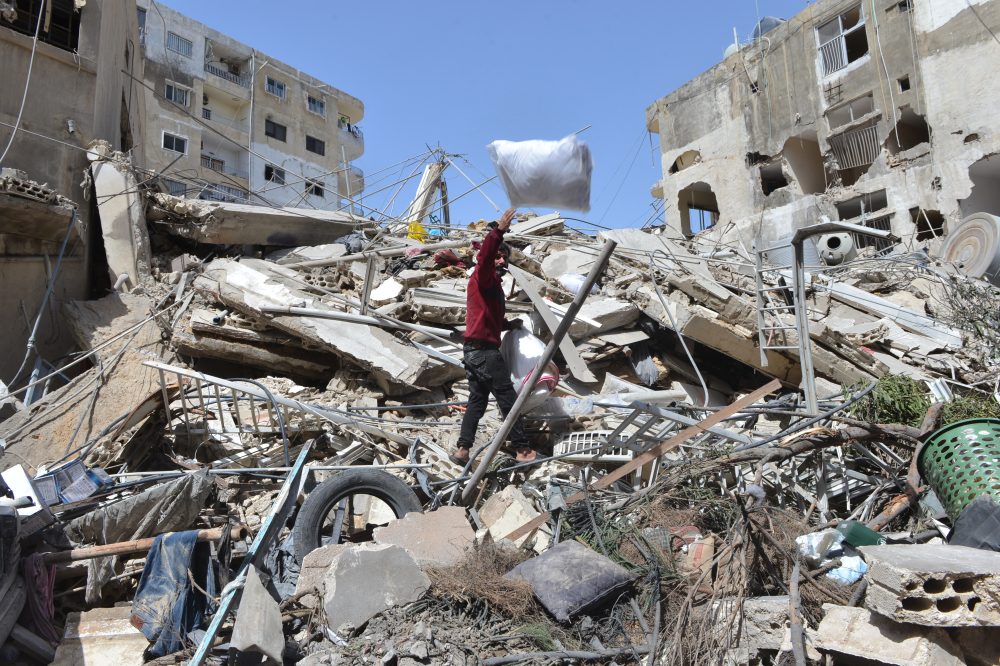 Lebanon death toll reaches 3,000 in fighting between Israel and Hezbollah
 Greenland says US talks make progress but island is not for sale
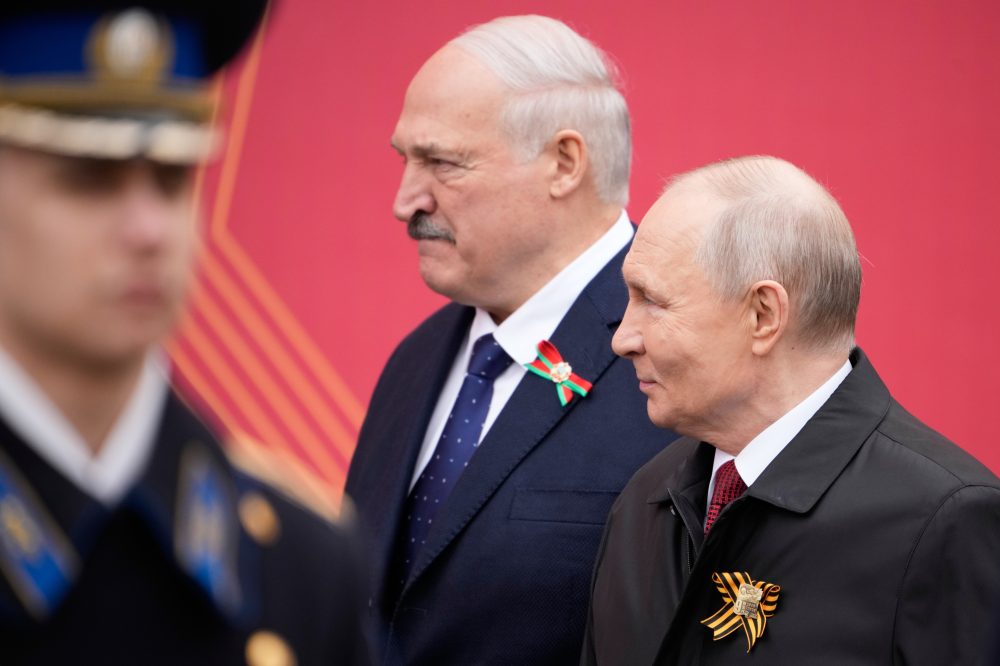 Belarus launches joint drills with Russia to practice nuclear weapons use